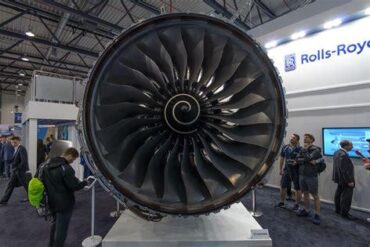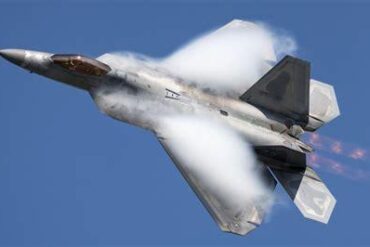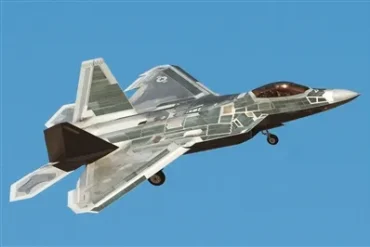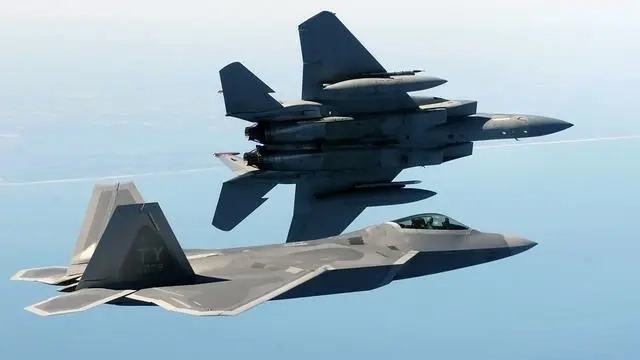
The F-22 Raptor, renowned for its unmatched stealth, speed, and agility, is powered by two Pratt & Whitney F119-PW-100 afterburning turbofan engines. These engines are the core of the aircraft’s supercruise capability, thrust vectoring, and low observability, making the F-22 a dominant force in modern air combat.
F-119 Engine Specifications and Performance
Unparalleled Thrust and Efficiency
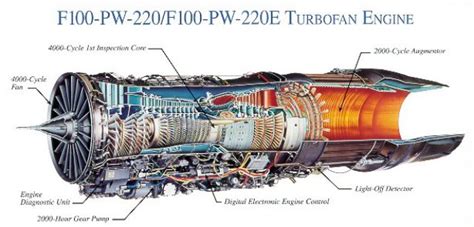
The F119-PW-100 generates an impressive 35,000 pounds of thrust (156 kN) with afterburner and 23,500 pounds (104 kN) in dry thrust. This enables the F-22 to outperform rival aircraft in acceleration, climb rate, and sustained high-speed flight.
Supercruise Capability
Unlike traditional fighters that rely on afterburners for supersonic speeds, the F-22 can sustain speeds above Mach 1.5 without afterburners. This reduces infrared and radar signatures while increasing fuel efficiency, extending operational range and survivability in combat.
Advanced Thrust Vectoring System
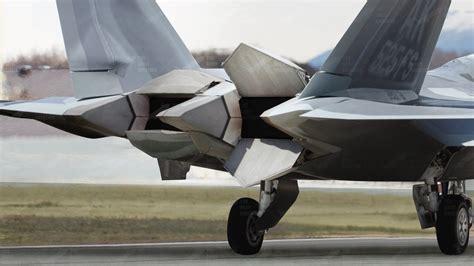
A defining feature of the F-22’s engine system is its two-dimensional thrust vectoring nozzles, which can pivot ±20° vertically. This allows for unparalleled maneuverability, enabling rapid climbs, extreme angles of attack, and advanced post-stall maneuvers such as Pugachev’s Cobra.
Lightweight and Durable Materials
Constructed from titanium alloys and composite materials, the F119 engine is both lightweight and incredibly durable. This high thrust-to-weight ratio (0.84) ensures optimal performance, even under extreme operational conditions.
Stealth-Optimized Engine Design
Minimizing Radar Cross-Section (RCS)
The F-22’s engines are meticulously designed to maintain stealth, utilizing several key innovations:
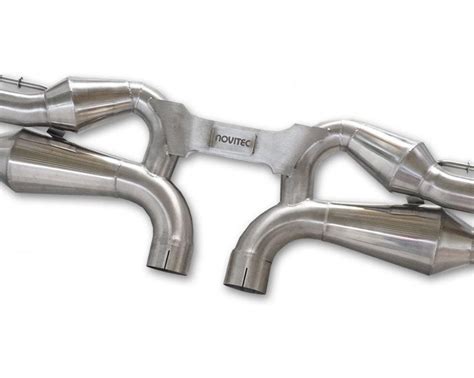
- S-Shaped Inlet Ducts: These conceal the engine fan blades from radar detection, a critical factor in reducing the aircraft’s RCS.
- Radar-Absorbent Materials (RAM): A ceramic-based RAM coating minimizes radar and infrared detection.
- Flattened Nozzles: The 2D nozzle design significantly reduces infrared exhaust visibility, crucial for stealth during engagements.
Aerodynamic and Avionic Integration
Enhanced Aerodynamics for Combat Superiority
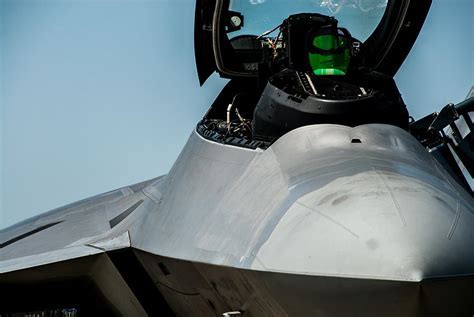
The F119 engines work in synergy with the F-22’s diamond-shaped wings and caret inlets (akin to those of the F/A-18), optimizing airflow for both supersonic and subsonic flight. This design minimizes drag and improves fuel efficiency, allowing for extended missions without additional refueling.
Thermal and Power Management
The engine’s thermal management systems effectively dissipate heat from avionics, ensuring sustained high-speed performance while maintaining stealth.
Additionally, the F-22’s sensor fusion systems, including the AN/APG-77 AESA radar, rely on the engine’s electrical power generation capabilities to provide real-time battlefield awareness.
Operational Performance and Combat Impact
Extended Combat Radius
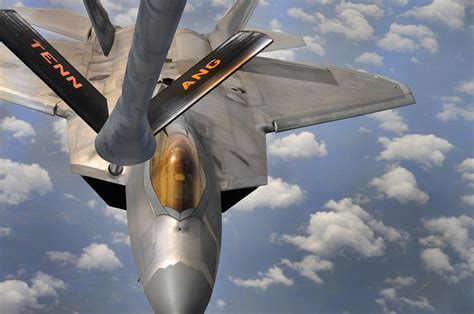
Despite an official combat radius of 759 km, real-world combat tests over Syria in 2016 demonstrated that the F-22 could exceed 3,000 km with aerial refueling. This long-range capability allows the F-22 to execute deep-penetration missions while maintaining stealth and tactical superiority.
Maneuverability Beyond Any Rival
The thrust vectoring system enables the F-22 to outmaneuver any modern fighter jet. Capable of executing high-angle post-stall maneuvers, it gains a decisive advantage in dogfights, allowing for engagement from superior attack positions.
Overcoming Early Challenges
Early operational issues, including altitude-induced hypoxia in pilots, were resolved through cockpit oxygen redesigns and engine refinements, ensuring the long-term reliability and safety of the aircraft.
F119 vs. Other Fighter Jet Engines
| Feature | F119-PW-100 (F-22) | F135 (F-35) | AL-41F (Su-57) |
|---|---|---|---|
| Thrust (with afterburner) | 156 kN | 191 kN | 176 kN |
| Supercruise | Yes | No | Limited |
| Thrust Vectoring | 2D | None | 3D |
| Stealth Integration | High | Moderate | Low |
The F119 engine is optimized for stealth and supercruise, unlike the F-35’s F135, which prioritizes multirole capability, or the Su-57’s AL-41F, which emphasizes 3D thrust vectoring for agility.
Conclusion
The F119-PW-100 engine is the backbone of the F-22 Raptor, delivering an unmatched combination of power, stealth, and maneuverability. Designed for air superiority, this engine ensures the F-22 remains the most dominant fighter jet in service, despite production ending in 2011. With continuous upgrades in avionics and materials, the F-22’s capabilities remain at the forefront of modern air combat.
Frequently Asked Questions (FAQ)
1. How does the F-22’s engine compare to the F-35’s?
The F-22’s F119 engine is optimized for stealth and supercruise, allowing sustained supersonic speeds without afterburners. The F-35’s F135 engine, while more powerful, lacks thrust vectoring and is designed for multirole flexibility rather than air dominance.
2. Why does the F-22 have 2D thrust vectoring instead of 3D?
The F-22’s 2D thrust-vectoring nozzles enhance maneuverability while maintaining stealth. Unlike 3D thrust vectoring, which can compromise stealth characteristics, the 2D design ensures a balance between agility and radar evasion.
3. Can the F-22’s engine be upgraded for future use?
While production of the F119 engine ended in 2011, continuous upgrades to materials, software, and avionics ensure that the F-22 remains combat-ready for decades to come.