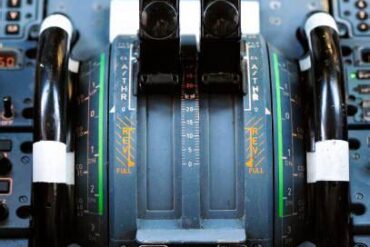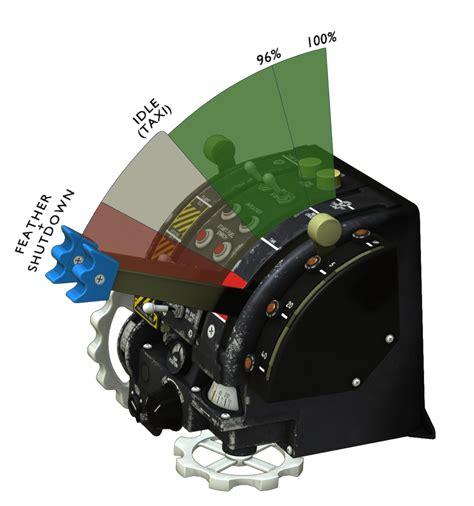
A Condition Lever is an important control located in the throttle quadrant of turboprop aircraft. Pilots use it to manage various functions related to both the propeller and engine. The specific functions can vary depending on the aircraft’s installation. Here are some key roles of the condition lever:
Fuel Cut-off: Most condition levers have a fuel cut-off position. When selected, this position stops fuel from reaching the engine, causing it to shut down. In some cases, this feature may be disabled by weight-on-wheels switches when the aircraft is not on the ground. To start the engine, the pilot must move the lever from cut-off to the “run” or “start/feather” position.
Propeller Feathering: Depending on the aircraft, the feather position of the condition lever may also serve as the engine start position. For many propeller-engine combinations, this position acts as a fuel cut-off both in the air and on the ground.
Propeller Un-feathering: This function, when available, usually operates as a spring-loaded, momentary position. It activates the propeller feathering pump, helping to move the blades out of the feathered position. This is crucial for initiating the air-start sequence for an engine that has been shut down.
Low Idle/High Idle Selection: The low idle position can be selected when on the ground. It allows for an alternate fuel schedule that reduces both engine and propeller RPM, saving fuel and minimizing noise. In some aircraft, this feature may be controlled by dedicated “low speed” selector buttons.
Propeller Speed Control: For propellers with multiple speed settings, the condition lever may have two or more detents corresponding to specific RPM settings, such as Takeoff, Climb, and Cruise. Alternatively, it may allow the pilot to set the propeller RPM to any value within a specified range.