In a significant transition for the United States presidential airlift fleet, the U.S. government is moving forward with plans to replace the aging VC-25A aircraft, better known as Air Force One, with a new variant of the Boeing 747-8i. This move represents the latest chapter in the evolution of America’s airborne command center, combining advanced aerospace engineering, national defense protocols, and high-level diplomatic symbolism.
A Royal Arrival: Qatar’s Boeing 747-8i Joins the Fleet
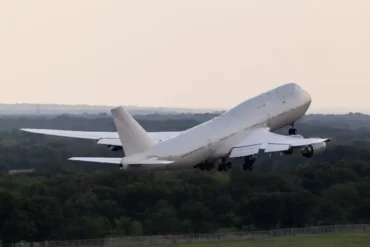
In early 2025, a Boeing 747-8i originally configured for the Qatari royal family arrived in the United States, marking an interim solution amid continued delays in Boeing’s VC-25B program. This aircraft, once operated under the Qatar Amiri Flight, was officially accepted by the U.S. Department of Defense on May 21, 2025, and is undergoing retrofitting to align with Air Force One standards.
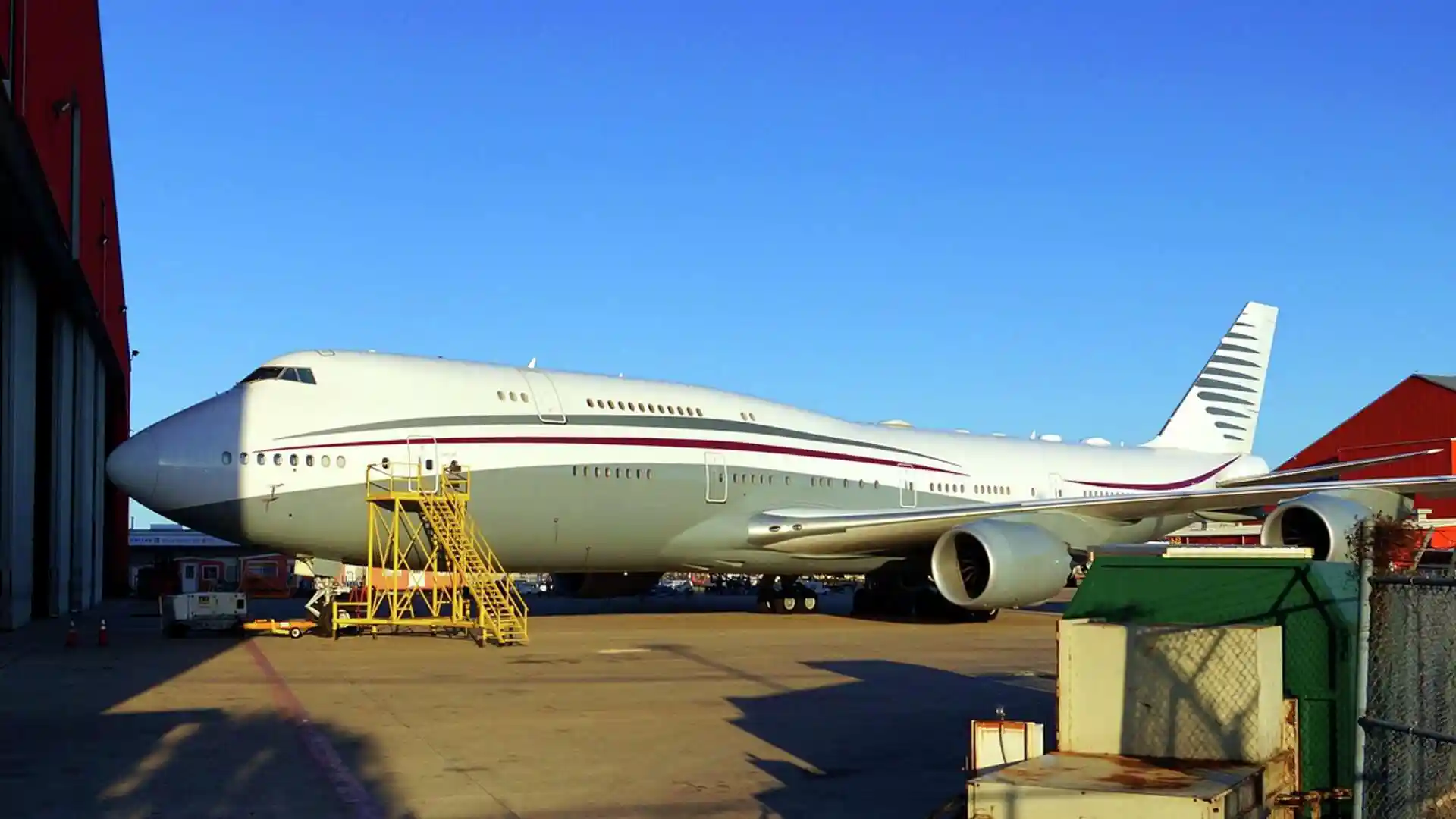
Initially built in 2012 and registered as P4-HBJ (formerly A7-HBJ), this aircraft joins an elite club as one of only 19 Boeing 747-8i units ever delivered to VIP or private operators. Featuring a lavish layout of lounges, conference rooms, and a master suite, its opulence will be dramatically transformed. The retrofit includes:
- EMP shielding
- Hardened encrypted communications
- Missile defense and countermeasures
- Interior overhaul to U.S. government standards
- Avionics rewiring
Rumors suggest that L3Harris Technologies is managing the highly classified refit at San Antonio International Airport (SAT). As of June 2025, the aircraft is undergoing disassembly and security vetting for foreign surveillance threats.
The VC-25A: A Legacy of Presidential Flight
For over three decades, the VC-25A, based on the Boeing 747-200B, has served as the airborne residence of the Commander-in-Chief. Two aircraft, tail numbers 28000 and 29000, entered service in 1990 during President George H. W. Bush’s administration. Operated by the Presidential Airlift Group, part of the 89th Airlift Wing, these aircraft are stationed at Joint Base Andrews, Maryland.
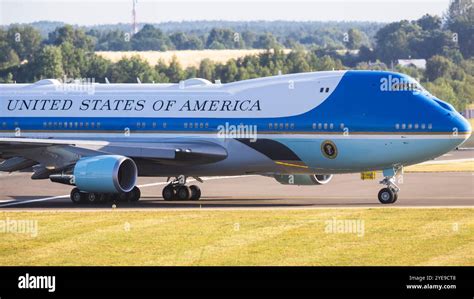
The VC-25A is more than just a plane — it is a flying fortress and command center. Key features include:
- Aerial refueling capability
- Nuclear electromagnetic pulse (EMP) shielding
- Advanced electronic countermeasures
- Chaff and flares to deter missile threats
- Medical suite, galleys, and private quarters
The aircraft’s interior comprises three levels. The upper deck contains the cockpit and communications center. The main deck is divided into areas for the President, senior staff, press, and guests, including a section nicknamed the “White House,” which includes an executive suite and office. The lower level is dedicated to cargo.
The VC-25B: The Future of Air Force One
With the VC-25A aircraft approaching 35 years of service, the U.S. Air Force sought a successor capable of addressing 21st-century defense, technology, and logistical needs. While Airbus briefly considered offering the A380, it withdrew from contention in 2009. In January 2015, the USAF formally selected the Boeing 747-8 as the base platform for the next-generation VC-25B.
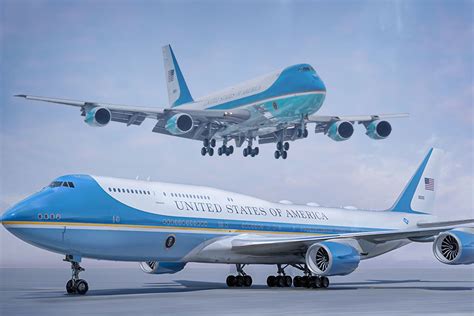
In 2017, the USAF acquired two 747-8i aircraft originally built for the now-defunct Russian airline Transaero. Stored at Southern California Logistics Airport (VCV), the planes were purchased and flown to Boeing’s San Antonio facility for transformation into state-of-the-art presidential aircraft.
VC-25B: Design, Defense, and Delay
The VC-25B program, initially slated for delivery in 2024, has faced a series of production delays, contractor issues, and evolving specifications. As of mid-2025, the revised delivery timeline pushes completion to 2029, although USAF discussions have hinted at expediting delivery to 2027.
Technically, the VC-25B is a leap forward. Built on the Boeing 747-8i platform, it incorporates the following enhancements:
- Four General Electric GEnx turbofans, each delivering 66,500 pounds of thrust
- EMP hardening for nuclear resilience
- Aerial refueling capability
- Advanced secure communications and cyber defenses
- Infrared and radar-guided missile countermeasures
The performance profile is equally impressive:
- Length: 250 feet 2 inches
- Wingspan: 224 feet 7 inches
- MTOW: 987,000 pounds
- Cruise speed: 500 knots (580 mph)
- Range: 7,800 nautical miles
The aircraft’s interior will be reimagined to fulfill critical functions during national emergencies, including classified communication suites, medical facilities, and conference rooms. Though exact layouts remain secret, the design echoes the operational logic of the VC-25A, updated for modern threats and technology.
Livery and Symbolism: A Presidential Paint Job
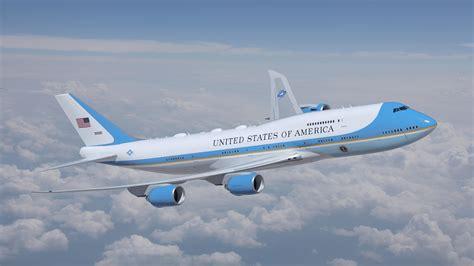
One of the more visible — and controversial — aspects of the VC-25B development has been its exterior livery. In 2019, President Donald Trump proposed a bold red, white, and blue design to replace the iconic blue-and-white paint scheme introduced during the Kennedy administration. However, by 2023, the Biden administration had reverted to a modernized version of the original design, citing tradition and cost considerations.
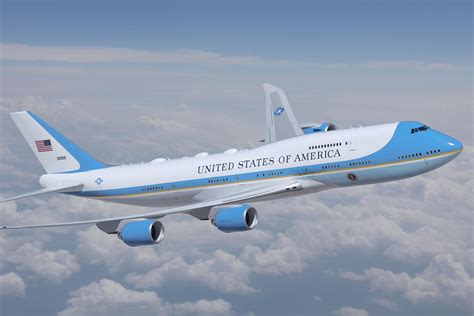
This decision underscores how Air Force One is more than a flying headquarters — it is a powerful symbol of American leadership and diplomacy. Whether parked on foreign soil or cruising at 45,000 feet, its design communicates continuity and command.
Interim Stopgap or Strategic Opportunity?
The Qatari 747-8i, while a temporary fill-in, presents an opportunity to test systems and modifications ahead of the full VC-25B rollout. With much of the VC-25B development classified, the Qatari aircraft offers a transparent glimpse into the extensive retrofitting and strategic planning required to operate a presidential aircraft in today’s global climate.
Its transformation also highlights growing cooperation between allied nations in the arena of aviation and defense. A gift of this scale — a widebody VIP-configured 747 — is rare and logistically invaluable. The aircraft serves not only as a bridge solution but as a testbed for integrating new secure technologies, design standards, and countermeasure systems.
The Evolution of Presidential Aviation
From the Douglas VC-118 to the VC-137 and the long-serving VC-25A, each generation of Air Force One has mirrored the technological and geopolitical context of its era. The VC-25B continues this legacy, fusing Cold War-era protocol with the realities of cyber warfare, missile proliferation, and long-range communications in the digital age.
As global threats evolve, so too must the platforms that protect the leadership of the United States. The upcoming VC-25B, despite delays and redesigns, will ultimately become a mobile nerve center for presidential decision-making, crisis management, and international diplomacy.
When the VC-25B finally takes flight, it won’t just be the newest Air Force One — it will be a symbol of resilient modernization, layered defense, and enduring American capability in the skies.
Final Thoughts: A New Chapter Aloft
The replacement of the VC-25A marks more than an upgrade in hardware — it signifies a commitment to national security, preparedness, and global presence. Whether in the skies over conflict zones or touching down for diplomatic summits, the aircraft known as Air Force One remains a potent icon. With the VC-25B on the horizon, the future of presidential aviation is poised to soar even higher, built on decades of engineering expertise, operational insight, and the unwavering expectation that the aircraft carrying the President must be nothing short of exceptional.