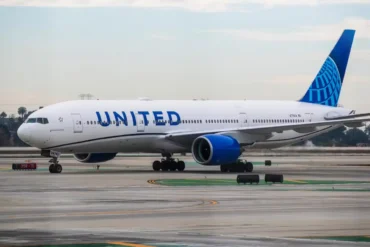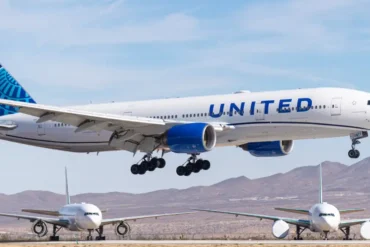
The Boeing 777-200 once symbolized the muscular confidence of long-haul aviation. When it entered service in the mid-1990s, it promised transoceanic reach with twin-engine efficiency, and airlines built route networks around its blend of range, payload, and cabin scale. Three decades later, that promise has aged into a maintenance-heavy reality. Airframes are accumulating cycles, engines face escalating shop visits, and fuel economics are unforgiving in a market where margins are trimmed with surgical precision. The question facing fleet planners today is not sentimental. It is operational, financial, and strategic: what replaces the Boeing 777-200 without breaking route economics or crew ecosystems?
Airlines do not replace an aircraft with a silhouette; they replace a role. The 777-200 and its extended-range sibling carried dense premium cabins on transatlantic trunks, hauled belly cargo that quietly paid the bills, and tolerated long sectors with operational headroom. Replacing that role in the late 2020s and early 2030s means finding an aircraft that can span continents with fewer headaches, lower fuel burn, and flexibility across a wider map of airports. The modern market tilts toward versatility over brute size, and the physics of economics favor lighter structures, efficient engines, and adaptable capacity.
The data emerging from large legacy carriers paints a consistent story. The fleets that once leaned heavily on early 777 variants are now filling orderbooks with mid-sized, long-range widebodies. This is not nostalgia-driven fleet renewal; it is a recognition that networks have fractured into thinner long-haul routes, where frequency beats sheer seat count. The replacement aircraft must thread that needle, preserving reach while avoiding the penalty of flying half-empty metal across oceans.
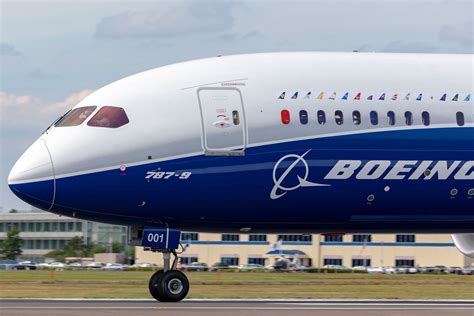
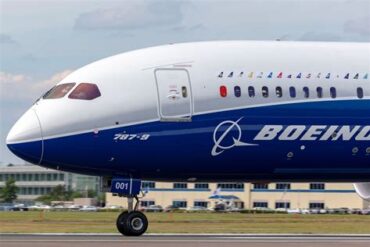
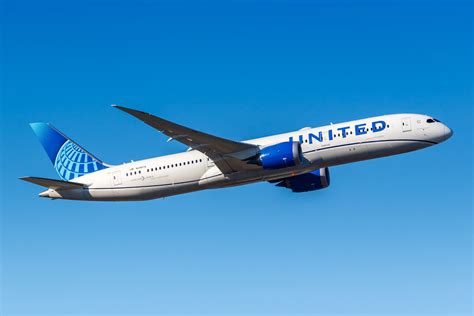
The Boeing 787-9 Dreamliner sits squarely in that strategic sweet spot. Its appeal is not just technical bravado but how neatly it maps onto the lived reality of airline operations. With a range that rivals or surpasses early 777 variants, the 787-9 can carry meaningful payloads across the Atlantic and deep into the Pacific while opening city pairs that were once marginal with larger jets. The shorter takeoff field requirement widens the list of viable airports, turning secondary hubs into credible long-haul gateways. This quietly reshapes route planning, letting airlines chase demand instead of forcing demand to conform to aircraft limitations.
Efficiency is where the Dreamliner changes the conversation. Composite structures reduce weight and resist corrosion fatigue patterns that plague older aluminum fleets. Advanced engines, paired with aerodynamics tuned for cruise efficiency, translate into materially lower fuel burn per seat. In a world of volatile fuel prices and tightening emissions regimes, this is not a nice-to-have. It is survival equipment. Airlines are not merely swapping airplanes; they are swapping operating philosophies, trading the old model of “fill the big jet or lose money” for “right-size the aircraft and build frequency where demand breathes.”
There is also the human machinery of aviation to consider. Training pipelines, maintenance tooling, spare parts inventories, and crew scheduling all benefit from fleet commonality. Airlines that already operate Dreamliners find that adding more 787-9s compounds efficiency across departments. Pilots transition within type families with fewer friction points. Maintenance crews work within familiar systems. Dispatchers plan rotations with predictable performance envelopes. This ecosystem effect often outweighs raw performance metrics when the boardroom sharpens pencils.
The replacement story is not frictionless. The 787-9 carries fewer seats than even the smallest 777 variants in typical two-class layouts. On slot-constrained routes, fewer seats per movement can feel like a step backward. The operational reality, though, is that demand fragmentation has changed the arithmetic. Airlines increasingly prefer to add frequencies with slightly smaller aircraft, capturing premium demand with schedule convenience rather than packing every passenger into fewer, larger departures. This trend dovetails with the 787-9’s economics, turning a perceived capacity drawback into network flexibility.
Cargo complicates the equation. The 777’s freighter lineage created a muscle memory around belly payload and dedicated cargo variants that the 787 does not fully replicate today. While the Dreamliner’s belly space is respectable, there is no active 787 freighter program serving the market at scale. Cargo carriers and mixed operators must therefore juggle fleets, leaning on purpose-built freighters like the 777F to shoulder heavy freight while passenger airlines pivot to more efficient passenger-centric widebodies. This bifurcation reflects a broader specialization in aviation: fewer do-it-all airframes, more tailored tools for specific missions.
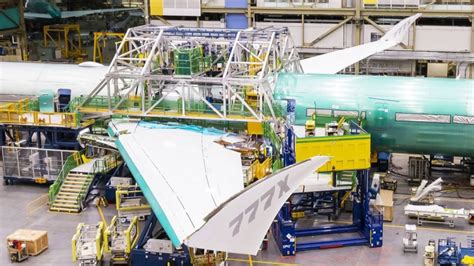
The 777X was designed, at least on paper, to inherit the throne of the classic 777. In practice, it has stumbled into a market that has moved on. The aircraft’s sheer scale suits concentrated hub-to-hub flows with thick premium demand, a pattern more common in certain European and Middle Eastern networks than in the increasingly distributed U.S. long-haul market. Add in prolonged certification delays and shifting delivery timelines, and the risk profile becomes hard to justify for airlines that need certainty in their fleet transitions. Fleet planning is chess played years in advance; pieces that refuse to arrive on the board force uncomfortable gambits elsewhere.
The Dreamliner’s story does not stop at replacing the 777-200. It also absorbs the legacy of the Boeing 767, an aircraft that once bridged medium-haul and long-haul roles with pragmatic efficiency. As the last passenger 767s fade into niche service, the 787 family steps into the vacuum with a broader performance envelope. This matters because fleet transitions are rarely one-for-one swaps. Airlines prefer to solve multiple aging-fleet problems with a coherent strategy, reducing complexity while modernizing capabilities. The 787 becomes a hinge point in that strategy, connecting the retirement arcs of both the 767 and early 777s into a single modernization narrative.
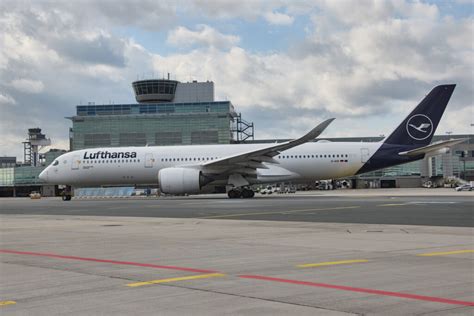
Airbus complicates the competitive landscape with credible alternatives. The A330neo offers evolutionary economics with familiar dimensions, while the A350 stretches into ultra-long-haul territory with remarkable range and capacity. The choice between these families is not ideological; it is contextual. Route structures, airport constraints, and cabin product strategies all shape the answer. Yet the gravitational pull of the 787-9 remains strong because it aligns with the mid-market sweet spot where many legacy carriers now operate their most profitable long-haul services.
The Dreamliner’s operational résumé includes moments that verge on poetic. Flights into Antarctica under harsh conditions demonstrated not just range but resilience, avionics stability in extreme cold, and systems reliability far from diversion options. These feats are not daily airline business, yet they signal robustness. When an aircraft performs at the edges of the envelope, operators gain confidence in routine operations. Reliability is the unglamorous backbone of profitability, and the 787 has earned a reputation as a workhorse that shows up to do the job across climates and mission profiles.
Replacing the 777-200 is therefore less about coronating a single successor and more about acknowledging a shift in aviation’s center of gravity. The industry is moving away from mega-capacity twins toward flexible long-range midsize widebodies. This is a response to passenger behavior, network economics, and environmental pressure converging into a new equilibrium. Airlines want aircraft that can pivot between dense corridors and thinner spokes without punishing their balance sheets. The 787-9 embodies that pivot, not as a perfect mirror of the 777-200, but as a better fit for the world that emerged after it.
There is a quiet philosophical turn here. Aviation once chased bigness as a proxy for progress. Bigger jets meant more ambition, more connectivity, more spectacle. The current era prizes precision. Precision in matching capacity to demand. Precision in fuel burn per seat. Precision in operational resilience. The aircraft replacing the Boeing 777-200 reflects this turn. It is not about towering presence at the gate; it is about threading profitable routes across a fragmented global map with fewer compromises.
The replacement cycle also reshapes passenger experience in subtle ways. The 787’s cabin pressurization and humidity profiles improve comfort on long sectors, reducing fatigue and dehydration. Larger windows and quieter interiors recalibrate expectations of what long-haul flying feels like. These details matter in competitive premium markets where soft product differences sway loyalty. The retirement of older 777s is therefore not just a maintenance story; it is a redefinition of the sensory contract between airlines and passengers.
As fleets turn over, the long shadow of the 777-200 lingers in the routes it enabled and the networks it helped build. Its replacement is not an act of erasure but of adaptation. The aircraft stepping into its role carries the lessons of three decades of long-haul economics, engineering evolution, and shifting demand patterns. The Dreamliner’s rise is not a victory lap for a single model; it is evidence that aviation, when it listens to data and physics instead of nostalgia, learns how to travel lighter across vast distances without losing its reach.