Control Wheel Steering, often shortened to CWS, is a term that can describe two very different autopilot features depending on the aircraft and its autopilot system. These differences are tied to how the system is designed and how the aircraft manufacturer labels its functionality. In one setup, CWS refers to a temporary override function that lets pilots fly manually without turning off the autopilot completely. In another, it describes a selectable autopilot mode that allows pilots to guide the aircraft using the control yoke, rather than using switches on the autopilot panel.
What Control Wheel Steering Does
In basic manual flying, pilots control the aircraft using physical inputs like the control yoke or stick and the rudder pedals. These inputs move the aircraft’s control surfaces—the ailerons, elevator, and rudder—which allow the aircraft to rotate around its pitch, roll, and yaw axes. Once the pilot sets the desired position, trim systems help maintain that attitude with less effort.
Autopilot systems change this dynamic by using computers to manage flight control. Instead of moving the aircraft directly, the pilot tells the autopilot what to do through the flight management system (FMS) or control panel. This lowers workload, especially over long flights or during complex procedures. CWS adds a layer to this interaction, letting pilots manually adjust flight attitude or direction without fully disconnecting from autopilot support.
CWS Variant One: Touch Control Steering (TCS)
The more common version of CWS is often called Touch Control Steering (TCS). You’ll find it on a wide range of aircraft—from small general aviation planes like the Cessna 182 Skylane to larger jets such as the Gulfstream V and commercial airliners like the Embraer ERJ 190. While some aircraft manufacturers still refer to this feature as CWS, most call it TCS.
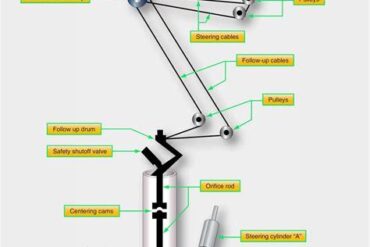
The TCS button is usually located on the outer edge of the control yoke and is spring-loaded. Pressing and holding this button while the autopilot is active disconnects the autopilot’s control servos but keeps the autopilot system running. This means the pilot can make manual adjustments—like changing the rate of climb or descent—without turning off the autopilot entirely. Once the button is released, the servos reactivate and hold the aircraft at the new setting.
This is useful in several real-world scenarios. For example, pilots can fine-tune the aircraft’s descent rate when nearing their assigned altitude to avoid triggering unnecessary TCAS or ACAS resolution advisories. It can also help in slight heading changes, such as maneuvering around small clouds. Some airlines even include procedures that use TCS for immediate actions, like those required in breakout maneuvers during close parallel approaches under Precision Runway Monitoring (PRM).
CWS Variant Two: Full CWS Mode
The second version, usually called CWS Mode, is a more advanced system found in older models of aircraft like the Boeing 737 and military platforms such as the Lockheed Orion. In this setup, the autopilot allows pilots to adjust flight direction by applying pressure to the control yoke or column, all while keeping the autopilot servos engaged.
Typically, these systems offer three autopilot settings: OFF, CWS, and CMD (Command). With the autopilot off, pilots fly manually. In CMD mode, the autopilot has full control, responding to input from the control panel or the FMS. For example, if the pilot selects a climb to a certain altitude or follows a navigation route, the autopilot will handle everything.
CWS mode falls somewhere in between. Here, the pilot can fly the plane using the yoke, and when they release pressure, the system holds the last commanded pitch or roll. It’s sometimes nicknamed “Airbus mode” by pilots, since it shares similarities with fly-by-wire behavior. The goal is to offer a stable flying experience with reduced pilot workload. This comes in handy especially when flying through turbulence or during other high-stress phases of flight.
Some systems take this further. If a pilot’s input is below a certain threshold—for example, less than a 5-degree bank—the autopilot will gently return the aircraft to level flight after input is released. This allows for smooth handling with minimal effort and is especially helpful when flying in challenging weather. Many operators and aircraft manuals recommend using this CWS mode during turbulent conditions, including approach and landing phases.
Real-World Example: Boeing 737-800 Incident Over the Adriatic Sea
On February 13, 2019, a Boeing 737-800 flying over the southern Adriatic Sea experienced unexpected severe turbulence. Two flight attendants and several passengers were injured because they were not properly secured. The investigation found that the pre-flight briefing had taken place before the updated weather charts were issued. These new charts showed the presence of severe turbulence caused by mountain waves and jetstream interaction—details that were missing from the initial forecast used for planning.