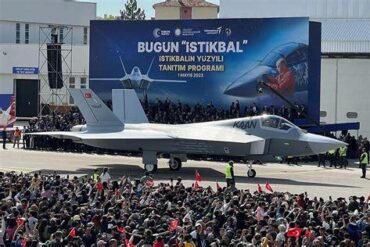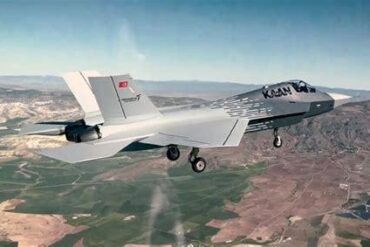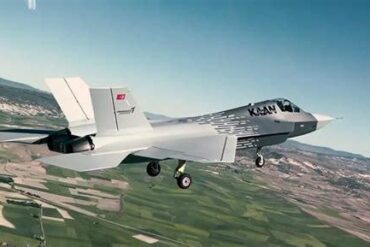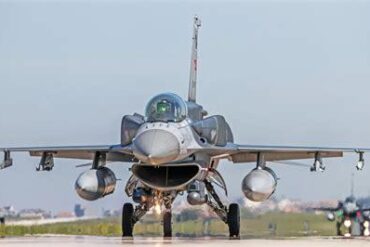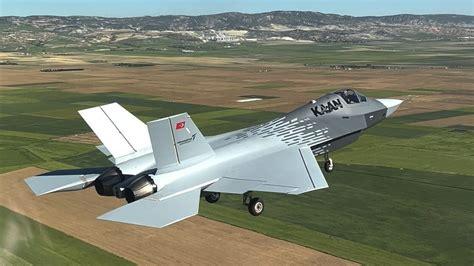
In a watershed moment for both Türkiye’s defense industry and the global military aviation market, Turkish Aerospace Industries (TAI) has secured its largest-ever defense export: a deal to supply 48 KAAN fifth-generation fighter jets to Indonesia. Unveiled on July 24, 2025, during the IDEF 2025 defense exhibition in Istanbul, the agreement sets a new precedent not only for Türkiye’s defense capabilities but also for how next-generation fighter technology is shared and co-developed in an increasingly multipolar world.
Türkiye’s First Foray into the Global Fighter Jet Arena
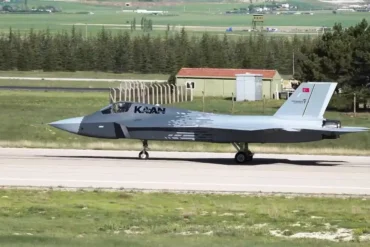
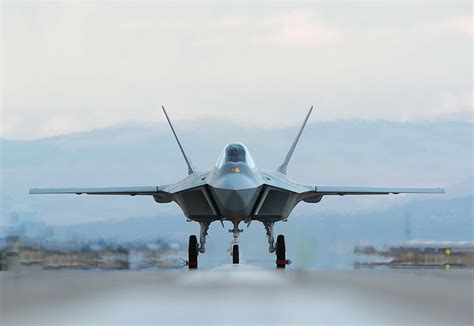
The KAAN, a fifth-generation stealth multirole fighter, is the flagship project of TAI, designed under the supervision of the Presidency of Defense Industries (SSB). With this export deal, Türkiye effectively joins an elite group of countries capable of designing, producing, and now exporting fifth-generation combat aircraft—traditionally a domain monopolized by the United States, Russia, and select European powers.
The announcement marks a paradigm shift in how fighter jet programs are structured globally. Unlike traditional defense contracts that place purchasing nations as end-users with limited say, this agreement embeds Indonesia deeply into the design, engineering, and local assembly processes. It’s a strategic leap for both nations—Türkiye solidifies itself as a new aerospace leader, while Indonesia gains technological sovereignty.
Strategic Dimensions of the Türkiye-Indonesia KAAN Agreement
The agreement, endorsed by President Recep Tayyip Erdoğan and President Prabowo Subianto, involves more than just aircraft delivery. The 10-year program outlines:
- Full technology transfer, giving Indonesia unprecedented access to stealth design, AI-enabled avionics, and radar systems.
- Local production lines, ensuring industrial development in Indonesia.
- Shared engineering and testing responsibilities, elevating Jakarta’s role from buyer to partner.
This setup grants Indonesia a stake in the evolution of the KAAN platform while advancing Türkiye’s vision of defense exports based on equal-footed industrial partnerships.
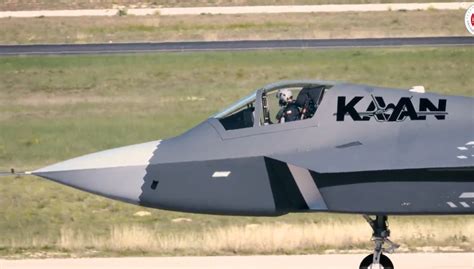
KAAN Fighter Jet: Technical Excellence Meets Strategic Vision
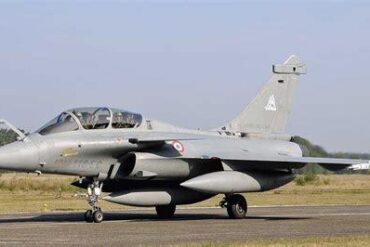
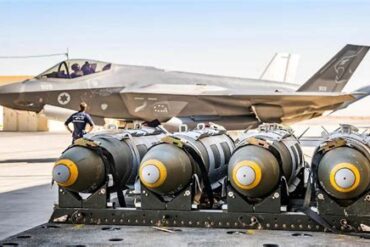
Türkiye’s KAAN is engineered to compete head-to-head with the likes of the F-35 Lightning II, Dassault Rafale, and Eurofighter Typhoon. Yet it’s the KAAN’s comprehensive capabilities and export-friendly architecture that truly set it apart:
- Low-observable stealth design
- AESA radar (Active Electronically Scanned Array)
- Internal weapons bays for enhanced radar evasion
- AI-enabled avionics for threat detection and decision support
- IRST (Infrared Search and Track) for passive tracking
- Advanced electronic warfare (EW) suites
- Initial powerplant: GE F110 turbofan engines, transitioning to the indigenous TEI-TF35000
The aircraft completed its maiden flight on February 21, 2024, and is undergoing a rigorous flight-testing campaign, aiming for limited operational capability by 2028.
A Calculated Indonesian Pivot
Indonesia’s move toward KAAN signals a strategic realignment. Previously a potential buyer of the Rafale and the Eurofighter, Jakarta opted for the KAAN due to several converging factors:
- Technology access and local control, lacking in Western deals
- Faster development path to fifth-generation capability
- Reduced dependency on traditional defense blocs
- Increased industrial participation, enhancing local aerospace infrastructure
This pivot is further underscored by Indonesia’s declining enthusiasm for South Korea’s KF-21 Boramae program, where financial and industrial cooperation fell short of expectations. With KAAN, Jakarta secures greater return on investment, both militarily and economically.
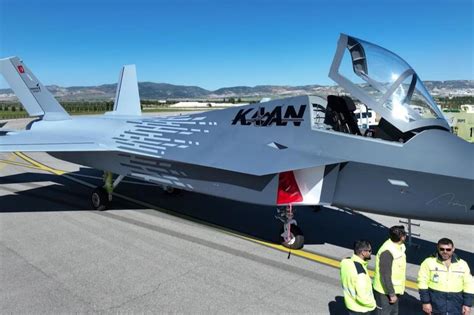
Türkiye’s Strategic Aerospace Ascension
The KAAN deal comes on the heels of Türkiye’s successful exports of Bayraktar TB2 and Akıncı UAVs, marking the next evolutionary step in its defense industrial strategy. With the KAAN, Türkiye is not only delivering a fighter aircraft—it is exporting an entire aerospace ecosystem.
This transition is backed by several strategic trends:
- Turkish defense doctrine favoring technological independence
- Strong government backing for arms exports
- A growing domestic industrial base capable of component manufacturing, systems integration, and R&D
Furthermore, Türkiye is already in discussions with other potential KAAN buyers, including Pakistan, Azerbaijan, and several Gulf states. The Indonesian deal, thus, functions as a launchpad for broader market penetration.
Redefining Global Fighter Jet Procurement
The Türkiye-Indonesia KAAN contract represents more than just a milestone sale. It reveals a broader trend: the emergence of non-Western defense suppliers who are willing—and able—to offer high-tech systems without the strings attached. This appeals to countries aiming to balance national defense with technological independence and geopolitical flexibility.
Traditional suppliers like the U.S., France, and the U.K. have historically limited technology transfers, viewing buyers as dependent clients. Türkiye, on the other hand, promotes a cooperative model, one that blends affordability, capability, and sovereignty.
This model is not only attractive—it’s scalable. If Türkiye can deliver the KAAN on schedule and within spec, the global fighter market may soon be forced to recalibrate long-held assumptions about who sets the rules in fifth-generation airpower.
Long-Term Strategic Implications
The KAAN program promises to reshape defense-industrial relations across Southeast Asia and the broader Global South. Indonesia’s decision to back KAAN over more established platforms signals a new confidence in rising middle-power defense ecosystems. It may also encourage other regional players to seek similar arrangements with Türkiye, undermining legacy suppliers who have often dictated unfavorable terms.
This is particularly significant as nations worldwide seek to diversify procurement channels amid shifting U.S.-China tensions and rising skepticism of Western dominance. Türkiye’s emergence as a technology-exporting state, not just a licensed producer, will likely inspire other nations—India, Brazil, South Africa—to pursue similar trajectories.
Conclusion: Türkiye’s KAAN Ushers in a New Fighter Jet Order
The Türkiye-Indonesia KAAN agreement isn’t just a contract—it’s a strategic declaration. With 48 aircraft on order, full technology transfer underway, and co-production lines being planned, the deal underscores the arrival of a new era in global airpower. It represents a break from dependency, a challenge to entrenched Western aerospace giants, and a showcase of Türkiye’s technological evolution from consumer to creator.
As Türkiye positions itself as a global aerospace player, the KAAN program stands not only as its most ambitious defense project to date—but also as a test case for a new model of international arms cooperation rooted in parity, partnership, and strategic autonomy. If successful, it may do for fighter jets what the Bayraktar TB2 did for drones: democratize access to advanced combat power and change the shape of aerial warfare for decades to come.