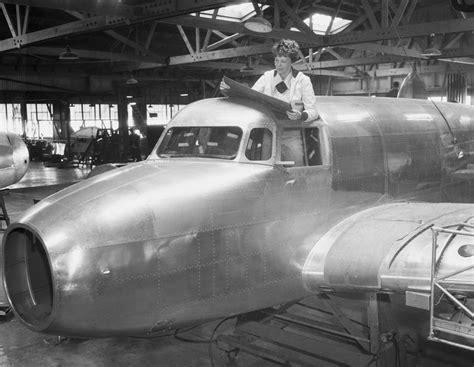
Amelia Earhart’s final flight in 1937 marked a defining moment in the history of aviation — not for its completion, but for its mysterious disappearance that continues to baffle historians, explorers, and aviation enthusiasts nearly nine decades later. The aircraft she flew, the Lockheed Electra 10-E, has become as legendary as the aviator herself. Despite scattered artifacts and multiple theories, the Electra remains missing, though new clues hint that its final resting place may finally be within reach.
The Lockheed Electra 10-E: A Machine Built for Ambition
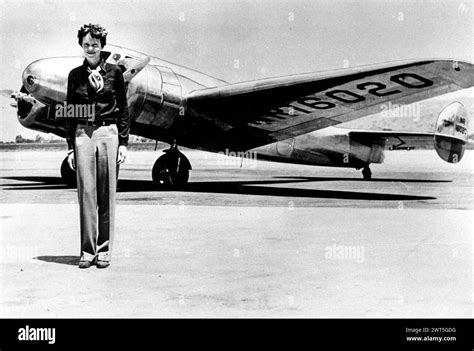
The Lockheed Electra 10-E was more than just a commercial airliner; it was a custom-built, twin-engine marvel modified specifically for Earhart’s historic attempt to circumnavigate the globe. Designed for long-distance endurance and scientific observation, the 10-E was tailor-made for adventure.
The Electra was 39 feet long, with a 55-foot wingspan, and could cover 713 miles on a single fuel load. Powered by two Pratt & Whitney R-1340 Wasp radial engines, the aircraft could reach a maximum speed of 202 mph. It featured a distinct twin-tail design and a robust fuselage capable of handling added fuel tanks, navigation instruments, and communication gear.
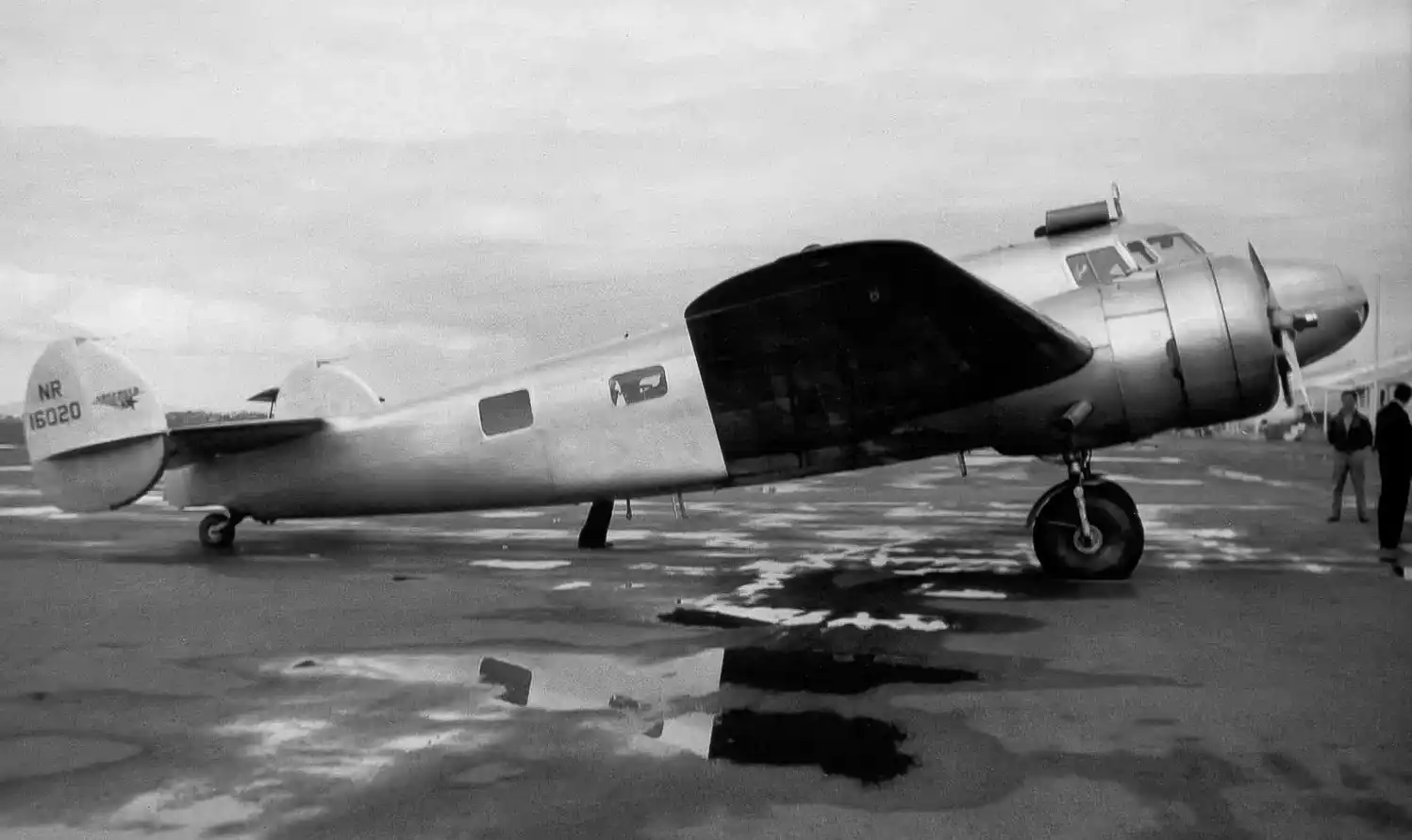
What set this plane apart was its structural modification to accommodate the demanding journey ahead. Instead of traditional passenger seating, the Electra carried extra fuel tanks, effectively boosting its range for the transoceanic segments of the journey. Earhart chose this aircraft for its reliability, speed, and capacity to navigate the treacherous skies of the South Pacific.
A Flight into Mystery: The 1937 Disappearance
On July 2, 1937, Amelia Earhart and navigator Fred Noonan departed Lae, New Guinea, bound for Howland Island — a remote, flat speck in the Pacific Ocean. It was a critical leg of their around-the-world flight, with over 2,500 miles of open water ahead. Despite scheduled radio transmissions, the U.S. Coast Guard cutter Itasca, stationed near Howland, struggled to establish reliable contact. Earhart’s last confirmed transmission was indecipherable, and shortly after, all communication ceased.
The disappearance sparked an unprecedented naval and aerial search, led by the U.S. Navy, covering thousands of square miles. Despite their efforts, no trace of the Electra was found. With fuel likely exhausted, theories emerged: did they crash at sea? Did they miss Howland and land elsewhere? Or were they captured? The mystery only deepened as time passed.
Theories, Clues, and Debris: Has the Plane Been Found?
Over the decades, multiple theories have been proposed. The most enduring is the Nikumaroro Hypothesis — suggesting Earhart and Noonan diverted to Nikumaroro Island, formerly Gardner Island, part of the Phoenix Islands. Supporting this theory is the discovery of artifacts like:
- A woman’s shoe matching 1930s styles
- Aluminum panel fragments possibly from an Electra
- Skeleton fragments possibly belonging to a European woman
One of the more compelling clues surfaced recently: a satellite-visible underwater object near Nikumaroro’s Taraia shoreline — dubbed the “Taraia Object”.
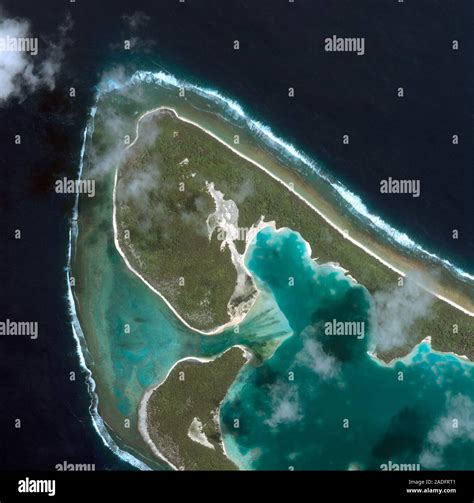
The Purdue Research Foundation, associated with Earhart’s alma mater, Purdue University, has announced an expedition scheduled for November 2025 to investigate the object. If confirmed, it could be the most significant Earhart discovery to date — perhaps even the final resting place of the Lockheed Electra.
Legacy of the Lockheed Electra Beyond Earhart
Though forever tied to Amelia Earhart’s story, the Lockheed Electra 10-E had a wider historical footprint. It served in commercial aviation throughout the late 1930s and became a valuable cargo and military transport plane during World War II. Airlines such as Pan American Airways and Eastern Air Lines operated variants of the Electra.
Its design innovations — including its twin-tail configuration and all-metal fuselage — set the stage for future aircraft developments. The Electra 10-E may have become synonymous with tragedy, but it also represented technological ambition, bridging the gap between the golden age of aviation and the modern era.
Scientific Precision Meets Human Drama
Earhart’s choice of aircraft was never random — it was calculated. She sought an airframe that could balance range, reliability, and performance across multiple continents and hostile weather conditions. Her journey was supported by technical experts, aviation sponsors, and researchers, all drawn into the ambition of breaking barriers.
Her Electra, serial number 1055, was part of a line of only 15 Lockheed 10-E units ever built. Its unique configuration and modifications — such as extra communication equipment and reinforced landing gear — make it easily identifiable should wreckage be conclusively located.
Nikumaroro: The Island That Holds the Truth?
Nikumaroro remains central to the most plausible theory. Located roughly 350 miles southeast of Howland Island, the coral atoll is isolated and treacherous. Researchers have conducted numerous expeditions, combing the reef and its depths with remote-operated submersibles, magnetometers, and sonar scanners. Some expeditions recovered:
- Aircraft-grade aluminum sheeting matching Electra specifications
- A mirror thought to be from a 1930s-era compact
- Small glass jars resembling those used for freckle cream — a personal item known to be carried by Earhart
Despite these intriguing finds, conclusive evidence remains elusive. Yet, the presence of the Taraia Object — and its unmistakable aircraft-like dimensions — may soon change that.
The 2025 Expedition: A Historic Moment Looms
In what may be the most consequential development since 1937, the Purdue Research Foundation aims to deploy cutting-edge sonar and drone technology in the November 2025 mission to Nikumaroro. This expedition will focus on the submerged Taraia Object using submersible cameras, high-resolution 3D mapping, and forensic material sampling. If the wreckage proves to be Earhart’s Lockheed Electra, it would be one of the greatest archaeological finds in aviation history.
It may also offer emotional closure to a mystery that has captured the world’s imagination for generations. For decades, Earhart has symbolized courage, innovation, and defiance of societal limits. Finding her plane would not just solve a mystery — it would cement her legacy as a pioneer who dared the impossible.
Conclusion: The Ghost of the Electra Still Calls
The Lockheed Electra 10-E was more than just a vessel; it was the embodiment of human ambition, entrusted to one of the most fearless aviators in history. Its disappearance transformed a triumph into an eternal question. And now, with modern technology and relentless pursuit, we stand on the brink of possibly solving one of aviation’s greatest enigmas.
Whether buried beneath Nikumaroro’s coral lagoon or scattered by the ocean’s vast hand, the Electra still calls to us. Perhaps soon, we will have an answer.