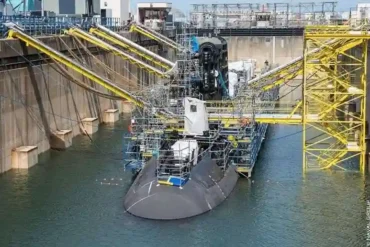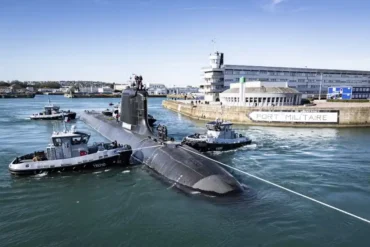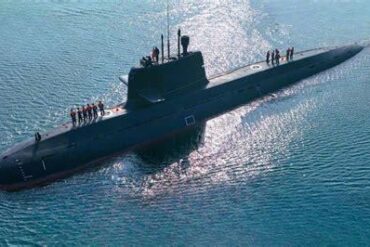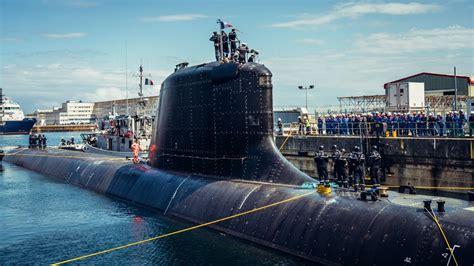
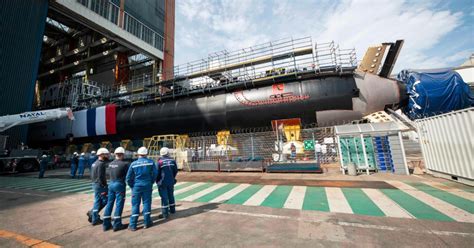
France’s strategic underwater capabilities are set to receive a significant upgrade ahead of schedule. The French Navy may receive the sixth and final Barracuda-class nuclear-powered attack submarine (SSN) in 2029, a full year earlier than previously planned. This marks a crucial step in modernizing France’s naval deterrence posture and maintaining its dominance in European undersea warfare. The early delivery stems from remarkable production efficiencies achieved by Naval Group at its Cherbourg shipyard, a facility critical to France’s defense industrial base.
Background: The Barracuda Program and Its Strategic Context
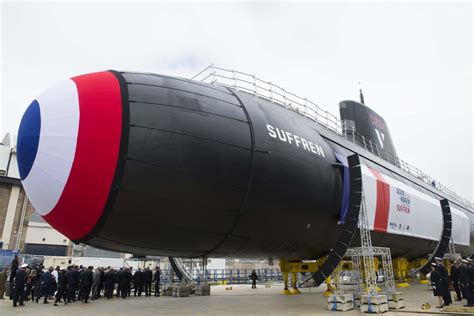
The Barracuda program, officially known as the Suffren class, is the most significant overhaul of the French Navy’s submarine fleet since the Cold War. These new-generation SSNs are designed to replace the aging Rubis-class submarines, which have been in service since the early 1980s. The program’s objective is clear: avoid capability gaps by ensuring seamless transition as the Rubis-class retires.
With enhanced endurance, reduced crew requirements, and improved automation, Barracuda-class submarines are at the forefront of technological sophistication in conventional attack submarine design. These vessels incorporate nuclear propulsion and carry a formidable weapons suite including the MdCN naval cruise missile, which provides long-range precision strike capability from underwater.
Operational Milestones: A Measured Yet Determined Build-Up
The first unit of the class, SNA Suffren, was delivered in November 2020 and officially commissioned in June 2022 after rigorous sea trials. The second boat, Duguay-Trouin, followed in April 2024, and the third, Tourville, was inducted in July 2025 during a high-profile ceremony in Toulon, attended by top defense and political figures.
The momentum continues with De Grasse (S638), the fourth submarine in the class, achieving nuclear reactor start-up (divergence) in December 2025. This crucial phase signals the point of no return in submarine construction, marking the beginning of continuous reactor operation. The divergence was supervised by the French Atomic Energy Commission (CEA), with technical oversight by TechnicAtome, France’s key player in naval reactor design.
Revised Delivery Timeline: An Industrial Success Story
Originally, the final submarine—Casabianca—was expected to be delivered by 2030. However, new planning assumptions from the Ministry of the Armed Forces suggest that the delivery of De Grasse will occur in 2026, followed by Rubis in 2028, and Casabianca as early as 2029.
This compression of the timeline is made possible by:
- Enhanced coordination across the nuclear propulsion supply chain.
- Streamlined production flow at Cherbourg.
- Lessons learned and process refinements from earlier builds.
Such improvements demonstrate the increasing maturity of the Barracuda program, reducing the traditional risks associated with nuclear submarine construction.
Strategic and Operational Implications for France
From a strategic standpoint, early delivery solidifies France’s status as Europe’s premier undersea warfare power. The advanced capabilities of the Suffren class enable sustained and covert presence in key theaters including the Atlantic, Mediterranean, and increasingly, the Indo-Pacific.
Defense Minister Sébastien Lecornu, during the commissioning of Tourville, underscored that Barracuda-class SSNs can remain deployed for twice as long as their Rubis-class predecessors. This endurance is vital for France’s ambitions to maintain a persistent naval footprint across global hotspots. The deployment of these submarines sends a clear signal of deterrence, reinforcing France’s autonomy in strategic decision-making.
The submarines are built to perform a wide spectrum of missions:
- Anti-submarine and anti-surface warfare.
- Covert intelligence collection.
- Special operations deployment.
- Conventional deep-strike missions using MdCN missiles.
Industrial Capability and National Sovereignty
The acceleration of the Barracuda program also boosts France’s defense industrial credibility. In an era where several European naval projects face cost overruns and delivery delays, France’s ability to deliver complex nuclear submarines ahead of schedule sets a powerful precedent.
Naval Group, serving as the prime contractor, showcases its prowess not only in technological innovation but in managing vast, high-stakes defense programs. The synergy between Naval Group, TechnicAtome, and other defense entities ensures that sovereign capabilities remain intact, and that no critical element of submarine production is outsourced beyond France’s control.
This self-reliance aligns with France’s doctrine of strategic autonomy, particularly in the face of evolving global threats and the uncertain reliability of multinational defense dependencies.
Contrast with Broader European Naval Programs
Unlike other European naval programs struggling with budgetary, technical, or political challenges, the Barracuda program has largely avoided disruption. For instance, delays in the German Type 212CD, British Dreadnought-class, and Italian U-212 NFS highlight the rarity of France’s success.
By maintaining discipline in design scope, resource allocation, and stakeholder coordination, the French Ministry of the Armed Forces has created a model of programmatic stability. If the early delivery of Casabianca is confirmed, it would mark a significant exception in European naval procurement trends—a reminder of what can be achieved with clear strategic vision and competent execution.
Conclusion: Strengthening the Backbone of France’s Naval Force
The prospective early delivery of the sixth Barracuda-class submarine is more than a scheduling achievement—it is a reaffirmation of France’s technological, military, and industrial strength in the underwater domain. It ensures the Navy can phase out the Rubis-class without compromising its readiness, while continuing to assert a robust maritime presence in geopolitically contested waters.
At a time when great-power rivalry is reshaping defense postures across Europe and beyond, the Barracuda-class emerges as both a symbol and instrument of French strategic resolve. As naval deterrence becomes more central to national security doctrines, France is positioning itself not just to keep pace—but to lead beneath the waves.