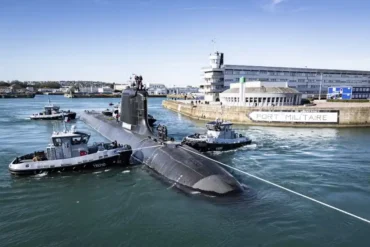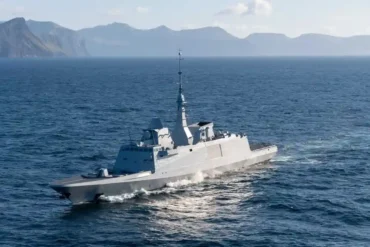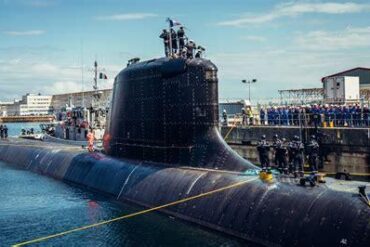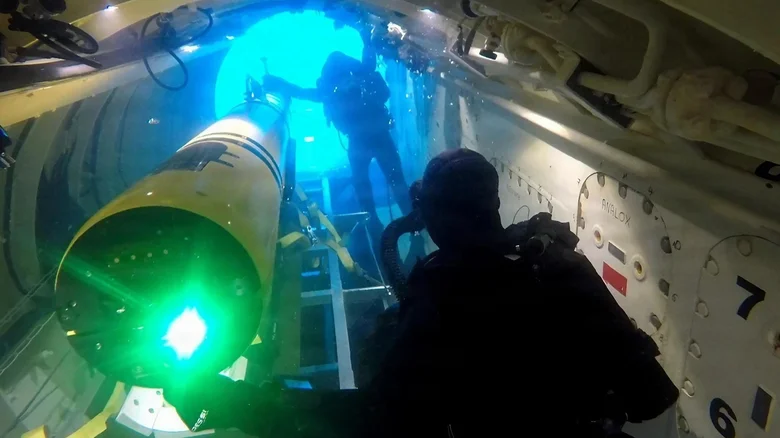
The French Navy has reached a major milestone in underwater warfare technology by successfully launching and recovering an autonomous underwater drone from a nuclear-powered attack submarine while remaining fully submerged. Conducted off the coast of Toulon, France’s primary naval base, the operation demonstrated an unprecedented level of military interoperability between France and the United States, combining advanced submarine engineering with cutting-edge unmanned maritime systems.
This breakthrough marks a turning point in how modern navies deploy unmanned underwater vehicles (UUVs) for surveillance, reconnaissance, and oceanographic missions. The exercise not only proved the operational feasibility of submerged drone recovery but also showcased how allied forces can integrate hardware from different nations into a single, complex mission.
A Complex Operation Beneath the Mediterranean
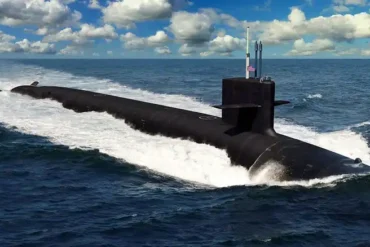
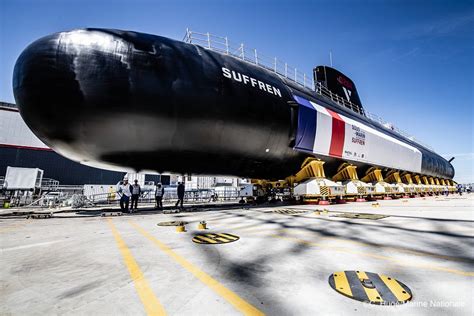
Over several days in March, one of France’s advanced Suffren-class nuclear-powered attack submarines conducted the historic mission. The submarine successfully deployed and later recovered a U.S.-built Razorback autonomous underwater drone, all while remaining beneath the surface.
The Razorback drone resembles a miniature submarine, designed specifically for military missions that demand stealth and endurance. At approximately 3.2 meters long and weighing around 240 kilograms, it is far too large to be casually launched into the ocean. Handling such a device in the confined and pressurized environment of a submerged submarine represents a major logistical and engineering challenge.
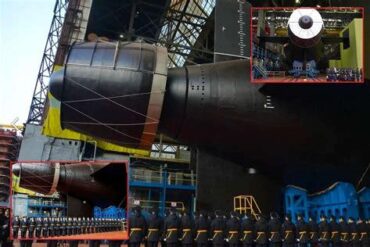
To accomplish this, the submarine utilized a Dry Deck Shelter (DDS) mounted to its stern. Traditionally, these removable modules are used to deploy special operations divers and their equipment. In this mission, however, the compartment was adapted to facilitate the launch and recovery of the Razorback drone.
The operation required remarkable precision. Once deployed, the drone conducted its programmed mission autonomously before navigating back to the submarine’s location. Retrieval then required specialist divers, who carefully guided the vehicle back into the shelter. While technically demanding, the process proved that underwater drone operations can be integrated into submarine missions without requiring the vessel to surface.
Razorback Drone: A Military Evolution of the REMUS 620
The Razorback underwater drone is essentially the military variant of the civilian REMUS 620 autonomous underwater vehicle. Designed for long-duration missions in challenging underwater environments, the platform offers impressive endurance and operational flexibility.
Equipped with advanced sensors and modular payload bays, the drone can support multiple mission profiles, including:
- Underwater reconnaissance and surveillance
- Oceanographic data collection
- Mine detection and seabed mapping
- Environmental monitoring in strategic maritime zones
The drone’s endurance is equally notable. Depending on its payload configuration, it can remain underwater for more than 70 hours, operating at depths reaching approximately 183 meters. This capability enables submarines to extend their sensing range without exposing themselves to detection.
Why Submarine-Launched Drones Are a Strategic Game Changer
Submarines have long been considered the most stealthy platforms in naval warfare. By combining them with autonomous drones, naval forces dramatically expand their operational reach.
A submerged submarine deploying a drone can survey large maritime areas without risking detection. The unmanned vehicle can scout hostile waters, map seabeds, and even search for naval mines before the submarine moves closer.
This technology also introduces an important tactical advantage: risk reduction. Dangerous missions that once required divers or manned vessels can now be performed by autonomous systems.
In addition, the drone’s ability to collect oceanographic data enhances submarine operations. Variables such as water temperature, salinity, and current patterns affect sonar performance. Accurate environmental data helps submarines remain stealthy while improving the effectiveness of their sensors.
Strategic Interoperability Between France and the United States
The success of this mission stems from a collaborative framework established between the French Navy and the U.S. Navy in December 2021. Known as the Strategic Interoperability Framework, the initiative aims to strengthen cooperation during high-end military operations.
Under this agreement, both navies conduct joint experiments designed to test advanced systems under realistic operational conditions. The successful integration of French submarine platforms and American drone technology demonstrates that allied naval forces can seamlessly combine their capabilities in complex missions.
Such cooperation is increasingly vital as maritime security challenges grow more sophisticated. Autonomous systems, advanced sensors, and artificial intelligence are rapidly reshaping naval warfare, and joint development ensures that allied fleets remain technologically aligned.
Submarine Drone Launch Methods: Shelter vs. Torpedo Tubes
While the U.S. Navy has previously launched drones from submarines, the method used by France introduces an important evolution.
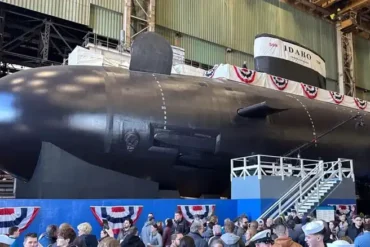
American submarines such as the Virginia-class USS Delaware have tested drone launches through torpedo tubes. Although effective, this approach imposes strict limitations on the size and shape of deployable drones, since the vehicle must fit within the cylindrical tube.
The Dry Deck Shelter method used by the French submarine offers greater flexibility. Larger or differently shaped drones can be deployed without needing to conform to torpedo tube dimensions. However, this flexibility comes with additional complexity, particularly during the recovery phase.
Currently, drones cannot autonomously dock back into the shelter, meaning divers must assist with retrieval. Future technological improvements may eventually enable fully automated recovery systems.
The Future of Autonomous Subsea Warfare
The successful operation off Toulon represents more than a technical demonstration—it signals the future direction of naval strategy. Autonomous underwater systems are becoming central to maritime intelligence, surveillance, reconnaissance, and mine countermeasures.
France is already exploring the development of its own domestically designed underwater drone capable of operating with its submarine fleet. Such a system would allow the French Navy to conduct similar missions without relying on foreign-built hardware.
Meanwhile, the United States is pushing even further by investing in fully autonomous submarine systems, indicating that unmanned vessels may soon play a larger role alongside traditional crewed submarines.
As underwater robotics continue to evolve, the ability to launch and recover drones while remaining submerged will become a defining capability for modern submarine fleets.
A New Chapter in Naval Innovation
The first successful submerged recovery of a naval drone by a French nuclear submarine represents a milestone in both technology and international military cooperation. By proving that complex unmanned systems can be deployed and retrieved without surfacing, the mission expands the tactical possibilities for submarines operating in contested waters.
This achievement demonstrates how the fusion of autonomous robotics, advanced submarine platforms, and allied interoperability is transforming naval warfare. As nations continue to invest in underwater autonomy, the quiet depths of the ocean are rapidly becoming the next frontier of military innovation.