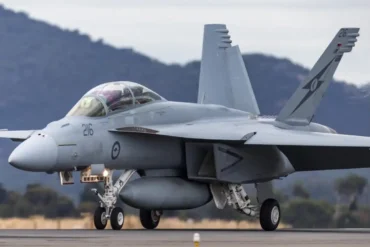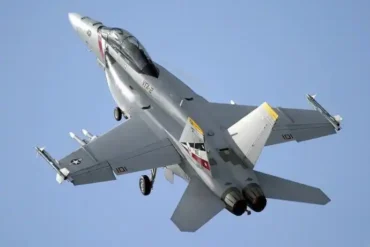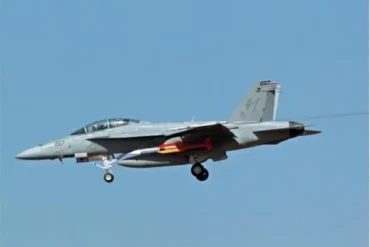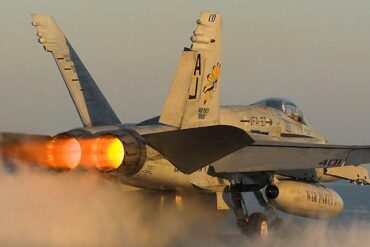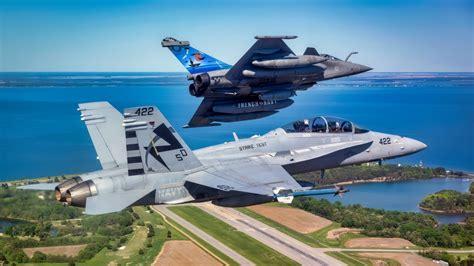
The story of the F/A-18E/F Super Hornet is inseparable from modern American naval power. For more than two decades, it has been the dependable steel backbone of U.S. carrier decks, launching into conflicts, deterrence patrols, and crisis-response missions with industrial regularity. Yet icons rarely fade with a dramatic explosion. They erode quietly, decision by decision, contract by contract. The moment when Dassault’s Rafale reportedly “shot down” the Super Hornet in competitive evaluations did not destroy the jet in combat, but it struck something more fragile: confidence in its future relevance.
This was not merely an aircraft losing a bid. It was a symbolic fracture in Boeing’s last major carrier-based fighter program, occurring as the global fighter market hardened around stealth, networking, and next-generation concepts. What followed was a cascade—industrial, political, and strategic—that now points unmistakably toward the end of an era.
By 2025, the signs were no longer subtle. Northrop Grumman confirmed completion of its final structural components for the Super Hornet, including aft and center fuselages and vertical tails. These are not minor parts; they are the bones of the aircraft. When the bones stop being built, the organism is already terminal. Boeing’s St. Louis production lines are now living on borrowed time, sustained only by a shrinking set of contracts and obligations already inked.
The Super Hornet did not fail because it was weak. It failed because the world moved faster than its upgrade path.
When Competition Became Condemnation
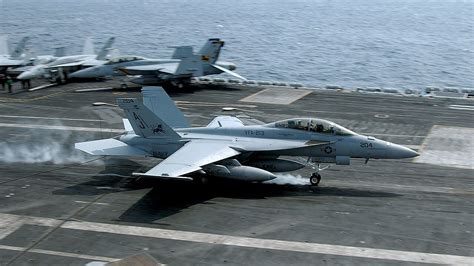
The narrative shorthand—“Rafale shot down the Super Hornet”—captures attention because it compresses a complex reality into a visceral metaphor. In truth, the decisive blow was struck during India’s naval fighter competition, one of the most scrutinized carrier aviation contests of the decade. Boeing had pinned extraordinary hopes on this deal. Winning it would not only have secured a major export customer but also extended the Super Hornet production line well into the late 2020s.
Boeing went all in. The F/A-18 Block III was marketed as a digitally advanced, combat-proven, and carrier-optimized aircraft. The company aligned its pitch with India’s “Make in India” initiative, promising deeper industrial partnerships and technology transfer. The jet underwent exhaustive trials on Indian soil, including ski-jump takeoffs and catapult compatibility tests—no shortcuts, no excuses.
Yet when the decision came, India selected the Rafale-M.
The reasons were operational rather than emotional. The Rafale-M offered better alignment with India’s immediate carrier requirements, superior integration with existing Rafale fleets, and a perception of longer-term growth potential without reliance on a production line already facing closure. That verdict echoed far beyond New Delhi. It sent a signal to other potential buyers: if even an extensively tested, heavily lobbied Super Hornet could not win here, where exactly could it still win?
That question never found a convincing answer.
Boeing’s Shrinking Window and the 2027 Cliff
Boeing officially acknowledged reality in 2023, announcing plans to shutter the Super Hornet production line by late 2025 due to a lack of new customers. A $1.3 billion U.S. Navy contract for 17 Block III aircraft temporarily delayed the inevitable, pushing the projected end date to 2027. This was not a revival; it was a grace period.
By January 2026, Northrop Grumman’s disclosure that it had completed its final lots of Super Hornet structures made the situation irreversible. Subcontractors do not quietly finish final parts unless the end is contractually certain. Production ecosystems are brutally honest. When suppliers stop tooling, the prime contractor is already planning the lights-out ceremony.
Boeing insists, correctly, that the Super Hornet is not disappearing overnight. The Service Life Modification (SLM) program will extend selected airframes from 6,000 to 10,000 flight hours. A $930 million Navy contract ensures upgrades, maintenance, and Block III conversions will continue. Operational relevance, however, is not the same as industrial vitality. The aircraft will fly on, but it will no longer be born.
How the Super Hornet Became a Victim of Its Own Success
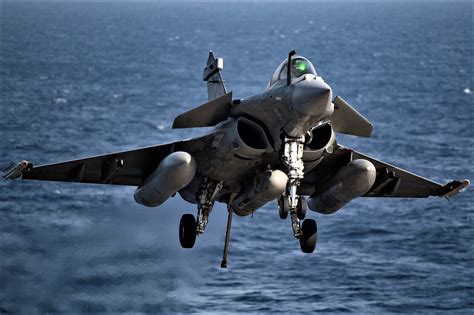
To understand the gravity of this moment, it helps to remember why the Super Hornet existed at all. In the late Cold War and immediate post-Cold War years, the U.S. Navy faced a crisis of capability. The A-6 Intruder was aging into obsolescence. The F-14 Tomcat was magnificent but expensive, maintenance-intensive, and politically vulnerable. The original F/A-18 Hornet lacked the range and payload for deep-strike missions.
Rather than fund an entirely new aircraft in an era of fiscal restraint, McDonnell Douglas proposed something radical yet conservative: a 70 percent larger, extensively redesigned Hornet. The result was the Super Hornet—a jet that could replace multiple platforms, simplify logistics, and dominate the carrier deck through versatility.
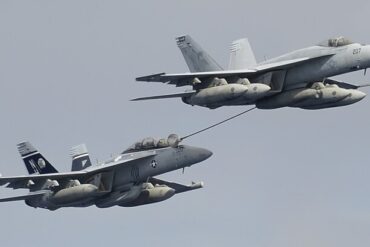
The concept worked spectacularly. The aircraft entered service in 1999 and rapidly absorbed missions once divided among specialized fleets. Fleet defense, strike, tanker support, reconnaissance, suppression of enemy air defenses—the Super Hornet did everything well enough that the Navy stopped demanding perfection in any single role.
That very versatility, however, eventually became a liability. As rivals optimized for specific future paradigms—stealth, sensor fusion, manned-unmanned teaming—the Super Hornet evolved incrementally rather than transformationally.
Block III: Impressive, but Not Enough
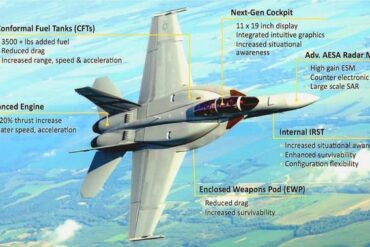
The Block III Super Hornet is a formidable machine. It features an advanced AESA radar, improved networking, enhanced cockpit displays, reduced radar cross-section measures, and the Distributed Targeting Processor-Networked (DTP-N). In isolation, these are serious upgrades. In context, they were fighting the wrong war.
By the early 2020s, procurement decisions were no longer about who had the best fourth-generation-plus fighter. They were about who offered the clearest bridge to the next generation. Lockheed Martin’s F-35C, despite its problems, represented that bridge. Dassault positioned Rafale as a sovereign, adaptable platform with strong growth margins. Saab sold Gripen as cost-effective and digitally agile.
The Super Hornet, meanwhile, carried the burden of its own history. Buyers saw a jet whose production line depended on political extensions, whose future relied on life-extension rather than clean-sheet evolution, and whose manufacturer was already reallocating talent to other programs.
Mark Sears, Boeing’s vice president for fighters, was unusually candid in 2024. International campaigns had failed. There were no active discussions for additional F-18 purchases beyond existing orders. The market had spoken, and it was not whispering.
Northrop’s Signal and the Industrial Endgame
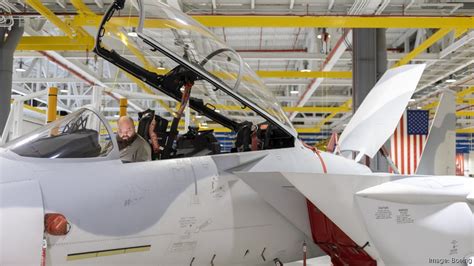
Northrop Grumman’s announcement in early 2026 was more than an earnings call footnote. It was a strategic signal. By completing its final fuselages and tails, Northrop effectively confirmed that the Super Hornet’s supply chain had entered its terminal phase. Aerospace production lines do not restart casually. Once specialized tooling is mothballed and skilled labor redeployed, resurrection becomes economically irrational.
Boeing is already redirecting its St. Louis workforce toward the F-15EX Eagle II, the T-7A Red Hawk, and the MQ-25 Stingray unmanned tanker. Each of these programs reflects a different future: air dominance, training for digital fighters, and unmanned carrier aviation. The Super Hornet, for all its achievements, belongs to yesterday’s compromise.
This industrial shift also intersects with politics. Congress is attempting to revive funding for the F/A-XX program, the Navy’s next-generation carrier fighter. Boeing and Northrop Grumman are expected to compete. In that context, continuing Super Hornet production beyond necessity would dilute focus and resources. Ending it clears the runway—symbolically and literally.
Combat Record That History Will Respect
None of this erases what the Super Hornet has done. Its combat record is extensive and varied. It flew its first combat missions over Iraq in 2002. It became the dominant strike fighter on U.S. carriers throughout the 2000s. It achieved a rare air-to-air kill in Syria by shooting down a Su-22, underscoring that it was never merely a bomb truck.
In recent years, Super Hornets and EA-18G Growlers have been central to operations against Houthi targets in Yemen, employing JDAMs, JSOWs, and Stormbreaker glide bombs with precision. Growlers, derived directly from the Super Hornet airframe, proved indispensable in SEAD missions during sensitive operations in the Caribbean, demonstrating the platform’s enduring electronic warfare value.
Even now, as tensions rise in the Middle East, Super Hornets sit armed on the decks of U.S. carriers, ready to fly. Operationally, the jet remains trusted. Strategically, it has been overtaken.
Rafale’s Symbolic Victory and What It Really Meant
The Rafale did not end the Super Hornet by outperforming it in a dogfight. Its victory was quieter and more consequential. It represented confidence in continuity, an assurance that the chosen platform would not become orphaned mid-service. For India, and for other buyers watching closely, that mattered more than marginal performance metrics.
In that sense, the Rafale “shot down” the Super Hornet not with missiles, but with timing. It arrived when Boeing’s industrial narrative was already fraying, when the U.S. Navy itself was signaling a pivot toward F-35s and future concepts. The contest simply made the underlying reality unavoidable.
The Super Hornet’s sunset is not a failure story. It is a lesson in how fast aerospace relevance can expire when strategic momentum shifts. Icons endure in museums and memory, not on balance sheets.
As production winds down and attention turns to the F/A-XX, the Super Hornet takes its place among the great carrier aircraft of history. Reliable. Adaptable. Hard-working. And ultimately, mortal.