The Dawn of an Aviation Empire: Pan Am’s Origins
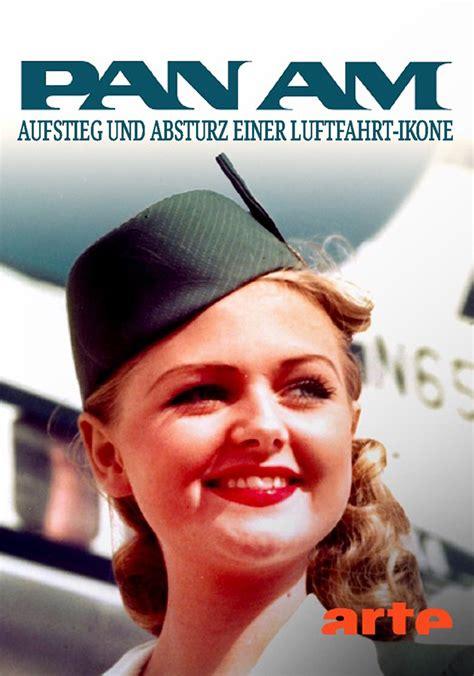
Pan American World Airways, universally known as Pan Am, was not merely an airline; it was a symbol of American ingenuity, a pioneer of international air travel, and for much of the 20th century, the unofficial overseas flag carrier of the United States. Founded on March 14, 1927, as Pan American Airways, its journey from a fledgling mail carrier to a global aviation titan is a story of ambitious vision, technological innovation, and, ultimately, dramatic decline. The airline’s legacy, however, endures, marked by its iconic blue globe logo (affectionately dubbed “The Blue Meatball”), the evocative “Clipper” names adorning its aircraft, and the crisp white caps of its distinguished pilots. Pan Am was the first airline to successfully circumnavigate the globe and played a pivotal role in shaping the modern airline industry, introducing innovations like jumbo jets and computerized reservation systems.
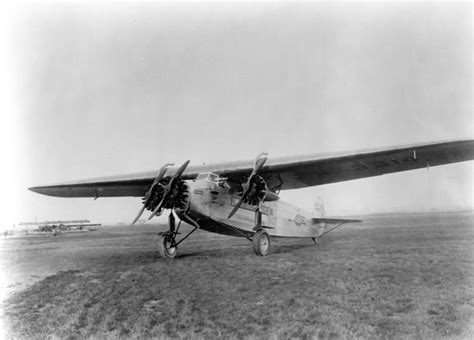
The genesis of Pan Am lay in the strategic concerns of the U.S. military. Army Air Corps officers Major Henry “Hap” Arnold, Carl Spaatz, and John Jouett established a shell company out of apprehension over the expanding influence of SCADTA (Sociedad Colombo-Alemana de Transportes Aéreos), a German-owned Colombian airline. SCADTA, operational since 1920, was actively seeking landing rights in the Panama Canal Zone, a move perceived by the U.S. Air Corps as a potential precursor to a German aerial threat to the vital canal. This geopolitical undercurrent spurred the U.S. Post Office in the spring of 1927 to solicit bids for a contract to deliver mail from Key West, Florida, to Havana, Cuba, with a strict deadline of October 19, 1927. While Arnold and Spaatz developed the prospectus for Pan American, another formidable player, Juan Trippe, entered the scene. Trippe, an ambitious entrepreneur, formed the Aviation Corporation of the Americas (ACA) on June 2, 1927, backed by influential financiers like Cornelius Vanderbilt Whitney and W. Averell Harriman. ACA secured crucial landing rights in Havana by acquiring American International Airways, a small seaplane service. A third entity, Atlantic, Gulf, and Caribbean Airways, founded by investment banker Richard Hoyt, also vied for the contract. Ultimately, the Post Office awarded the mail contract to Pan American Airways, despite its lack of aircraft and Cuban landing rights. In a strategic move just before the deadline, the three companies merged their interests. ACA chartered a Fairchild FC-2 floatplane, enabling Pan Am to operate its inaugural flight to Havana on October 19, 1927. The formal merger occurred on June 23, 1928, with Hoyt as president of ACA, but Trippe and his partners, holding 40% equity, positioned Trippe as the operational head of Pan American Airways, the primary operating subsidiary. The U.S. government, keen to counter SCADTA and establish a strong American presence in international aviation, largely supported Pan Am, effectively designating it as the “chosen instrument” for U.S. foreign air routes and shielding it from domestic competition on these routes.
The Clipper Era: Conquering Oceans with Flying Boats
Under Juan Trippe’s visionary leadership, Pan Am embarked on an ambitious expansion, aiming to connect North America with Central and South America. Throughout the late 1920s and early 1930s, Pan Am strategically acquired several struggling or defunct airlines in the region and skillfully negotiated with postal officials to secure lucrative airmail contracts. A pivotal moment came in September 1929 when Trippe, accompanied by the celebrated aviator Charles Lindbergh, toured Latin America to negotiate landing rights. This tour included critical stops in Colombia, SCADTA’s home territory, and Venezuela. By year’s end, Pan Am was operating flights down the west coast of South America to Peru. A significant consolidation occurred with the forced merger of the New York, Rio, and Buenos Aires Line (NYRBA), which granted Pan Am a seaplane route along South America’s east coast to Buenos Aires and Santiago. NYRBA’s Brazilian subsidiary was subsequently rebranded as Panair do Brasil. Further strengthening its South American presence, Pan Am partnered with the Grace Shipping Company in 1929 to form Pan American-Grace Airways (Panagra). That same year, a controlling stake in Mexicana de Aviación was acquired, extending Pan Am’s reach into Mexico and connecting with its Caribbean network. The company’s holding entity, Aviation Corporation of the Americas, became a highly sought-after stock, and in 1931, it was renamed Pan American Airways Corporation.
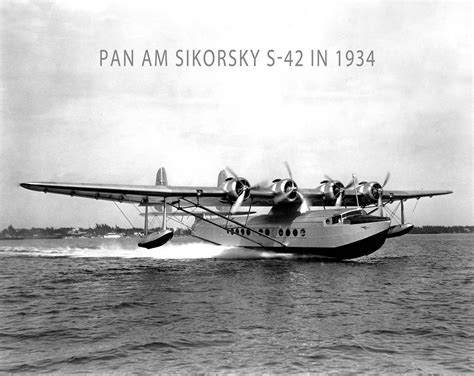
Pan Am’s early South American routes were flown by Consolidated Commodore and Sikorsky S-38 flying boats. The introduction of the larger Sikorsky S-40 in 1931 marked the beginning of the legendary “Clipper” era. These aircraft, bearing names like American Clipper, Southern Clipper, and Caribbean Clipper, became synonymous with Pan Am’s romantic and pioneering spirit. The International Pan American Airport at Dinner Key in Miami served as the bustling hub for these Latin American services. By 1937, Pan Am’s ambitions turned towards Europe. Agreements were forged with Britain and France for seaplane service from Norfolk, Virginia, via Bermuda and the Azores, utilizing Sikorsky S-42s. A joint service with Imperial Airways from Port Washington, New York, to Bermuda commenced in June 1937. Survey flights across the North Atlantic began on July 5, 1937, with a Pan Am S-42, Clipper III, landing in Botwood, Newfoundland, and then Foynes, Ireland. Simultaneously, an Imperial Airways Short Empire flying boat, the Caledonia, made the westbound journey.
Trippe’s grandest vision was the transpacific route, connecting San Francisco to Honolulu, Hong Kong, and Auckland. After securing traffic rights in 1934 for Pearl Harbor, Midway Island, Wake Island, Guam, and Manila, Pan Am undertook a massive logistical operation. In March 1935, the S.S. North Haven, a chartered merchant ship, transported $500,000 worth of aeronautical equipment and construction crews to establish island bases across the Pacific. These crews, including future Pacific operations head Bill Mullahey, cleared lagoons, built hotels, and installed radio navigation equipment. The first survey flight to Honolulu occurred in April 1935 with an S-42. On November 22, 1935, the Martin M-130, famously known as the China Clipper, inaugurated the transpacific airmail service from Alameda, California, to Manila. This 8,000-mile, five-leg journey, completed on November 29, dramatically reduced travel time compared to steamships, from weeks to mere days. The first passenger flight on this route departed on October 21, 1936. A one-way ticket from San Francisco to Manila or Hong Kong in 1937 cost a staggering US$950. For its pioneering transpacific service, Pan Am was awarded the prestigious Collier Trophy in 1937 by President Franklin D. Roosevelt.
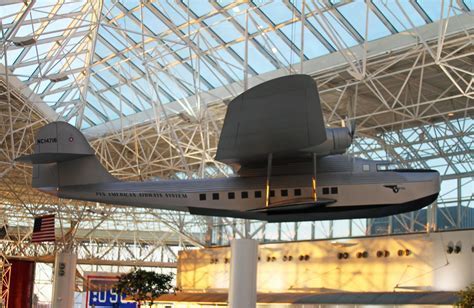
Pan Am also deployed Boeing 314 flying boats on its Pacific routes, allowing passengers in China to connect to domestic flights via the Pan Am-operated China National Aviation Corporation (CNAC). By 1941, Pan Am extended its service to Singapore. The delivery of six large Boeing 314s in early 1939 enabled the commencement of transatlantic passenger flights. On March 30, 1939, the Yankee Clipper, piloted by Harold E. Gray, completed the first-ever transatlantic passenger flight from Baltimore to Horta, Azores, and then to Lisbon. Scheduled weekly contract airmail and passenger services from New York to France and Britain soon followed. The southern route to Marseilles was inaugurated for airmail on May 20, 1939, and for passengers on June 28. The northern route to Southampton began airmail service on June 24, 1939, with passenger service added on July 8. With the outbreak of World War II in September 1939, European services were adjusted, with Foynes, Ireland, becoming a key terminus. During the war, Pan Am flew over 90 million miles supporting military operations. Its Clippers were pressed into military service, and a new subsidiary pioneered a vital military supply route across the Atlantic from Brazil to West Africa. In January 1942, the Pacific Clipper completed the first circumnavigation of the globe by a commercial airliner. A year later, in January 1943, President Franklin D. Roosevelt became the first U.S. president to fly abroad, aboard the Dixie Clipper. The era also saw future Star Trek creator Gene Roddenberry serve as a Clipper pilot. The iconic Irish coffee is said to have been first served to waiting Pan Am passengers in Foynes in 1942.
Post-War Expansion and the Dawn of a New Era
The post-war landscape brought significant changes. Pan Am, no longer enjoying the near-monopoly of pre-war days, faced mounting competition. The Civil Aeronautics Board (CAB) adopted a new policy promoting competition on international routes. American Export Airlines, TWA, Braniff, United, and Northwest Orient emerged as rivals on various global sectors. Pan Am countered by modernizing its fleet. Douglas DC-4s initiated regular landplane flights across the Atlantic in October 1945. To compete with TWA’s forthcoming Lockheed Constellations, Pan Am ordered its own fleet of Lockheed L-049 Constellations, commencing transatlantic service on January 14, 1946, narrowly beating TWA. The airline also introduced Convair 240s for shorter routes and acquired Curtiss C-46s for its freight network. Transpacific flights beyond Hawaii resumed with DC-4s, later supplemented by Boeing 377 Stratocruisers, whose double-deck fuselage and lower-deck lounge offered a new level of luxury. “Super Stratocruisers” with extended range appeared on transatlantic routes in November 1954.
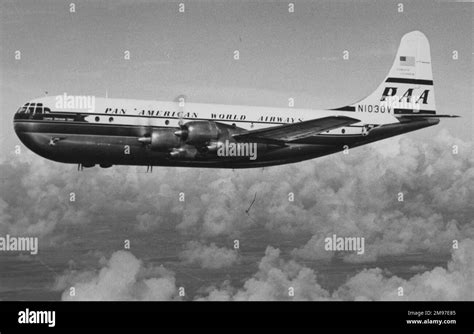
In June 1947, Pan Am launched the first scheduled round-the-world airline flight. Initially a multi-aircraft journey, the service connected San Francisco with New York via destinations like Honolulu, Manila, Bangkok, Calcutta, Karachi, Istanbul, and London. This remarkable service became a symbol of Pan Am’s global reach. In January 1950, Pan American Airways Corporation officially became Pan American World Airways, Inc., a name it had already started using in 1943. A significant strategic move was the acquisition of American Overseas Airlines (AOA) from American Airlines in September 1950 for $17.45 million. Following this, Pan Am ordered 45 Douglas DC-6Bs. The Clipper Liberty Bell, a DC-6B, inaugurated Pan Am’s all-tourist class Rainbow service between New York and London on May 1, 1952, complementing the first-class President Stratocruiser service. From June 1954, DC-6Bs also began operating Pan Am’s Internal German Services (IGS). The Douglas DC-7C “Seven Seas” was introduced on transatlantic routes in summer 1956, offering nonstop capabilities that kept Pan Am competitive until BOAC introduced the faster Bristol Britannia turboprop in late 1957.
Leading the World into the Jet Age
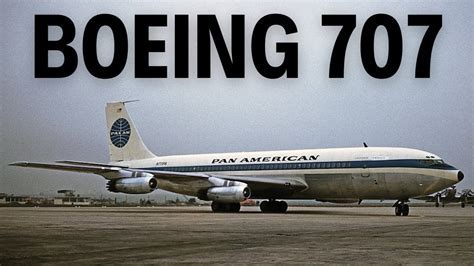
Pan Am once again demonstrated its pioneering spirit by leading the airline industry into the Jet Age. While it considered the British De Havilland Comet, the world’s first jetliner, Pan Am ultimately became the launch customer for the Boeing 707 in 1955, placing an order for 20 aircraft. The first scheduled jet flight operated by Pan Am took place on October 26, 1958, with a Boeing 707-121, Clipper America (N711PA), flying from New York Idlewild to Paris Le Bourget, with a refueling stop in Gander, Newfoundland. This flight carried 111 passengers and heralded a new era of speed and comfort in air travel. Pan Am also ordered 25 Douglas DC-8s. The introduction of the improved Boeing 707-320 “Intercontinental” in 1959-60, along with the DC-8s, enabled nonstop transatlantic crossings with viable payloads in both directions. While the DC-8s were phased out by 1970, the Boeing 707, with Pan Am eventually operating 120 of the -320 Intercontinental variant, became the backbone of its fleet until the arrival of the next generation of jetliners.
The Jumbo Jet Revolution and Technological Advancements
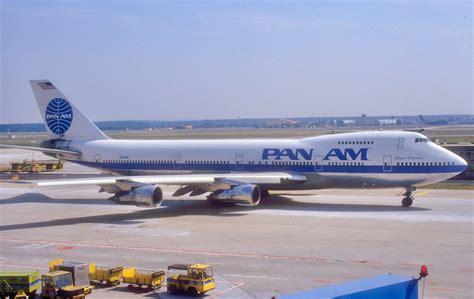
Pan Am continued its tradition of fleet innovation by becoming the launch customer for the Boeing 747. In April 1966, the airline placed a monumental $525 million order for 25 of these “jumbo jets.” On January 15, 1970, First Lady Pat Nixon christened the Pan Am Boeing 747 Clipper Young America at Washington Dulles International Airport. The inaugural 747 service from New York John F. Kennedy to London Heathrow took place on the evening of January 21, 1970. Although the scheduled Clipper Young America experienced an engine issue, Clipper Victor (later tragically involved in the Tenerife disaster) was substituted for the historic flight. The Boeing 747 revolutionized air travel, allowing Pan Am to carry significantly more passengers over longer distances. In 1970 alone, Pan Am transported 11 million passengers over 20 billion miles, firmly establishing the era of widebody air travel.
Pan Am was also forward-thinking regarding supersonic travel, being one of the first three airlines to sign options for the Aérospatiale-BAC Concorde. However, like most other airlines (except BOAC and Air France), it did not ultimately purchase the supersonic jet. It was also the first U.S. airline to reserve delivery positions for the Boeing 2707, the American supersonic transport (SST) project, which was later canceled by Congress in 1971. Beyond aircraft, Pan Am invested in cutting-edge technology. In 1964, it commissioned IBM to build PANAMAC, a massive computer system for booking airline and hotel reservations. This system, housed in the Pan Am Building in New York City (for a time the world’s largest commercial office building), also stored extensive data on destinations, airports, and services. The airline also constructed the iconic Worldport terminal at John F. Kennedy International Airport. Distinguished by its elliptical, four-acre roof, the terminal was designed for aircraft to park their noses under the overhang, allowing passengers to board via stairs protected from the elements—a feature later made obsolete by jetbridges. The Worldport, a symbol of Pan Am’s prestige, was transferred to Delta Air Lines in 1991 and eventually demolished in 2013.
The Zenith of Pan Am: The World’s Most Experienced Airline
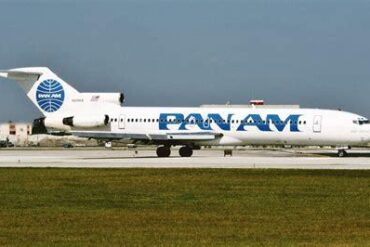
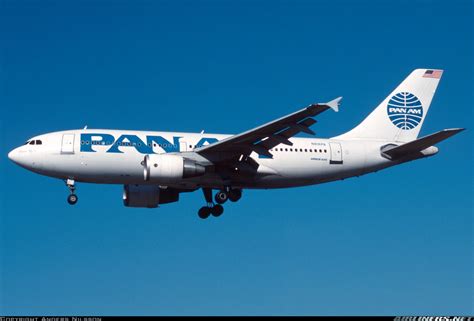
During its peak, from the late 1950s to the early 1970s, Pan Am proudly advertised itself as the “World’s Most Experienced Airline.” This was no idle boast. In 1966, it carried 6.7 million passengers, and by 1968, its fleet of 150 jets served 86 countries across every continent except Antarctica, covering a scheduled route network of 81,410 unduplicated miles. The airline was highly profitable, with cash reserves totaling $1 billion. Its primary routes connected New York with Europe and South America, and Miami with the Caribbean. In 1964, Pan Am even initiated a helicopter shuttle service in New York City. The jet fleet was diverse, including Boeing 720Bs, 727s (the first to bear “Pan Am” titles rather than “Pan American”), and later, Boeing 737s, 747SPs (capable of nonstop New York-Tokyo flights), Lockheed L-1011 Tristars, McDonnell-Douglas DC-10s, and Airbus A300s and A310s.
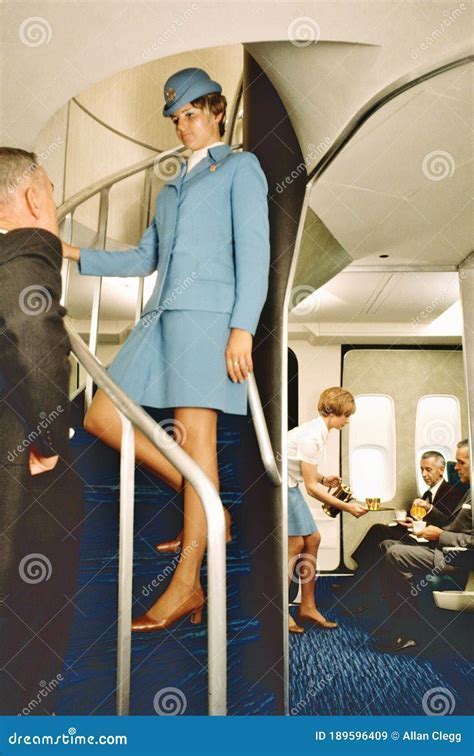
Pan Am’s influence extended beyond passenger transport. It owned the prestigious InterContinental Hotel chain and held a financial interest in the Falcon Jet Corporation. The airline was involved in creating a missile-tracking range in the South Atlantic and operating a nuclear-engine testing laboratory in Nevada. Pan Am also participated in numerous humanitarian flights, underscoring its global presence and responsibility. The airline was renowned for its modern fleet, innovative cabin design, and highly experienced crews. Cabin staff were often multilingual college graduates, frequently with nursing training, hired from around the world. Onboard service and cuisine, inspired by Maxim’s de Paris, were delivered with a level of personal flair that set a benchmark in the industry.
A unique and significant part of Pan Am’s operations was its Internal German Services (IGS). From 1950 until 1990, Pan Am operated a comprehensive network of high-frequency, short-haul flights between West Germany and West Berlin. This was a consequence of post-World War II agreements that restricted German airlines from operating into Berlin, limiting access to carriers from the Allied powers (U.S., UK, France). Pan Am utilized Douglas DC-4s, then DC-6Bs, and finally Boeing 727s from 1966 on these routes. These aircraft had to fly through narrow air corridors over East German territory at a maximum altitude of 10,000 feet. For many years, Pan Am’s West Berlin operation at Berlin Tempelhof Airport handled more passengers than any other airport in its system, consistently accounting for over half of West Berlin’s total commercial air traffic. The airline maintained a Berlin crew base primarily staffed by German flight attendants and American pilots.
Gathering Clouds: The Onset of Pan Am’s Decline
The early 1970s marked a turning point. Pan Am had heavily invested in a large fleet of Boeing 747s, anticipating continued growth in air travel. However, the introduction of these wide-bodies by Pan Am and its competitors coincided with an economic slowdown. The 1973 oil crisis exacerbated the problem, leading to sharply reduced air travel and severe overcapacity. Pan Am, with its high overheads from a vast, decentralized infrastructure and a fleet containing many older, less fuel-efficient narrow-bodied aircraft, was particularly vulnerable. Skyrocketing fuel prices dramatically increased operating costs. Furthermore, federal route awards to other airlines, such as in the Transpacific Route Case, eroded Pan Am’s passenger numbers and profit margins. By 1976, Pan Am had accumulated $364 million in losses over a decade, and its debt neared $1 billion, pushing the airline towards bankruptcy. William T. Seawell, who replaced Najeeb Halaby as Pan Am president in 1972, implemented a turnaround strategy involving network trimming, workforce reduction, wage cuts, and fleet resizing. These measures, aided by tax-loss credits, allowed Pan Am to return to profitability briefly in 1977.
Juan Trippe had long desired domestic routes for Pan Am. However, the CAB, wary of Pan Am’s potential to monopolize U.S. air routes, repeatedly denied it permission to operate domestically, either through organic growth or merger. The Airline Deregulation Act of 1978 fundamentally altered the competitive landscape, allowing more U.S. domestic airlines to compete with Pan Am internationally. To finally gain a domestic network, Pan Am, under Seawell, acquired National Airlines in 1979 after a bidding war with Texas International. The $437 million acquisition, completed in January 1980, further strained Pan Am’s already burdened balance sheet. The merger proved problematic: National’s north-south route structure provided insufficient feed for Pan Am’s key transatlantic and transpacific gateways, the fleets were incompatible (except for the Boeing 727), corporate cultures clashed, and labor costs increased due to pay scale harmonization. While revenues rose, fuel costs from the merger skyrocketed by 157% amidst a weak economy.
Desperate Measures: Asset Sales and Restructuring
As Pan Am’s financial situation worsened in 1980, Seawell initiated the sale of non-core assets. The airline’s 50% interest in Falcon Jet Corporation was sold in August, followed by the sale of the iconic Pan Am Building to Metropolitan Life Insurance Company for $400 million in November. In September 1981, the InterContinental hotel chain was sold. C. Edward Acker, former president of Air Florida, replaced Seawell in 1981 and continued the asset disposal program. The combined sale of InterContinental and the Falcon Jet stake amounted to $500 million. Acker also implemented operational cutbacks, most notably discontinuing the round-the-world service in October 1982 by ceasing flights between Delhi, Bangkok, and Hong Kong. Despite the precarious finances, Acker ordered new Airbus A300s, A310s, and A320s in 1984, hoping these advanced aircraft would improve competitiveness. The A310s began replacing 727s on IGS routes and A300s were deployed in the Caribbean in 1985. Longer-range A310s later served some transatlantic routes. However, the decision not to take delivery of the A320s, selling their positions to Braniff, meant many short-haul routes continued to be operated by aging 727s.
In a devastating blow to its global network, Pan Am sold its entire Pacific Division to United Airlines in April 1985 for $750 million. This sale included 25% of its route system, its major hub at Tokyo-Narita, and its Pratt & Whitney JT9D-powered 747SPs, Rolls-Royce RB211-powered L-1011-500s, and the General Electric CF6-powered DC-10s inherited from National. This move aimed to address fleet incompatibility and raise desperately needed cash. To bolster domestic feed, Pan Am contracted regional airlines under the Pan Am Express branding and acquired commuter airline Ransome Airlines in 1987. In a parallel move, Pan Am purchased New York Air’s shuttle service between Boston, New York, and Washington, D.C., rebranding it as the Pan Am Shuttle in October 1986, operating from LaGuardia Airport’s Marine Air Terminal. However, these efforts did not sufficiently address the lack of a robust domestic feeder network.
The Final Descent: Tragedy and Bankruptcy
Thomas G. Plaskett, a former American Airlines and Continental executive, became president in January 1988. While efforts to refurbish aircraft and improve on-time performance showed promise (the third quarter of 1988 was Pan Am’s most profitable ever), disaster struck on December 21, 1988. The terrorist bombing of Pan Am Flight 103 over Lockerbie, Scotland, resulted in 270 fatalities and sent shockwaves through the company and the world. The airline faced a $300 million lawsuit from victims’ families and suffered immense reputational damage. The FAA also fined Pan Am for numerous security failures that year.

In June 1989, Plaskett made a final, desperate attempt to create a strong domestic network by launching a $2.7 billion takeover bid for Northwest Airlines. This merger was envisioned to re-establish a significant transpacific presence and generate substantial annual savings. However, financier Al Checchi outbid Pan Am. The 1990-91 Persian Gulf War, triggered by Iraq’s invasion of Kuwait, caused fuel prices to soar and severely depressed global air travel demand. This was another crushing blow to the already reeling Pan Am. To raise cash, Pan Am sold its coveted London Heathrow routes and its IGS routes to Berlin (to Lufthansa for $150 million) to United Airlines, leaving it with only two daily London flights via Gatwick. These sales, totaling around $1.2 billion, were accompanied by 2,500 job cuts.
On January 8, 1991, Pan Am was forced to file for bankruptcy protection. Delta Air Lines emerged as a buyer for Pan Am’s remaining profitable assets, including most European routes, the Frankfurt mini-hub, the Shuttle operation, 45 jets, and the Worldport at JFK, for $416 million. Delta also injected $100 million to become a 45% owner of a reorganized, much smaller Pan Am, intended to serve the Caribbean, Central, and South America from a Miami hub. The Pan Am Shuttle service was taken over by Delta in September 1991, followed by most remaining transatlantic traffic rights in November. Former Douglas Aircraft executive Russell Ray Jr. was hired as Pan Am’s new president and CEO in October 1991, and headquarters were relocated to Miami. The new, smaller Pan Am relaunched on November 1, 1991, but continued to sustain heavy losses, reportedly $3 million a day. Delta, citing these losses, decided against a final $25 million payment. On December 3, 1991, Pan Am’s creditors advised the bankruptcy judge that they could not secure further investment. The following morning, December 4, 1991, Pan Am ceased all operations. The last scheduled flight was Pan Am Flight 436 from Bridgetown, Barbados, to Miami, operated by a Boeing 727-200, Clipper Goodwill. Approximately 7,500 employees lost their jobs, marking the end of an era for what was once the world’s most glamorous airline. The collapse was attributed to a confluence of factors: corporate mismanagement after Trippe, government indifference to protecting its prime international carrier, flawed regulatory policy, increased competition, high operating costs, and the devastating impact of the Lockerbie bombing and the Gulf War.
Pan Am’s Enduring Legacy and Cultural Impact
Despite its demise, Pan Am’s brand and contributions to aviation remain deeply ingrained in popular culture and industry history. The Pan Am International Flight Academy in Miami, originally the airline’s training center, is the only surviving division of the original company and continues to train pilots. The Pan Am name and imagery have been resurrected several times by new, unrelated airline ventures, though none achieved the stature of the original. In 1998, Guilford Transportation Industries purchased the Pan Am name and operated Pan Am Railways until its acquisition by CSX Corporation in 2022.
Pan Am held a unique position in 20th-century culture. It was famously the airline that brought The Beatles to New York in 1964. The airline featured prominently in Stanley Kubrick’s 1968 film 2001: A Space Odyssey, with its futuristic “Space Clipper.” It also appeared in several James Bond films. The term “Pan Am Smile” entered popular psychology to describe a perfunctory, insincere smile. More recently, the airline was the subject of the ABC television series Pan Am (2011-2012), which romanticized the lives of its 1960s flight crews. The airline’s distinctive blue globe logo, its “Clipper” aircraft, and the image of its sophisticated flight crews continue to evoke an era of glamour and adventure in air travel.

A Diverse Fleet Spanning Decades
Over its 64-year history, Pan Am operated a vast and varied fleet, reflecting the rapid advancements in aviation technology. Here’s a summary of key aircraft types:
- Flying Boats: Consolidated Commodore, Sikorsky S-36, S-38, S-40, S-42, S-43 “Baby Clipper”, Martin M-130 “China Clipper”, Boeing 314 “Clipper”
- Early Propeller Aircraft: Fokker F.VIIa/3m, Fokker F-10A, Ford Trimotor, Fairchild FC-2, Lockheed Model 10 Electra, Douglas DC-2, DC-3, DC-4
- Advanced Propeller Aircraft: Boeing 307 Stratoliner, Lockheed L-049 Constellation, L-749 Constellation, Boeing 377 Stratocruiser, Douglas DC-6, DC-7
- Early Jet Aircraft: De Havilland Comet (considered but not purchased), Boeing 707 (launch customer), Douglas DC-8, Boeing 720B
- Workhorse Jets: Boeing 727-100/200, Boeing 737-200
- Widebody Jets: Boeing 747-100/200/SP (launch customer for 747 and 747SP), Lockheed L-1011 TriStar, McDonnell Douglas DC-10
- Airbus Aircraft: Airbus A300B4, Airbus A310-200/300
- Pan Am Express Commuters: ATR 42, de Havilland Canada Dash 7, BAe Jetstream 31
At the time of its collapse, Pan Am’s fleet had been significantly reduced, but in March 1990, it still comprised a mix of Airbus A300s and A310s, Boeing 727s, 737s, and the iconic 747s, while Pan Am Express operated turboprops.
A Global Reach: Pan Am’s Destinations
At its zenith in the late 1960s and early 1970s, Pan Am served an extensive global network, connecting major cities across six continents. Its routes spanned from bustling metropolises in Europe, Asia, and South America to remote islands in the Pacific. Key hubs included New York (JFK’s Worldport), Miami, London, Frankfurt, and Tokyo. The airline’s timetables listed an impressive array of destinations, truly embodying its slogan as the “World’s Most Experienced Airline.” Some of the many destinations served at its peak included:
- North America: New York, Los Angeles, San Francisco, Miami, Chicago, Washington D.C., Honolulu, Mexico City, various Caribbean islands.
- South America: Buenos Aires, Rio de Janeiro, Caracas, Lima, Santiago, Bogotá.
- Europe: London, Paris, Frankfurt, Rome, Amsterdam, Moscow, Berlin, Madrid, Lisbon.
- Asia: Tokyo, Hong Kong, Bangkok, Singapore, Manila, Delhi, Mumbai, Beijing, Seoul, Jakarta.
- Africa: Johannesburg, Nairobi, Lagos, Accra, Dakar.
- Oceania: Sydney, Auckland, Nadi (Fiji), Papeete (Tahiti).
Pan American World Airways, despite its eventual grounding, remains a towering figure in aviation history. It pioneered international routes, introduced new aircraft technologies, and set a standard for global air travel that captivated the world for decades. Its story is a compelling saga of ambition, innovation, glamour, and, ultimately, a poignant reminder of the volatile nature of the airline industry.