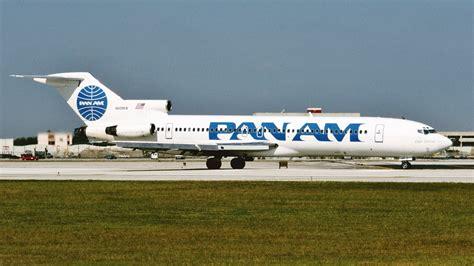
For much of the 20th century, Pan American World Airways was more than an airline. It was the airborne face of the United States, a company that projected glamour, technological confidence, and international ambition across every continent it touched. Long before global aviation became routine, Pan Am made the world feel connected. Its aircraft carried diplomats, celebrities, business leaders, immigrants, and tourists through an era when flying overseas still felt extraordinary.
By the time the airline disappeared on December 4, 1991, Pan Am had become both a victim of its own scale and a casualty of a rapidly changing industry. Rising fuel prices, deregulation, mounting debt, and catastrophic external shocks combined to destroy one of the most recognizable brands in aviation history. Thirty-five years later, the collapse of Pan Am still stands as one of the most dramatic corporate downfalls ever seen in commercial aviation.
The story of Pan Am is not merely about an airline that failed. It is the story of how modern international travel was invented, commercialized, and transformed into a global system that millions now take for granted.
The Birth of America’s Global Airline
Pan American World Airways began modestly in 1927 as a small carrier operating mail routes between Florida and Cuba. Yet under the leadership of visionary entrepreneur Juan Trippe, the airline quickly evolved into something radically larger. At a time when most American airlines focused almost entirely on domestic routes, Pan Am pursued international expansion with relentless ambition.
Trippe understood something before almost anyone else in aviation: the future of air travel would not stop at national borders. The airline aggressively expanded throughout Latin America during the late 1920s and 1930s, establishing routes that connected the United States to the Caribbean, Central America, and South America.
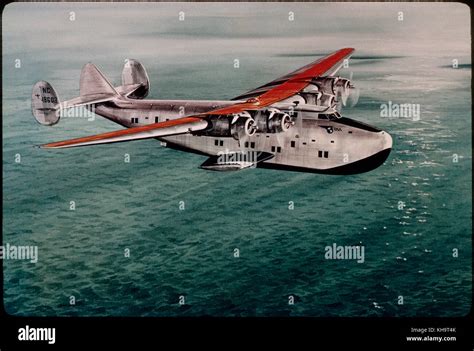
Unlike today’s aviation environment, long-distance flying during that era faced enormous infrastructure challenges. Many destinations lacked suitable runways for conventional aircraft. Pan Am solved this problem with flying boats known as Clippers, enormous seaplanes manufactured by companies such as Sikorsky, Martin, and Boeing. These aircraft could land on water, effectively turning oceans and harbors into international airports.
The Clippers became symbols of sophistication and adventure. Wealthy travelers crossed oceans in luxurious cabins while Pan Am steadily expanded its global influence. The airline did not simply transport passengers; it helped create the very idea of international commercial aviation.
As geopolitical tensions increased before World War II, Pan Am also gained strategic importance for the United States government. Its overseas networks and operational expertise became critical national assets. By the mid-20th century, Pan Am had become the closest thing America had to an official flag carrier.
Its globe logo soon became universally recognizable. In foreign capitals, seeing a Pan Am aircraft on the tarmac often symbolized the arrival of American business, tourism, and cultural influence.
How Pan Am Defined the Jet Age
Pan Am’s greatest strength was its ability to embrace technological change faster than competitors. While many airlines hesitated over the cost of jet aircraft, Pan Am moved aggressively into the future.
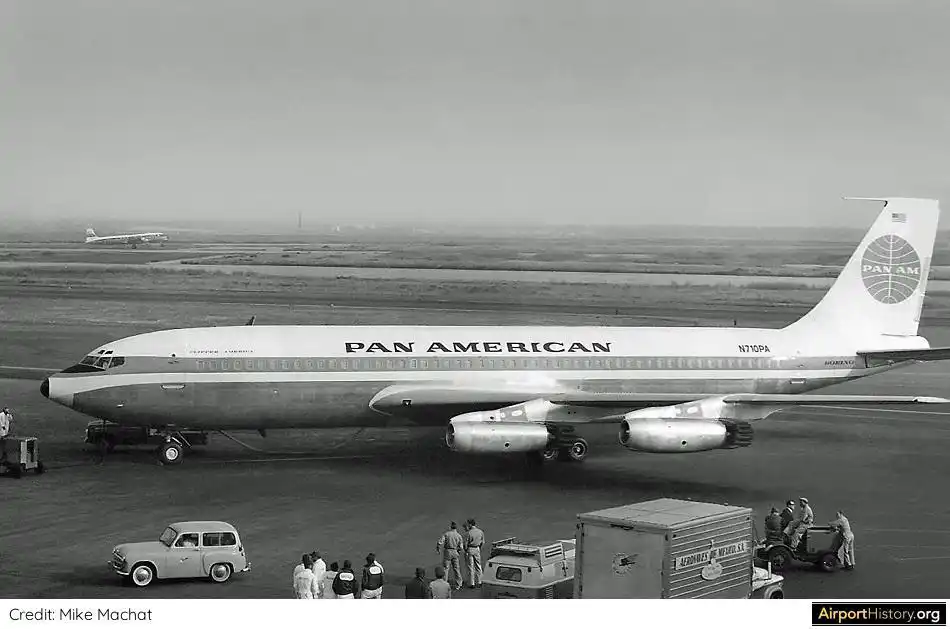
The airline became one of the launch customers for the Boeing 707, helping introduce the jet age to mainstream commercial travel during the late 1950s. Suddenly, crossing the Atlantic no longer required exhausting propeller-driven journeys. Flights became faster, smoother, and dramatically more accessible.
Pan Am’s adoption of jet technology transformed international aviation economics. Travel times shrank, passenger demand surged, and the airline became synonymous with modernity itself.
During the 1960s, Pan Am expanded at breathtaking speed. It connected New York to London, Paris, Rome, Tokyo, Hong Kong, and countless other destinations. The airline’s route map represented an airborne network spanning the globe.
By 1968, Pan Am operated flights to 86 countries and maintained one of the largest jet fleets in the world. Its operations stretched across more than 81,000 miles of scheduled routes. Few corporations anywhere possessed such an international footprint.
The airline cultivated a uniquely glamorous identity. Uniformed flight attendants, elegant ticket offices, premium lounges, and sophisticated advertising campaigns created an aura of prestige. Flying Pan Am became part of the travel experience itself.
Passengers were not merely purchasing transportation. They were buying entry into the glamorous world of international aviation.
Pan Am also became inseparable from the Boeing 747 revolution. On January 22, 1970, the airline launched the first commercial Boeing 747 service, introducing passengers to widebody travel on an unprecedented scale.
The massive aircraft changed global aviation permanently. Airfares gradually became more affordable, international tourism exploded, and flying overseas evolved from a luxury into an attainable experience for millions.
Pan Am stood at the center of that transformation.
The Golden Years of Pan Am
The late 1960s and early 1970s represented the peak of Pan Am’s influence and profitability. During this period, the airline appeared unstoppable.
Its blue globe logo became one of the most recognizable corporate symbols in the world. Pan Am advertisements portrayed international travel as sophisticated, cosmopolitan, and aspirational. The carrier branded itself as “The World’s Most Experienced Airline,” and the slogan felt justified.
Millions of passengers traveled aboard Pan Am aircraft every year. The airline dominated high-profile transatlantic corridors linking New York with Europe while simultaneously maintaining extensive operations throughout Latin America and Asia.
At its peak, Pan Am represented the optimism of postwar globalization. It symbolized a future where continents felt increasingly connected and where aviation would continue shrinking the world.
The airline’s innovation extended beyond long-haul routes. Pan Am experimented with helicopter transfers linking Manhattan to New York airports, attempting to streamline the entire travel experience for premium customers.
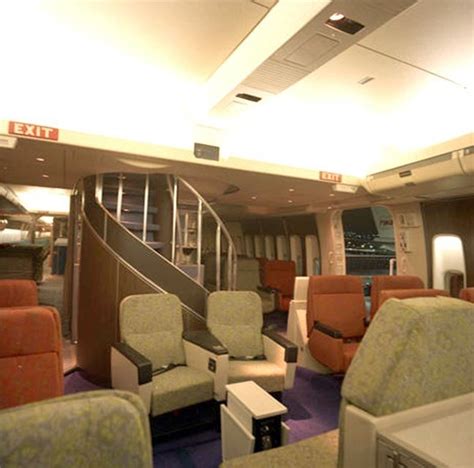
Inside its aircraft, passengers encountered spacious cabins, multilingual crews, refined onboard dining, and service standards that many competitors struggled to match.
Pan Am was not simply responding to aviation trends. In many ways, it created them.
Yet beneath the glamorous exterior, structural weaknesses were quietly developing.
Deregulation Exposed Pan Am’s Biggest Weakness
Pan Am’s business model depended heavily on international traffic. For decades, this specialization worked brilliantly because international routes were tightly regulated and competition remained limited.
However, the airline lacked something increasingly vital in the modern aviation marketplace: a large domestic feeder network.
When the United States deregulated the airline industry in 1978, competition intensified dramatically. Airlines with extensive domestic operations could funnel passengers from smaller American cities into profitable international hubs.
Pan Am could not do this effectively.
Competitors such as American Airlines, United Airlines, and Delta Air Lines possessed massive domestic networks feeding passengers directly into long-haul international flights. Pan Am relied heavily on partnerships and connecting agreements, leaving it strategically vulnerable.
This weakness became impossible to ignore.
In 1980, Pan Am attempted to solve the problem by purchasing National Airlines. The acquisition gave Pan Am access to domestic routes, but the deal proved disastrous financially and operationally.
The integration process became chaotic. Different fleets, incompatible systems, labor disputes, and rising debt burdens created enormous pressure on the airline’s finances.
Instead of strengthening Pan Am, the acquisition accelerated its decline.
Oil Crises and Financial Turbulence
The airline industry entered an increasingly volatile period during the 1970s and 1980s. Fuel prices surged following the oil shocks of 1973 and 1979, severely damaging airlines with large international fleets.
Pan Am’s operating costs skyrocketed.
Long-haul aircraft consumed vast quantities of fuel, and the airline’s premium service model carried high overhead expenses. Maintaining overseas stations, international staffing, and worldwide infrastructure required enormous capital.
At the same time, economic recessions caused fluctuations in travel demand. International passenger traffic became less predictable, leaving Pan Am exposed to severe revenue swings.
The company increasingly relied on asset sales to survive.
Routes, aircraft, airport facilities, and valuable real estate were gradually sold off to raise cash. While these transactions provided short-term financial relief, they weakened the airline’s long-term competitiveness.
Pan Am essentially began dismantling itself piece by piece.
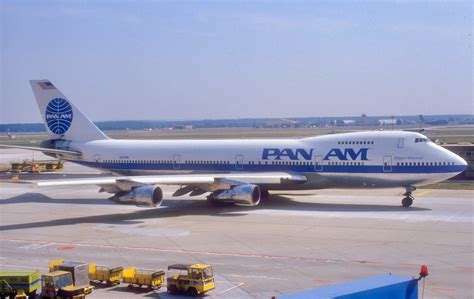
The carrier’s shrinking network reduced its strategic flexibility. Every major disruption became harder to absorb, and management struggled to stabilize the business.
The once-dominant airline had entered a dangerous downward spiral.
The Lockerbie Disaster and the Final Collapse
If deregulation and debt weakened Pan Am, the Lockerbie bombing devastated it.
On December 21, 1988, Pan Am Flight 103 exploded over Lockerbie, Scotland, after a terrorist bomb detonated onboard the Boeing 747. All 259 people aboard the aircraft were killed, along with 11 people on the ground.
The tragedy became one of the deadliest terrorist attacks in aviation history.
Beyond the horrifying loss of life, the disaster inflicted catastrophic reputational and financial damage on Pan Am. Public confidence deteriorated rapidly. Security scrutiny intensified. Lawsuits and operational costs mounted.
The airline never truly recovered.
Then came another crisis. Iraq’s invasion of Kuwait in 1990 triggered the Gulf War and caused global fuel prices to surge once again. International travel demand weakened sharply as geopolitical uncertainty spread.
Pan Am’s fragile financial position collapsed under the pressure.
In January 1991, the airline filed for Chapter 11 bankruptcy protection. Management attempted a desperate restructuring plan centered around Miami International Airport.
To raise cash, Pan Am sold critical assets to Delta Air Lines, including major transatlantic routes and the Northeast Shuttle operation. These were among the airline’s most valuable remaining businesses.
For a brief moment, there appeared to be hope that Pan Am might survive as a smaller carrier.
It did not. Losses continued mounting throughout 1991. Financing arrangements unraveled, employee morale deteriorated, and confidence among suppliers and passengers evaporated.
On December 4, 1991, Pan Am officially ceased operations. An airline that once symbolized the future of global aviation disappeared almost overnight.
Thousands of employees lost their jobs. Aircraft were transferred to competitors. Airport facilities changed hands. Routes were absorbed into rival networks. The Pan Am name, once associated with prestige and innovation, vanished from the skies.
Why Pan Am’s Legacy Still Matters Today
Despite its collapse, Pan Am’s influence remains deeply embedded in modern aviation.
The airline helped establish the framework for international air travel that still exists today. Many transatlantic routes operated by major US airlines trace their origins directly back to Pan Am’s pioneering network strategy.
The company also transformed aircraft development. Without Pan Am’s early support, both the Boeing 707 and Boeing 747 might have entered service far more slowly.
Pan Am effectively accelerated the global adoption of jet travel.
Its operational standards shaped the airline industry as well. Training procedures, branding strategies, international service concepts, and premium passenger experiences all reflected innovations that Pan Am popularized decades earlier.
Even the cultural image of international flying owes much to Pan Am’s influence. Vintage posters, globe logos, Clipper imagery, and iconic Boeing 747 photographs continue to evoke nostalgia for the golden age of aviation.
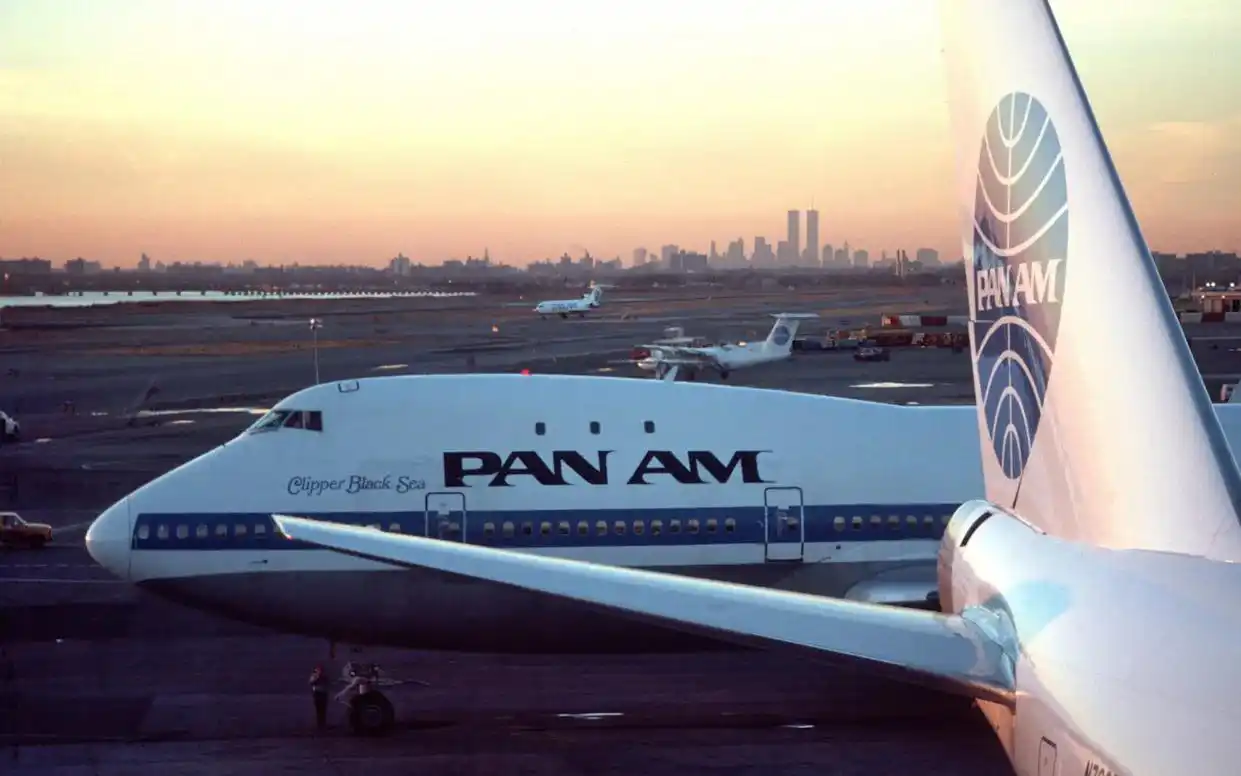
The airline’s collapse also became a cautionary business lesson. Pan Am demonstrated how even globally admired companies can fail when structural weaknesses, debt burdens, and external crises converge simultaneously.
For historians, aviation enthusiasts, and former employees, Pan Am remains more than a defunct airline. It represents an era when flying still carried a sense of wonder and when commercial aviation symbolized limitless possibility.
The Enduring Symbolism of Pan Am
Thirty-five years after its final flight, Pan Am still occupies a unique place in aviation history. Few airlines have ever achieved such cultural significance, and even fewer have collapsed so dramatically.
The company helped shrink the world by making international travel faster, more accessible, and more routine. It pioneered technologies, launched iconic aircraft, and built routes that connected continents long before globalization became a buzzword.
At the same time, Pan Am’s downfall reflected the brutal realities of the airline industry. Prestige and history could not shield the company from deregulation, operational inefficiencies, rising fuel costs, terrorism, and financial instability.
Yet the airline’s disappearance never erased its impact.
Every time passengers board a long-haul flight from the United States to Europe, Asia, or Latin America, they are participating in a global system that Pan Am helped create. The airline may no longer exist physically, but its DNA remains woven throughout international aviation.
That enduring influence explains why Pan Am still fascinates travelers decades after its collapse. It was not merely an airline that disappeared. It was the airline that taught America — and much of the world — how to fly globally.