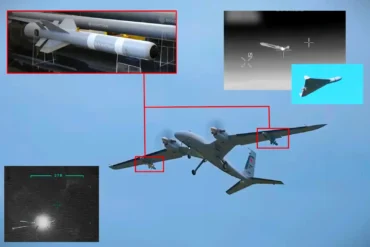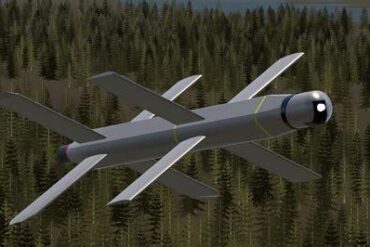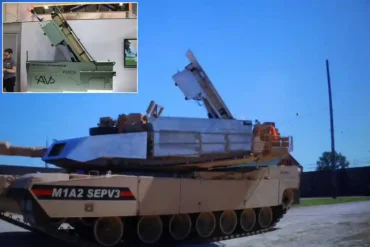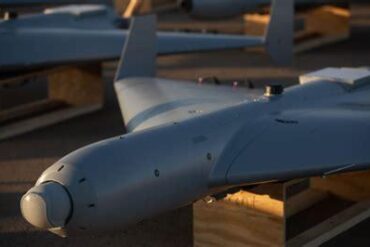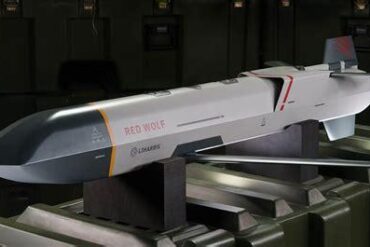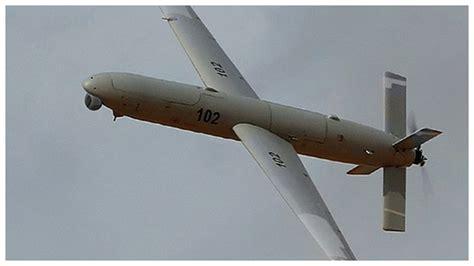
Loitering munitions, also referred to as suicide drones or kamikaze drones, represent a hybrid of unmanned aerial systems and precision strike weapons. These drones are engineered to hover over a target area, conduct real-time surveillance, identify high-value or mobile targets, and then destroy them by self-detonation.
Unlike traditional missiles that are launched and follow a fixed path, loitering munitions offer dynamic targeting capabilities. They can circle above a region for extended durations, awaiting the most opportune moment to strike. This patience and precision drastically reduce the chances of collateral damage, making them ideal for targeting urban or high-density zones where terrorist operatives are known to embed.
India has incorporated multiple variants into its arsenal, most notably the Nagastra-1, developed indigenously by Solar Industries, and the Warmate, imported from WB Group of Poland.
The Nagastra-1 is a compact yet lethal system with the following specifications:
- Range: 15 kilometers
- Explosive Payload: 1.5 kilograms
- Flight Time: Up to 30 minutes
- Guidance System: GPS and real-time electro-optical video feed
This fusion of surveillance and strike capabilities has given Indian forces a surgical edge in anti-terrorism operations, particularly in cross-border engagements.
How Loitering Munitions Were Deployed in Operation Sindoor
In Operation Sindoor, loitering munitions played a critical tactical role in neutralizing high-priority targets in both Pakistan and PoK. These included makeshift arms depots, insurgent training camps, and communication relay stations. Each drone was launched from a secure location within Indian territory and remotely piloted by highly trained drone operators, supported by intelligence units feeding live data into the command center.
Targets such as the JeM’s training camp in Bahawalpur and LeT’s logistics node in Muridke were first verified via real-time surveillance. Once confirmation was received, the loitering munitions were guided into a terminal dive, detonating precisely at the target coordinates. The lack of civilian casualties and absence of major infrastructure damage underscore the tactical brilliance and ethical calibration of the strikes.

Tactical Advantages Over Conventional Airstrikes
The employment of loitering munitions offers multiple battlefield advantages over conventional artillery or airstrikes. First and foremost, these systems operate below radar detection thresholds, making them ideal for covert operations. They can be rapidly deployed without the logistical burden of fighter jets or heavy artillery systems.
Furthermore, their autonomous navigation and target-recognition systems minimize the need for prolonged ground or air support. Unlike cruise missiles, which are expensive and rigid in targeting, loitering munitions are cost-effective, scalable, and modular, capable of engaging both static and mobile targets with equal efficiency.
Most importantly, these drones embody a psychological weapon. The mere possibility of an invisible, patient, and precise death from above induces terror in the ranks of non-state actors, who can no longer rely on stealth, terrain, or delay tactics.
India’s Indigenous Edge: Nagastra-1 and the Defense Industrial Base
The successful use of the Nagastra-1 in Operation Sindoor reflects the growing maturity of India’s indigenous defense sector. Developed by Solar Industries in collaboration with Z-Motion Autonomous Systems, the Nagastra-1 represents a quantum leap in India’s self-reliance in UAV technologies.
The Ministry of Defence has highlighted that the Nagastra-1 was particularly effective due to its low acoustic signature, infrared stealth, and modular warhead design, allowing for tailored mission profiles. It was deployed in at least four of the nine strikes, accounting for some of the most complex neutralizations during the operation.
This success signals a shift toward Atmanirbhar Bharat (self-reliant India) in defense manufacturing and sets a precedent for indigenous innovation in next-gen warfare technologies.
Strategic and Diplomatic Implications
The deployment of loitering munitions in Operation Sindoor carries far-reaching strategic ramifications. By opting for these advanced, targeted systems, India has sent a clear message to adversaries: it possesses the capability to strike with surgical precision without escalating into full-blown conflict.
The Indian Ministry of Defence emphasized this in its official communique: “Our actions have been focused, measured and non-escalatory in nature. No Pakistani military facilities have been targeted.” This assertion is not merely rhetorical—it reflects India’s evolving doctrine of proportionate response and strategic restraint.
International reactions have ranged from supportive to guarded, with U.S. former President Donald Trump commenting, “I just hope it ends very quickly,” indicating global concern over regional instability. However, the precision and restraint demonstrated by India have also earned diplomatic credibility, positioning New Delhi as a responsible power capable of combating terrorism without triggering geopolitical turmoil.
Conclusion: A New Era in Anti-Terror Operations
Loitering munitions have redefined the contours of modern warfare—offering a blend of surveillance, precision, and psychological dominance. Operation Sindoor was not just a tactical victory but a strategic milestone that underscored the effectiveness of these autonomous systems in neutralizing asymmetric threats.
By employing weapons like Nagastra-1 and Warmate, India showcased its ability to innovate and integrate cutting-edge technology into real-world missions. The success of the operation provides a roadmap for future military engagements where minimally invasive, highly effective, and ethically calibrated responses will shape the conduct of war.
In a region marred by decades of proxy conflict and border skirmishes, India’s deployment of loitering munitions could mark the beginning of a new counter-terrorism doctrine—one where technology, strategy, and diplomacy converge to uphold peace without compromising national security.