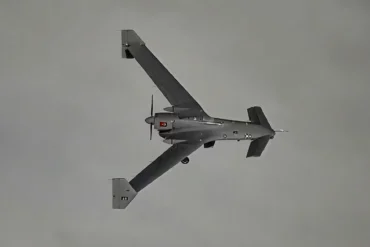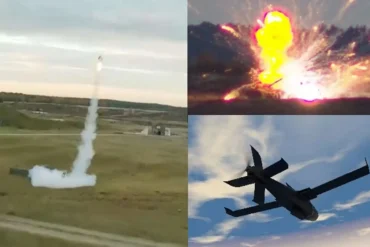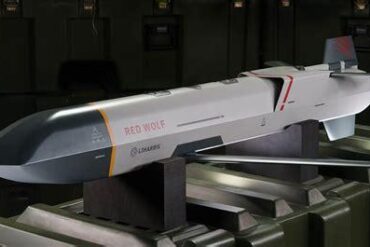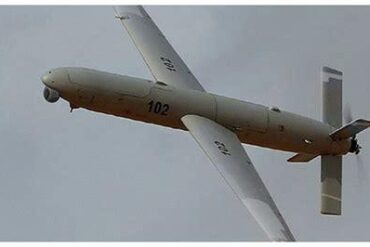
The United Arab Emirates (UAE) is reportedly evaluating the Chinese-made Feilong 300D loitering munition as part of its strategic expansion in long-range strike capabilities. This prospective interest, emerging from specialized intelligence sources as of November 2025, signals not only a tactical shift in Emirati doctrine but also a deepening of defense-industrial entanglements with Beijing amid broader geopolitical considerations.
The Feilong 300D: Redefining Cost-Efficient Long-Range Strike
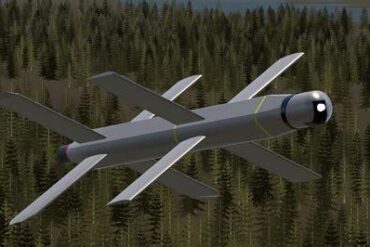
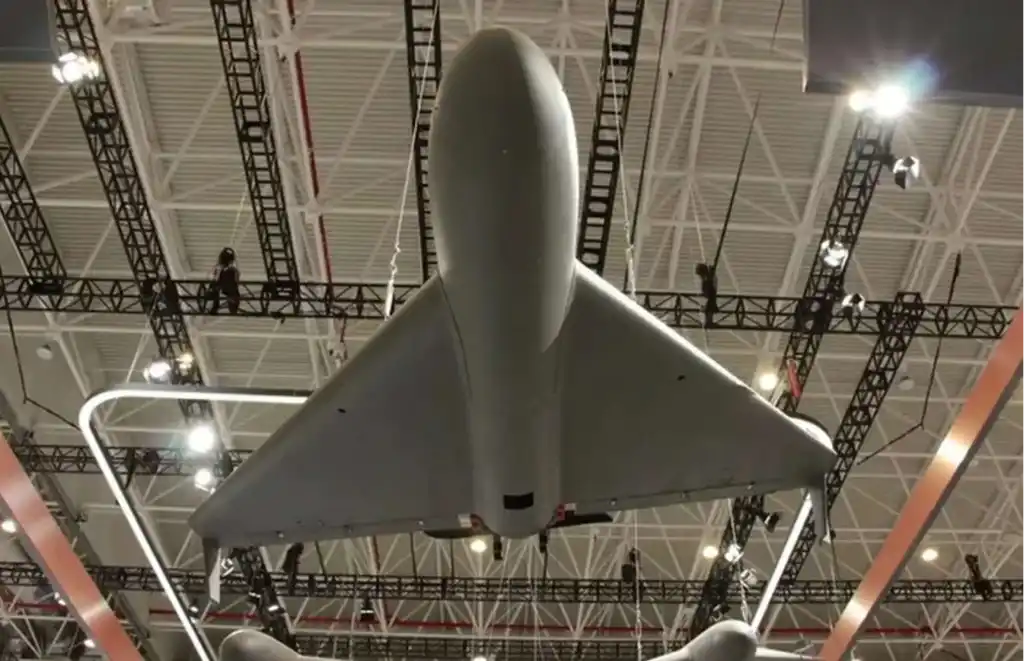
China’s Feilong 300D, designed and produced by Norinco, is a gasoline-powered, delta-wing loitering munition boasting an advertised range of approximately 1,000 kilometers. The system, unveiled during Airshow China in Zhuhai, attracted attention for its exceptional price point—reportedly as low as $10,000 per unit—and its role as a mass-producible, attritable deep-strike asset.
The drone’s technical blueprint centers on affordability and saturation. Key features include:
- Delta-wing design for aerodynamic efficiency.
- Pusher-prop configuration, minimizing radar and infrared signatures.
- Modular warhead options, enabling target flexibility.
- Inertial and satellite navigation systems, with potential for automated targeting.
- Composite materials, enhancing flight endurance and reducing radar cross-section.
Its operational philosophy is clear: deploy large volumes to overwhelm adversary air defenses, accept losses, and still gain the upper hand in cost-exchange ratios.
Strategic Utility for the UAE: Complement, Not Compete
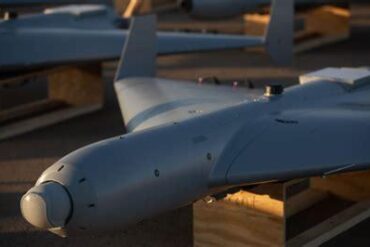
The Feilong 300D would not compete with the UAE’s existing tactical loitering munitions but complement them in range and role. The Emirates has already made significant progress in domestic drone development, particularly via EDGE Group’s HALCON division, which provides systems like the HUNTER 2-S, HUNTER 5, and HUNTER 10. These drones operate in the 50–100 km range, geared for tactical and swarm-based missions with payloads ranging from 2 to 10 kg.
- The HUNTER 2-S is optimized for short-range, AI-enabled swarm strikes.
- The HUNTER 10 offers improved endurance and larger payloads, extending Emirati reach within the tactical domain.
A Feilong-class capability would introduce a strategic tier to this ecosystem. In a conflict scenario, this could enable:
- Use of indigenous systems for immediate battlefield saturation.
- Retention of Feilong drones for deep-strike missions against high-value targets within contested zones.
- A cost-effective substitute for cruise missiles or high-end UCAVs.
Procurement Status: Hypothetical, But Not Implausible
As of now, there are no confirmed negotiations, field trials, or procurement contracts for the Feilong 300D by the UAE. The concept remains in an exploratory phase. However, this pattern aligns with Abu Dhabi’s historical approach to foreign defense technologies—quiet evaluation precedes overt moves.
Observable milestones that would signal a shift to active procurement could include:
- Participation in joint field tests during platforms like IDEX or UMEX.
- Announcements via UAE’s Tawazun Economic Council or military command.
- Public disclosures by Norinco regarding Middle Eastern export clients.
Until such indicators emerge, the Feilong 300D remains a strategic hypothesis—a compelling possibility rather than an imminent deployment.
Geopolitical Balancing Act: Between East and West
The UAE’s interest in the Feilong 300D must be understood against the backdrop of its dual-alignment strategy. While Abu Dhabi maintains deep, institutional ties with Western defense partners, particularly the United States and Europe, it has concurrently expanded its cooperation with China.
In 2018, China and the UAE upgraded their ties to a comprehensive strategic partnership, emphasizing collaboration across AI, emerging technologies, and industrial systems. The UAE has already operated Chinese platforms, notably:
- Wing Loong I and II UAVs, which saw active combat use in regional theaters.
- Interest in Chinese radars, early warning systems, and electronic warfare tools.
This maturing relationship, especially in unmanned and autonomous systems, makes Feilong-type systems a logical extension. However, any integration would come under intense scrutiny from Washington, which continues to view Chinese ISR presence in Gulf networks as a cybersecurity and intelligence threat.
Cybersecurity, Interoperability, and Political Optics
Bringing the Feilong 300D into the UAE’s command-and-control infrastructure would raise delicate concerns:
- Data integrity and exposure across shared coalition networks.
- Risks of compromising Western-supplied systems or inadvertently revealing operational patterns.
- Interoperability challenges with NATO-standard platforms.
Moreover, even exploratory interest in Chinese systems often serves political leverage, allowing Abu Dhabi to:
- Pressure Western suppliers for better terms, quicker delivery schedules, or technology transfers.
- Signal strategic autonomy and multi-vector procurement flexibility.
Industrial Ambitions: Make it in the Emirates
The UAE’s trajectory from importer to exporter of unmanned systems adds another layer of complexity. The EDGE Group is increasingly active in African and Middle Eastern markets, and introducing a low-cost, long-range loitering munition could reshape regional proliferation dynamics.
However, several questions loom:
- Would the Feilong 300D be subject to end-use restrictions or ITAR-style compliance?
- Could China offer local assembly, transfer of production, or customization within UAE industrial zones?
If affirmative, this could align the Feilong 300D with the UAE’s “Make it in the Emirates” initiative, fostering sovereign capabilities and stimulating the local defense economy.
Limitations and Uncertainties: What We Don’t Yet Know
Despite its promise, the Feilong 300D remains an unproven system in real-world conditions. Crucial questions include:
- How does it perform under electronic warfare environments, such as GPS jamming?
- What is its survivability rate against modern layered air defenses?
- Can it integrate with existing Emirati C4ISR platforms, particularly those built for EDGE systems?
In contrast, the HUNTER series benefits from homegrown software integration, field experience, and platform maturity. Any foreign import, particularly from China, would need to match or exceed these integration standards to avoid operational fragmentation.
Conclusion: More Than a Drone, a Strategic Signal
Even absent a signed deal, the Feilong 300D’s emergence in Emirati defense considerations speaks volumes. It signals a future where price, quantity, and modularity can redefine long-range strike doctrine. It reflects Abu Dhabi’s unwavering commitment to keeping technological options open, fostering an environment of competitive procurement, and safeguarding strategic autonomy.
Whether or not the Feilong 300D joins the UAE arsenal, its specter already influences how allies, adversaries, and global suppliers perceive the next generation of affordable strategic munitions. The conversation it has sparked is as valuable as any contract.
Until definitive steps are observed, the Feilong 300D remains a compelling yet unconfirmed addition, emblematic of the shifting sands in Gulf security architecture.