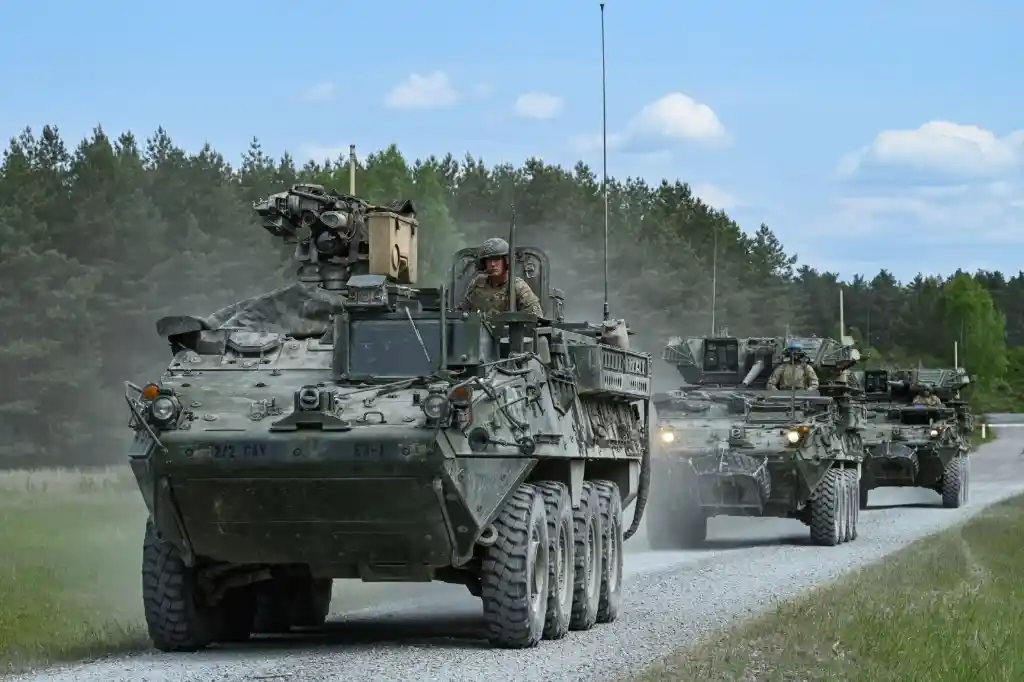
Poland is moving toward the acquisition of 250 U.S. Stryker armored combat vehicles through a symbolic one-dollar transfer, a deal that accelerates Warsaw’s mechanized modernization and reinforces NATO’s posture at a moment of heightened tension along the Alliance’s eastern flank. Public remarks from Deputy Prime Minister and Defense Minister Władysław Kosiniak-Kamysz and supporting reports from Polskie Radio confirm that the transfer aligns with both nations’ strategic priorities: fortifying frontline mobility while recalibrating U.S. force structure in Europe.
The vehicles will originate from American units already stationed on the continent, part of Washington’s ongoing adjustment of its Stryker presence. This approach offers a critical benefit for Warsaw: near-instant availability. Instead of waiting years for a new production batch and a transatlantic delivery cycle, the Polish Army can absorb these platforms after technical inspection and refurbishment. The move fills gaps created by the retirement of aging Soviet-era BWP-1 infantry carriers and the substantial number of modern vehicles Poland has supplied to Ukrainian forces.
Stryker’s Military Value for Poland’s Rapidly Evolving Force Structure
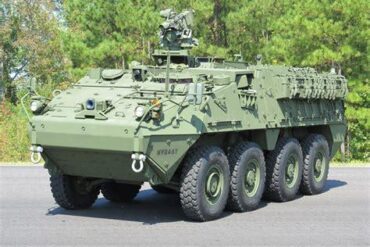
The M1126 Infantry Carrier Vehicle, the backbone of the Stryker family, stems from the Canadian LAV III and Swiss Piranha III lineage, chosen by the U.S. Army for its capacity to rapidly deploy a brigade within 96 hours to overseas theaters. With capacity for a two-person crew and nine infantry soldiers, its design emphasizes swift troop delivery, protected maneuver, and interoperability with NATO air transport assets such as the C-17, C-5, and, under specific weight conditions, the C-130.
More than a mobility platform, the Stryker provides a versatile combat envelope. Its M151 Protector remote weapon station supports multiple armaments, including a 12.7 mm machine gun, 7.62 mm machine gun, or a 40 mm automatic grenade launcher. Full sight stabilization and Detached Line of Sight capabilities allow gunners to maintain target lock even over uneven terrain. Newer configurations like CROWS-J, integrating a Javelin anti-tank missile, expand its role by enabling over-the-horizon armored target engagement.
Protection remains a central strength. The Stryker’s steel hull and ceramic add-on armor shield crews from 14.5 mm rounds and artillery fragmentation, while optional V-shaped hull kits—developed during Afghanistan operations—improve survivability against mines and improvised explosive devices. CBRN overpressure systems and externally mounted fuel tanks add layers of crew safety. Its FBCB2 digital communication suite further enables seamless integration into digitized NATO battlespace management frameworks.
Inspection, Categorization, and Integration Into Polish Brigades
Statements from Kosiniak-Kamysz emphasize that each vehicle will undergo a detailed inspection to determine optimal assignment: operational deployment, training, or support roles. General Wiesław Kukuła confirmed that technical teams have established recommendations for the Armaments Agency, with an on-site evaluation scheduled before a final decision expected in the second half of 2026. The timeline could accelerate should regional security conditions deteriorate.
For Poland, the timing could not be more strategic. The accelerated retirement of legacy platforms and generous support to Ukraine have strained fleet numbers. Adopting Strykers offers a rapid, high-quality solution at a negligible acquisition cost—a rare opportunity in large-scale force development.
Complementing Rosomak and Borsuk: A Three-Tiered Modernization Strategy
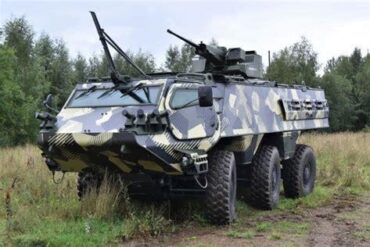
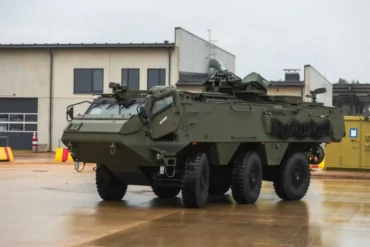
Despite the symbolic price, the acquisition does not diminish Poland’s commitment to its national defense industry. The domestically assembled Rosomak, derived from the Patria AMV, already forms the backbone of Poland’s wheeled combat fleet, surpassing 900 units delivered. Newer versions equipped with the ZSSW-30 turret—featuring a 30 mm Mk44S cannon and Spike LR anti-tank missiles—are entering frontline service, with thirty-five currently in the 21st Podhale Rifles Brigade.
Parallel developments include the first delivery of the tracked Borsuk infantry fighting vehicle to the 15th Mechanized Brigade in Giżycko. Backed by a contract for 111 units and a long-term ambition that may reach 1,400 platforms across specialized variants, Borsuk represents the heavy complement to Poland’s evolving mechanized architecture.
Within this ecosystem, the Stryker provides immediate mobility and troop lift capability, Rosomak furnishes multi-role fire support, and Borsuk supplies tracked resilience and anti-armor firepower. Together they produce a coherent, NATO-interoperable force design optimized for long-distance maneuver operations along the eastern frontier.
A Strategic Signal to Moscow and a Consolidation of U.S.-Polish Defense Ties
The symbolic one-dollar transaction carries geopolitical weight far beyond procurement arithmetic. It demonstrates unprecedented strategic alignment between Warsaw and Washington, signaling a fortified commitment to defending NATO’s most exposed frontier. Poland strengthens its posture as the Alliance’s primary land power in Central Europe, a role increasingly vital amid persistent Russian military pressure and regional unpredictability.
The United States, meanwhile, illustrates its confidence in Poland’s readiness, logistics infrastructure, and long-term defense planning. By transferring Strykers already based in Europe, Washington reinforces front-line readiness without introducing new logistical burdens, while enabling its own force restructuring.
A New Pillar of NATO Mobility and Deterrence
Once the transfer is finalized, the introduction of 250 Stryker vehicles will significantly expand Poland’s ability to field rapidly deployable, digitally networked mechanized brigades. Their integration into national and NATO command systems enhances shared situational awareness, cross-border coordination, and multinational maneuver capacity.
The symbolic price belies the real value of the Stryker fleet: strengthened deterrence, faster response times, and a deeper military partnership between two allies shaping NATO’s future security architecture. As Poland accelerates its transformation into one of Europe’s most capable land forces, the Stryker transfer becomes a milestone in both its national defense strategy and the collective resilience of the Alliance.