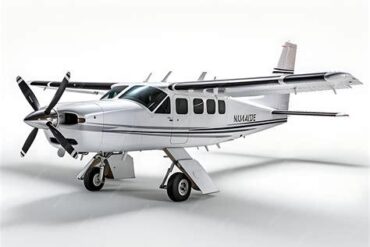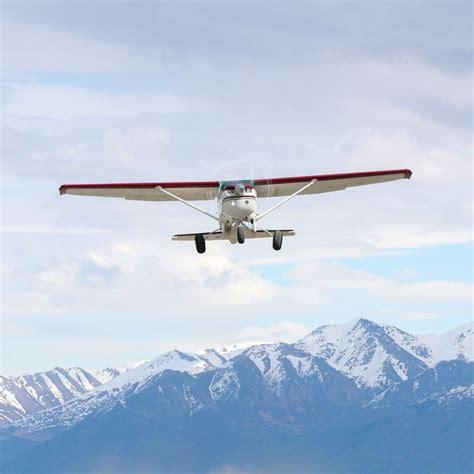
The Cessna 206 Stationair has earned a formidable reputation over decades of service as one of the most capable and versatile single-engine utility aircraft ever built. Combining rugged construction with remarkable load-carrying ability, the 206 has carved a niche in both remote wilderness operations and upscale private use. Developed from the high-performance Cessna 210, the Stationair series evolved into a family of aircraft that include the Cessna 205, 206, and 207—each iteration fine-tuned to serve increasingly specialized missions.
This aircraft’s significance lies in its rare ability to blend practicality, reliability, and performance, making it a staple for air taxi fleets, bush pilots, military units, and adventurers alike.

Evolution of the Stationair Lineage
The development of the Stationair family traces its roots to the retractable-gear Cessna 210, a high-performance, six-seat aircraft. In response to demands for a more rugged, fixed-gear platform, Cessna introduced the 205 in 1963, effectively initiating what would become one of the most successful high-wing utility aircraft lines ever produced.
- Cessna 205 (1963–1964): Officially designated as Model 210-5, the 205 featured a 260 hp Continental IO-470-S engine and provided six seats in a fixed-gear configuration. A total of 576 units were built, marking a successful introduction.
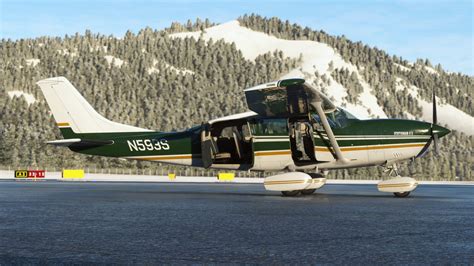
- Cessna 206 (1964–1986; 1998–present): Introduced with more powerful engines ranging from 285 to 310 hp, the 206 came in multiple subvariants. The U206 (Utility) model featured a clamshell cargo door, making it ideal for hauling freight and oversized loads, while the P206 (Passenger) variant used standard passenger doors. In 1998, production resumed with the 206H and T206H, incorporating modern avionics and engines, including the Lycoming IO-540.
- Cessna 207 (1969–1984): This extended version added 45 inches of fuselage length, allowing seating for seven or eight passengers and a 300 hp Continental IO-520-F engine. Known for high-density operations, it found favor among tour and charter companies.
Technical Specifications and Performance of the 206H Stationair
The current production model, 206H Stationair, exemplifies the pinnacle of rugged utility aviation. With its powerful Lycoming IO-540-AC1A5 engine generating 300 hp, the aircraft delivers a maximum speed of 174 mph and a cruising speed of 163 mph. It seats one pilot and five passengers, with a maximum takeoff weight of 3,600 pounds.
Key specifications include:
- Length: 28 feet 3 inches
- Wingspan: 36 feet
- Empty Weight: 2,176 pounds
- Maximum Range: 840 miles
- Service Ceiling: 15,700 feet
These characteristics make it particularly suitable for both high-altitude airports and short, unimproved runways.
Operational Versatility in Demanding Environments
The Cessna 206 excels in roles that few other single-engine aircraft can manage as efficiently. Its high-wing design, robust landing gear, and spacious cabin layout provide the flexibility required for operations ranging from bush flying in Alaska to humanitarian missions in Africa.
Pilots frequently choose the 206 for:
- Bush Flying: Remote wilderness areas demand an aircraft with rugged landing capabilities and room for cargo—attributes the 206 delivers consistently.
- Float and Ski Installations: Kenmore and Wipaire conversions allow the 206 to take off from water or snow, vastly expanding operational flexibility.
- Skydiving Operations: Its side door can be modified for jumpers, and the aircraft’s quick climb rate is advantageous.
- Aerial Photography & Surveying: The broad windows and stable flight characteristics make it an ideal platform.
- Executive Transport: Optional luxury interiors transform the utilitarian cabin into a comfortable and quiet travel space.

Powerplant and Modification Options
While the standard Lycoming IO-540 provides reliability and performance, many operators choose aftermarket upgrades and conversions to enhance mission-specific capabilities.
Popular modifications include:
- Diesel Conversions: Thielert V-8 conversions provide better fuel efficiency and allow the use of Jet-A fuel, which is more globally available.
- Turboprop Upgrades: Soloy offers conversions to the Allison M250 engine, which delivers impressive power and climb performance.
- Engine Upgrades: Continental IO-550 conversions offer improved cruise speeds and payload handling.
These modifications expand the aircraft’s versatility and operating range, making it a more capable platform for challenging missions.
Global Operators and Civil Uses
The global footprint of the Cessna 206 is vast. Its reliability and simplicity make it a popular choice for government agencies, non-governmental organizations, and commercial charter operators. Some notable users include:
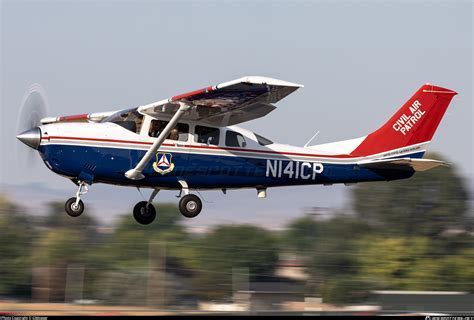
- Civil Air Patrol (USA) – Utilized for search-and-rescue and training.
- Argentine Federal Police – Used for law enforcement surveillance.
- Bolivian Air Force – Operational in rugged Andean terrains.
- U.S. Marshals Service – Employed for prisoner transport and field support.
In remote regions of Africa, Southeast Asia, and South America, the 206 is often the only lifeline connecting villages with cities, delivering supplies, mail, and even medical services.
Notable Incidents and Safety Record
Despite its solid safety reputation, the Cessna 206 has been involved in a number of high-profile incidents over the years, often in extreme conditions. These serve to underscore both the aircraft’s durability and the inherent risks of the environments in which it operates.
- 1972 Colorado Crash: Millionaire and race car driver Lance Reventlow died when a 206 crashed in Colorado due to adverse weather.
- 2023 Colombian Jungle Crash: A crash deep in the Amazon left four children stranded for 40 days before rescue, capturing international attention.
- 2023 Zimbabwe Mine Incident: A 206 went down near a remote mining site; poor visibility and mechanical failure were suspected.
- 2024 Missouri Skydiving Mishap: A dramatic incident where engine failure forced all occupants to parachute out safely mid-flight.
Each case illustrates the kind of demanding missions the 206 is tasked with—and how well it often performs under duress.
A Modern Icon: Continuing Production and Market Demand
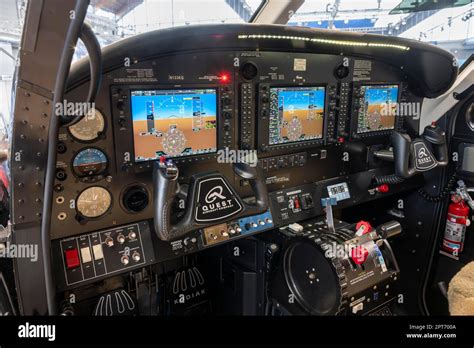
Unlike many aircraft introduced in the 1960s, the Cessna 206 remains in production, reflecting its ongoing demand. The 206H and T206H Stationair models continue to be ordered by flight schools, private owners, and commercial operators alike. Featuring Garmin G1000 avionics, autopilot integration, and refined interiors, these latest models blend classic design with modern technology.
Production numbers further testify to its success:
- 6,581 Cessna 206s built from 1964 to 2004.
- Over 726 206H and T206H aircraft produced from 1998 to 2004 alone, with continued production thereafter.
The Stationair’s ability to carry out both working-class utility roles and executive-level transport positions it as a rare, dual-purpose aircraft with few rivals.
Conclusion: A Benchmark in Utility Aviation
Few aircraft have left such an indelible mark across so many sectors of aviation as the Cessna 206. Its evolution from a modified 210 into a global workhorse speaks volumes about the engineering, foresight, and adaptability embedded in its DNA. Whether hauling medical supplies in Papua New Guinea, ferrying skydivers in the American Midwest, or exploring remote Canadian lakes on floats, the 206 continues to define what a single-engine aircraft can accomplish.
For operators seeking reliability, capability, and flexibility, the Cessna 206 remains not just a choice—but often the only one that fits the mission.