Moving a helicopter on the ground is a delicate operation—one that demands absolute precision, unwavering control, and a tool engineered for both safety and efficiency. For decades, ground crews have relied on a variety of traditional methods involving tow bars, dollies, and manual repositioning. These techniques, while functional, often fall short in terms of both safety and time efficiency. Enter the Chopper Spotter, a transformative piece of ground support equipment that redefines the standard for helicopter mobility.
Unlike conventional movers, the Chopper Spotter doesn’t just support the helicopter; it integrates with it in a manner that maximizes stability while simplifying control. It is not merely a towing system but a precision-guided lifting and maneuvering unit, optimized for rotorcraft from start to finish.
What Is the Chopper Spotter? A Revolution in Rotorcraft Ground Handling
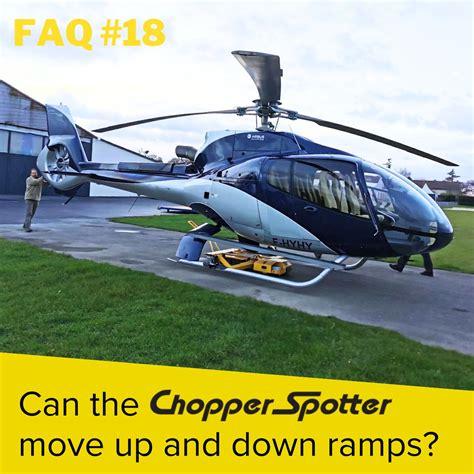
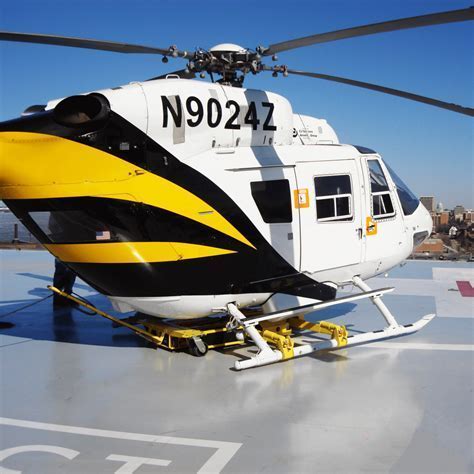
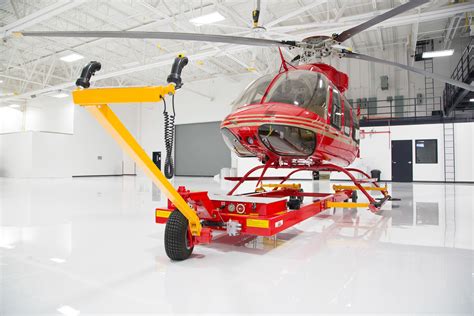
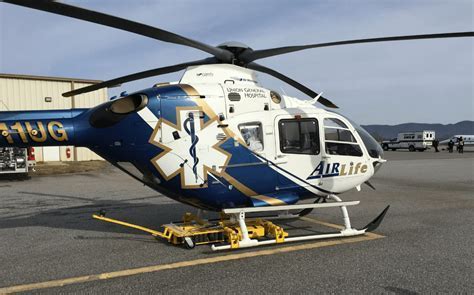
The Chopper Spotter is a purpose-built, self-powered transport device engineered to connect directly with a helicopter’s skids. It rolls under the aircraft from the rear, utilizing custom-fitted yokes to interface with the skid’s wheel attachment points. This rear-entry configuration enhances weight distribution and operational balance, allowing precise handling without the torsional stress typically exerted by side or front attachments.
One of its most critical innovations is the wireless handheld controller, granting the operator complete mobility and visibility during the entire process. No cords. No guesswork. Just deliberate, responsive control.
In demanding environments such as hospitals, air ambulance operations, military flight lines, and busy heliports, time is more than money—it’s survival. The Chopper Spotter’s efficient design ensures rapid ground repositioning while minimizing human error and mechanical strain.
Key Features That Redefine Helicopter Mobility
The Chopper Spotter isn’t simply a mover; it’s an integrated system that transforms a traditionally manual task into a streamlined operation. Among its standout features:
- Attachment Mechanism: Designed for precise alignment, the device easily rolls beneath the helicopter and connects to the wheel attachment points via robust rear yokes.
- Wireless Controller: Enables single-operator use with intuitive directional inputs—”UP,” “FORWARD,” “REVERSE,” and “DOWN.”
- Single-Hand Control: While one hand steers the tail boom for directional alignment, the other manages lift and propulsion.
- Quiet Electric Operation: Engineered for noise-sensitive environments, its electric drive system eliminates engine noise and reduces emissions.
- Compact Storage Profile: After detachment, the unit can be stowed efficiently without occupying critical hangar space.
Why Precision Matters: The Engineering Behind Safer Helicopter Ground Handling
Rotorcraft are uniquely vulnerable on the ground. Their elevated centers of gravity and relatively narrow skids make them particularly susceptible to tipping or imbalance. Improper ground handling not only risks damage to the aircraft but also jeopardizes the safety of ground crew and bystanders. The Chopper Spotter addresses these vulnerabilities with engineering that prioritizes balance, simplicity, and fail-safe functionality.
The center of gravity during movement remains tightly controlled, thanks to the low-mounted wheels and precise rear yoke attachment. Additionally, the wireless control enables the operator to maintain a safe distance from rotors or engine intakes during start-up or shut-down positioning.
Step-by-Step: How to Move a Helicopter Using the Chopper Spotter
Using the Chopper Spotter is remarkably intuitive. Its ergonomic design and thoughtful workflow reduce the training curve to a minimum. Here’s how a typical operation unfolds:
Step 1: Positioning the Chopper Spotter
Roll the device from behind the helicopter. Align its yokes with the wheel attachment points on the skids. The rear entry is key—it reduces front-end interference and provides better balance.
Step 2: Controller Engagement
Stand behind the helicopter while gripping the wireless handheld controller. This vantage point not only provides a complete view of the skids and tail but also enables real-time responsiveness.
Step 3: Tail Stabilization
Use your free hand to firmly grasp the helicopter’s tail boom. This dual-contact method—machine at the skids, human at the tail—allows precision steering while maintaining full control over the aircraft’s orientation.
Step 4: Lifting the Helicopter
Press the “UP” button. The Chopper Spotter’s electric motors smoothly raise the helicopter. The ascent is consistent and vibration-free, preserving rotor alignment and airframe integrity.

Step 5: Ground Maneuvering
With the aircraft airborne, press “FORWARD” or “REVERSE” as needed. Use your free hand on the tail boom to guide direction. This human-machine symbiosis ensures the most precise repositioning possible, ideal for tight hangar spaces or narrow helipads.
Step 6: Lowering the Helicopter
Once at the new location, press the “DOWN” button. The unit lowers the helicopter evenly. It’s essential to verify skid contact and stability before detachment.
Step 7: Safe Removal and Storage
Roll the Chopper Spotter away from the helicopter and return it to its designated storage area. Its compact footprint makes storage both easy and space-saving.
Comparing Traditional Methods vs. Chopper Spotter Innovation
Legacy helicopter moving systems often involve multiple personnel, physical strain, and risk. Manual dollies and tow bars are not only labor-intensive but also leave room for uncontrolled motion and imprecise placement. These tools rarely allow the operator to simultaneously manage both propulsion and steering.
The Chopper Spotter flips this paradigm on its head. A single operator, using a handheld controller and a stabilizing grip on the tail boom, can execute precision movements with millimeter accuracy. This level of control simply cannot be matched by traditional systems.
Use Cases: From Hospital Helipads to Military Readiness
The applications for the Chopper Spotter span a wide spectrum of operational environments. At hospitals, its whisper-quiet operation enables patient-friendly transfers near emergency wings. In military settings, its mobility and rapid-response capability support readiness drills and fast deployment without compromising safety.
Moreover, commercial operators, flight schools, and emergency medical services (EMS) benefit from minimized hangar time and improved asset rotation, which in turn drives cost efficiency.
Its rugged construction also means it’s built to last. Aerospace-grade materials ensure durability, even under the stress of repeated use in harsh environments.
A Smarter Future in Ground Support Equipment
As the aviation industry continues to push toward automation, energy efficiency, and reduced personnel risks, the Chopper Spotter emerges as a symbol of this transformation. It’s not just a machine—it’s a strategy for smarter, safer, and more efficient helicopter operations. When integrated into standard ground handling protocols, it can drastically reduce turnaround time while elevating the safety baseline.
In a world where downtime equates to lost missions, revenue, or even lives, equipment like the Chopper Spotter is more than a luxury—it’s a necessity. Its blend of engineering elegance, practical usability, and proven results sets it apart in the crowded field of aircraft ground handling.
Conclusion: The Future of Helicopter Movement Has Arrived
Precision, control, and safety are non-negotiables in helicopter operations. The Chopper Spotter delivers all three in a single, sophisticated platform. Whether you operate a flight school, support medevac teams, or oversee a military fleet, implementing the Chopper Spotter into your daily workflow will yield immediate benefits in efficiency, safety, and aircraft longevity.
In an era that values innovation backed by proven field application, the Chopper Spotter represents the next generation of helicopter ground handling—silent, strong, and smart. The way forward isn’t to work harder; it’s to work smarter. With the Chopper Spotter, smarter starts now.