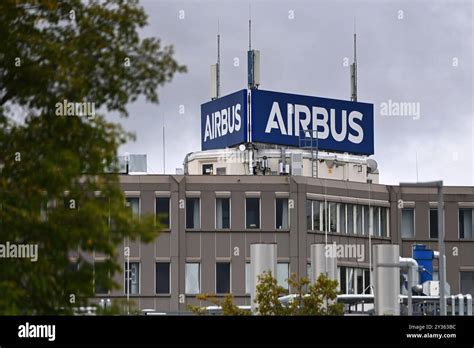
Airbus Defence and Space stands as one of the most formidable forces in the global aerospace and defence industry. Formed in January 2014 from the consolidation of Airbus Military, Astrium, and Cassidian, it emerged as a division of the newly restructured Airbus Group, formerly EADS. With headquarters in Taufkirchen, Germany, under the leadership of CEO Michael Schoellhorn, this division represents the cutting-edge of Europe’s aerospace ambitions. It delivers integrated solutions in military aviation, space systems, cybersecurity, and intelligence services.
In 2024, Airbus Defence and Space reported revenues of €11.995 billion, total assets of €22.582 billion, and employed more than 36,000 people worldwide. Despite reporting a net income loss of €656 million, its strategic influence remains immense, contributing about 21% of Airbus’s total revenues.
Strategic Genesis: A History of Mergers and Integration
The legacy of Airbus Defence and Space is rooted in decades of transnational aerospace consolidation. In the 1990s, companies like DaimlerChrysler Aerospace (DASA), British Aerospace, and Aérospatiale envisioned a pan-European aerospace champion. Though initial attempts faltered, the path forward became clear in 1999 when DASA merged with Spain’s CASA, followed by a union with Aérospatiale-Matra to form the European Aeronautic Defence and Space Company (EADS) in 2000.
This marked the birth of the second-largest aerospace conglomerate after Boeing. In 2001, Airbus Industries was transformed from a consortium into a proper joint stock company—Airbus SAS. Over the next decade, EADS consolidated space and defence operations: it acquired BAE’s 25% stake in Astrium, formed EADS Defence and Security Systems, and restructured entities like MTAD, Airbus Military SL, and Eurocopter.
By 2013, all defence-related assets were merged into a unified division—Airbus Defence and Space, launched alongside Airbus Helicopters and the core Airbus Commercial Aircraft division.
Core Business Lines and Capabilities
Air Power: The Backbone of Military Aviation
Airbus Defence and Space’s Air Power line develops and supports high-performance combat, transport, and refuelling aircraft. Key platforms include:
- Eurofighter Typhoon: A multirole twin-engine canard delta-wing fighter.
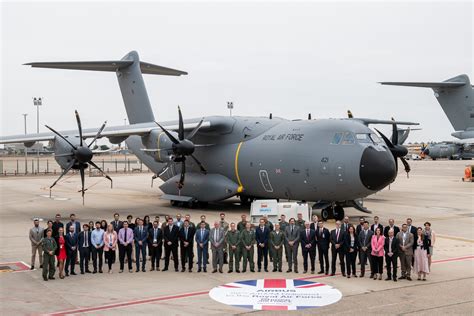
- A400M Atlas: A four-engine turboprop strategic/tactical military transporter.
- A330 MRTT: A multi-role tanker aircraft based on the Airbus A330.
- C295 and CN-235: Medium twin-turboprop tactical transport aircraft.
The division also plays a pivotal role in the Future Combat Air System (FCAS) and holds a 37.5% stake in MBDA, Europe’s leading missile producer.
Connected Intelligence: Secure and Digital Defence Networks
Through its Connected Intelligence business line, Airbus provides cybersecure communications, military intelligence systems, and digital battlefield networks. Its platforms span:
- Space Digital: Satellite-based data infrastructure.
- Public Safety and Security: Crisis management systems.
- Cyber: Advanced cybersecurity for armed forces.
- Defence Digital: Integrated mission-critical systems.
This unit plays a vital role in command, control, communications, computers, intelligence, surveillance and reconnaissance (C4ISR) frameworks.
Space Systems: Europe’s Space Industrial Champion
Airbus Defence and Space dominates the European space sector with leading-edge solutions in telecommunications, Earth observation, navigation, and scientific exploration. It manages a 50% stake in ArianeGroup, a joint venture with Safran, responsible for Ariane rocket launch systems.
Major achievements include:
- Automated Transfer Vehicle (ATV) for ISS resupply
- Orion European Service Module (ESM) for NASA’s Artemis missions
- Leading ESA missions: Solar Orbiter, Gaia, JUICE, ExoMars, BepiColombo, and Rosetta
Landmark Programmes and Technologies
Unmanned Aerial Vehicles and Future Airpower
Airbus has pioneered unmanned systems for modern warfare. Notable UAVs include:
- Zephyr: A solar-powered high-altitude pseudo-satellite (HAPS) for continuous surveillance.
- Barracuda and KZO: Tactical and reconnaissance UAVs.
- Euro Hawk: A signals intelligence UAV based on the RQ-4B Global Hawk.
- Wingman (2024): A loyal unmanned combat drone unveiled at the ILA Berlin Air Show to fly alongside Eurofighters.
In 2023, the company tested autonomous in-flight drone guidance using an A310 MRTT, advancing toward Autonomous Air-to-Air Refuelling (A4R) and Formation Flight.
Missile Systems and Strategic Defence
Airbus Defence and Space contributes to strategic deterrence and missile development. In partnership with Safran, the firm is upgrading the M51 ballistic missile system for the French Navy to the M51.3 standard.
Earth Observation and Secure Telecommunications
The company is the largest global provider of Earth observation satellites, with platforms like:
- TerraSAR-X NG, AstroBus-S, AstroBus-L, AstroBus-XS
- Major EO satellites: Envisat, GOCE, GRACE, Swarm, EarthCARE, Sentinel, MetOp
For telecommunications, Airbus produces the renowned Eurostar series, with more than 70 satellites ordered and 500+ years of in-orbit operations. Other key systems include Alphabus, Skynet, Inmarsat, and Eutelsat.
Commercial Innovation: One Atlas and Space Tourism
Launched in 2016, One Atlas offers a global satellite image basemap, refreshed yearly, for defence and security applications. It supports real-time mapping, surveillance, and logistical planning.
Airbus also explored space tourism through its Spaceplane concept—a suborbital vehicle with a full-scale mockup unveiled in 2007 and now displayed at the Musée de l’Air et de l’Espace in Paris.
Strategic Growth and Global Partnerships
Looking ahead, Airbus Defence and Space is spearheading a joint venture combining its Space Systems and Space Digital operations with Telespazio and Thales Alenia Space. The new entity—slated for launch in 2027, pending regulatory approval—will be owned by Airbus (35%), Leonardo (32.5%), and Thales (32.5%), with a projected annual turnover of €6.5 billion.
Additionally, the company is expanding into the southern hemisphere with a new research facility in Adelaide, Australia, focused on satellite development for the Australian Defence Force.
Industrial Footprint and Global Reach
Airbus Defence and Space maintains a robust industrial footprint across Europe and beyond:
- France: Elancourt, Vélizy, Les Mureaux, Bordeaux, Toulouse, and Kourou (French Guiana)
- Germany: Manching, Friedrichshafen, Ottobrunn/Taufkirchen, Bremen, Immenstaad
- Spain: Getafe (Madrid), Sevilla, Albacete
- UK: Newport, Portsmouth, Stevenage
- Italy, Netherlands, South Africa: Rome, Potenza, Leiden, Irene
Competitive Landscape and Future Outlook
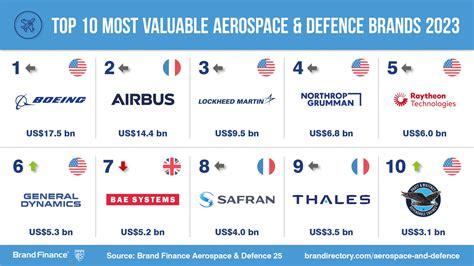
Airbus Defence and Space operates in a highly competitive ecosystem, with rivals including Boeing Defence, Lockheed Martin, Raytheon, Northrop Grumman, and Thales Alenia Space. However, Airbus’s integrated capabilities across air, cyber, and space, along with pan-European industrial backing, give it a strategic edge in serving NATO and global allied forces.
With a proven legacy of space achievements, cutting-edge UAV technologies, and pioneering digital warfare systems, Airbus Defence and Space continues to define the future of European strategic autonomy and global aerospace leadership.