Air Canada is preparing to make aviation history with the launch of its shortest-ever nonstop flights to Asia, introducing a new Vancouver–Sapporo service that quietly reshapes the transpacific map. More than just another route announcement, this move signals a calculated expansion into a niche market that blends geography, fleet strategy, and seasonal demand in a way few global carriers attempt. The decision underscores how modern long-haul networks are increasingly shaped by precision rather than sheer distance.
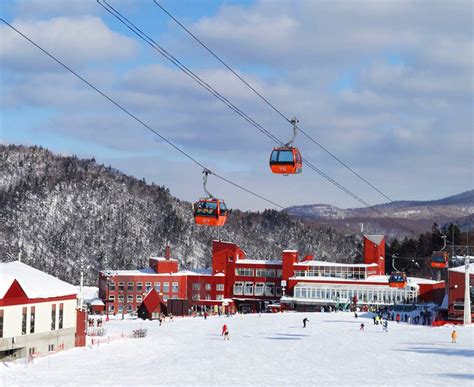
The new route will officially begin on December 17, linking Vancouver International Airport with New Chitose Airport in Sapporo, the capital of Japan’s northern island of Hokkaido. While December may seem unconventional for a new international launch, Sapporo is globally recognized for its winter tourism economy, driven by skiing, snow festivals, and cold-weather experiences that attract travelers precisely when other destinations slow down. For Air Canada, timing is not an accident but a commercial thesis.
This service will stand alone in the market. No other airline currently operates nonstop flights between North America and Sapporo, giving Air Canada a rare monopoly on a long-haul city pair. Although charter flights briefly connected the regions in the late 1990s, this marks the first sustained scheduled service of its kind, elevating the route’s historical importance within both Canadian and Japanese aviation circles.
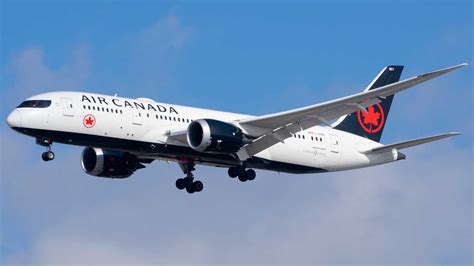
From a network perspective, the Vancouver–Sapporo link becomes the shortest Asian route ever operated by Air Canada, covering just 3,726 nautical miles (6,901 kilometers) based on great-circle distance. That distinction also makes it the shortest route to Asia from anywhere in Canada or the continental United States. For years, Vancouver–Tokyo Narita held that title, but Sapporo replaces it by a meaningful margin, redefining what “long-haul Asia” can look like in operational terms.
Vancouver to Sapporo: A Calculated Seasonal Play
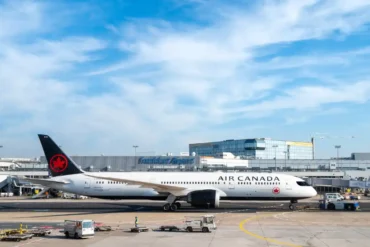
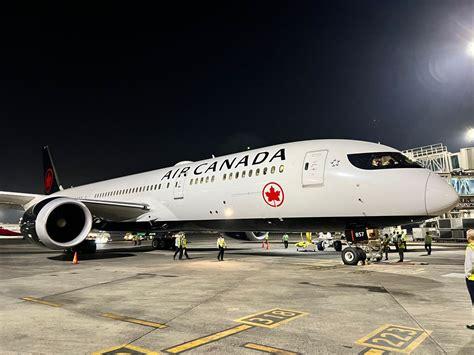
Flights will operate three times weekly, a deliberate choice that balances market uncertainty with schedule reliability. Air Canada will deploy the 255-seat Boeing 787-8 Dreamliner, its smallest-capacity widebody aircraft. This aircraft choice is central to the strategy. The 787-8 offers long-range capability with lower trip costs, making it ideal for thin or developing markets where demand must be carefully cultivated rather than assumed.
Operating costs and financial risk are further reduced by leveraging Vancouver as a Pacific hub, where connecting traffic from across Canada and the United States can feed the flight. While point-to-point demand between Vancouver and Sapporo remains modest—fewer than 7,000 passengers traveled between the cities over a recent 12-month period—the broader catchment area tells a different story. Cities like Los Angeles, San Francisco, and Seattle already generate meaningful Sapporo-bound traffic via connections, traffic Air Canada now aims to capture directly.
A New Benchmark in Air Canada’s Asian Network
By 2026, Air Canada plans to operate 19 routes to Asia, excluding the Middle East, with 18 of them nonstop. This represents the airline’s most expansive Asian network ever, surpassing previous highs and reinforcing its long-term commitment to the region. With Sapporo added, Air Canada will serve 13 Asian destinations, the highest total in its history.
Across its nonstop Asian routes, the airline’s average stage length sits at 5,428 nautical miles, making the Sapporo service a significant outlier. Its shorter distance allows for improved aircraft utilization, more flexible crew planning, and resilience against operational disruptions, particularly at a time when airspace constraints and fuel costs continue to influence route economics worldwide.
Market Risk Meets Strategic Opportunity
Despite its headline appeal, the Vancouver–Sapporo route is not without risk. Sapporo is a smaller origin-and-destination market than several Japanese cities Air Canada has previously exited, including Nagoya. However, size alone does not determine viability. Sapporo’s appeal lies in its distinct tourism profile, strong brand recognition among winter sports enthusiasts, and limited nonstop competition.
Air Canada’s broader Asian strategy suggests a willingness to experiment, adjust, and redeploy capacity where long-term potential outweighs short-term volatility. The return of Beijing Capital Airport to its network and the addition of Manila illustrate a carrier actively refining its Asian footprint rather than merely restoring pre-2020 patterns.
Why This Route Matters Beyond the Headlines
The launch of Vancouver–Sapporo is not simply about being the shortest. It represents a shift in how airlines define long-haul relevance, emphasizing connectivity, aircraft right-sizing, and destination uniqueness. In an era where ultra-long routes often dominate attention, Air Canada’s Sapporo gamble proves that strategic restraint can be just as disruptive.
This route may never be the largest in passenger numbers, but its symbolic value is substantial. It challenges assumptions, fills a geographic gap, and reinforces Vancouver’s role as North America’s most versatile gateway to Asia. In doing so, Air Canada is not just adding a destination—it is quietly rewriting the rules of transpacific expansion.