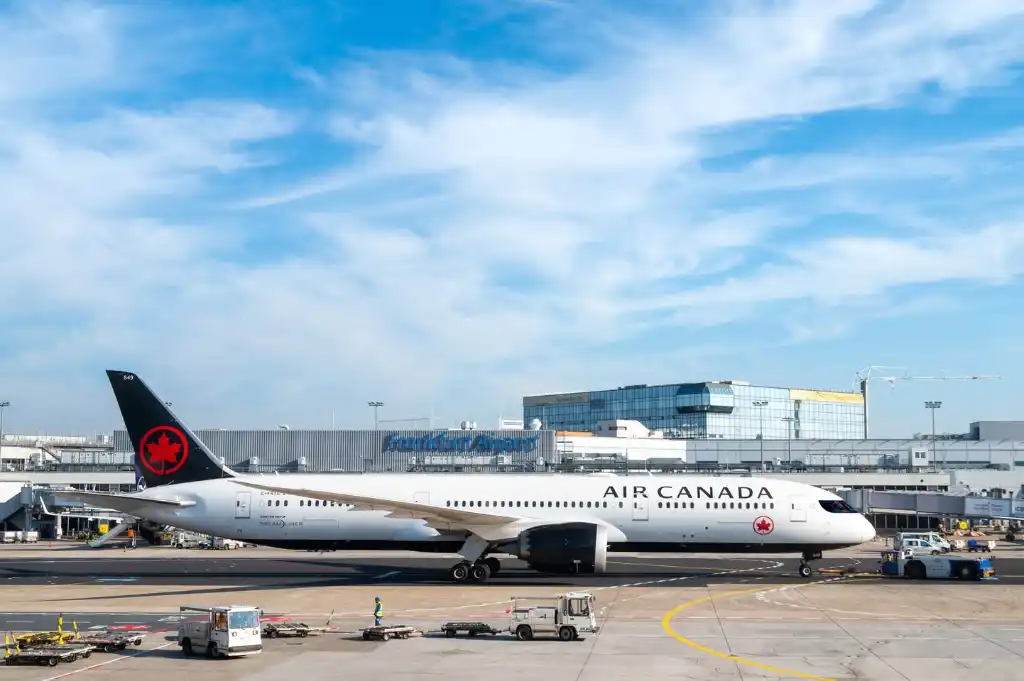
Air Canada is quietly but decisively reshaping the transpacific aviation map. By 2026, the Canadian flag carrier will operate flights to a record-breaking 13 destinations across Asia, marking the most expansive Asian network in the airline’s history. This milestone reflects not only rising demand between Canada and Asia, but also Air Canada’s long-term confidence in the region as a cornerstone of its global strategy.
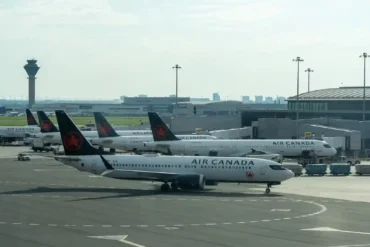
Asia has long been one of Air Canada’s most valuable long-haul markets, anchored by its West Coast gateway at Vancouver International Airport (YVR). From there, the airline has built a dense web of transpacific routes optimized for both point-to-point travelers and onward Star Alliance connections. Complementing Vancouver are Air Canada’s eastern hubs at Toronto Pearson (YYZ) and Montréal Trudeau (YUL), which together allow the carrier to blanket Asia with a mix of nonstop and strategically routed services.
This expansion brings scale, frequency, and fleet efficiency into sharp alignment—three ingredients that define successful long-haul networks in the modern aviation era.
Vancouver’s Growing Role as North America’s Pacific Gateway
Vancouver remains the beating heart of Air Canada’s Asia strategy. Its geographic advantage shortens flight times, improves aircraft utilization, and makes it a natural bridge between North America and East Asia. In 2026, YVR will serve as the launch point for the airline’s newest Asian destination: Sapporo, Japan.

Announced in January 2026, the new Vancouver–Sapporo (CTS) route will begin on December 17, operating three times weekly using the Boeing 787 Dreamliner. The service is seasonal, running through late March, and is timed to capture winter demand for Hokkaido’s globally renowned ski resorts. At 3,726 nautical miles, it becomes Air Canada’s shortest Asia route, while also giving Sapporo its only nonstop link to North America.
Beyond skiing, the airline has leaned into Sapporo’s broader appeal—its food culture, beer heritage, and northern Japanese identity—positioning the route as both an adventure and lifestyle destination rather than a niche seasonal experiment.
Thirteen Asian Destinations, Nineteen Routes, One Coherent Strategy
By 2026, Air Canada’s Asian map will span 13 cities served by 19 distinct routes across East Asia, Southeast Asia, and South Asia. Scheduling data shows a network built on consistency rather than flash, with high-frequency routes forming the backbone.
The most frequently operated Asian route will be Vancouver–Hong Kong (HKG), with 366 one-way departures planned across the year. Several other routes closely follow, each operating daily service with 365 flights annually. These include Toronto–Delhi (DEL), Toronto–Seoul (ICN), Toronto–Tokyo Haneda (HND), and Vancouver–Tokyo Narita (NRT).
Close behind is Vancouver–Shanghai (PVG), scheduled for 360 departures, underscoring Air Canada’s commitment to rebuilding capacity in mainland China as travel demand continues its post-pandemic normalization. Additional Asian cities served include Bangkok, Beijing, Manila, Osaka, and Singapore, with some routes operating seasonally to match demand patterns.
In total, Air Canada has scheduled 4,691 one-way Asia departures in 2026, a scale that firmly places it among the most active transpacific carriers in North America.
A Widebody Fleet Built for Long-Haul Efficiency
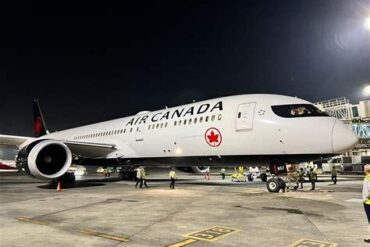
Every one of Air Canada’s Asia flights in 2026 will be operated by Boeing widebody aircraft, reinforcing the airline’s fleet standardization strategy. The undisputed workhorse of the network is the Boeing 787-9 Dreamliner, which accounts for 3,318 flights. Its fuel efficiency, range, and passenger comfort make it ideal for both high-density trunk routes and thinner long-haul markets.
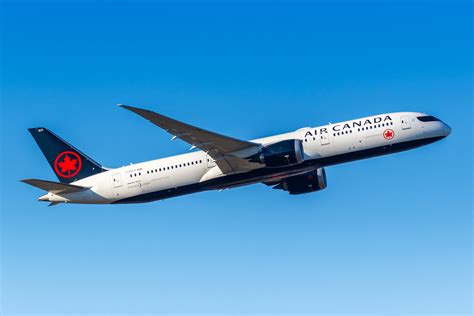
Supporting the Dreamliner fleet are the Boeing 777-300ER with 919 flights, the 777-200LR with 365 flights, and a smaller number of 787-8 operations. This mix allows Air Canada to right-size capacity while maintaining premium cabin consistency across its long-haul offering.
The upcoming Sapporo route, while not yet reflected in all scheduling databases, will also rely on the 787 platform—further evidence that the Dreamliner is central to Air Canada’s long-term Asia ambitions.
The London Exception: One Asian Route With a Strategic Stop
While nearly all of Air Canada’s Asia services operate nonstop, one route stands apart. The Toronto–Mumbai (BOM) service operates via London Heathrow (LHR), creating a unique one-stop Asian corridor through Europe.
This winter-season route leverages fifth freedom traffic rights, allowing Air Canada to sell tickets solely between London and Mumbai. Operated by the Boeing 787-8, the service is carefully timed, with 88 departures scheduled across the winter season, peaking in January, December, and November. It is a niche operation, but one that adds flexibility and revenue diversity without committing to a nonstop ultra-long-haul segment.
A Defining Moment for Air Canada’s Transpacific Future
Reaching 13 Asian destinations is more than a numerical milestone. It signals Air Canada’s transition from selective Asia presence to network-scale dominance, built on frequency, fleet discipline, and hub efficiency. With Vancouver, Toronto, and Montréal working in tandem, the airline has created a transpacific system that is resilient, flexible, and commercially sharp.
As global travel demand continues to tilt toward Asia, Air Canada’s 2026 network positions it not just to participate—but to compete aggressively, route by route, flight by flight, across one of aviation’s most strategically vital regions.