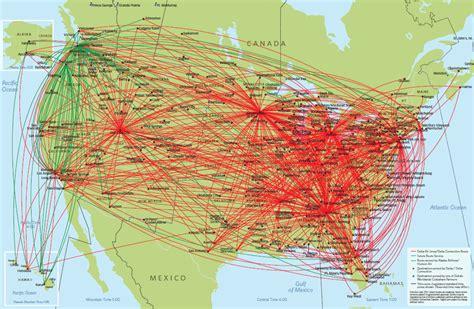
Delta Air Lines, long recognized as one of the leading transatlantic carriers in the United States, has meticulously fine-tuned its European network strategy over the years. While the airline offers robust coverage from its primary hubs like New York-JFK, Atlanta, and Boston, a surprising reality emerges when examining certain secondary markets: from four notable U.S. airports, Delta maintains just a single long-haul transatlantic route.
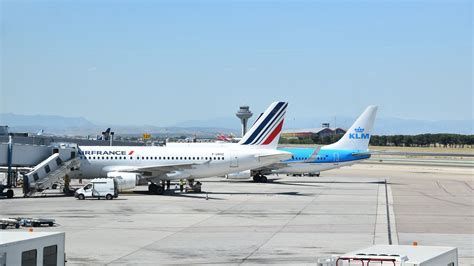
This strategic minimalism is not accidental. Each of these routes exists solely to feed SkyTeam alliance megahubs in Amsterdam (AMS) and Paris Charles de Gaulle (CDG) through partnerships with KLM and Air France. These cities remain essential nodes for European and onward international connectivity.
The Evolution of Cincinnati’s Transatlantic Role
Once a critical Delta hub, Cincinnati/Northern Kentucky International Airport (CVG) has seen a dramatic reduction in transatlantic services. Prior to Delta’s post-bankruptcy realignment and the Northwest Airlines merger, CVG featured a thriving European network. In its heyday, Delta operated to cities including Amsterdam, Frankfurt, London Gatwick, Munich, Paris Orly, Rome, and Zurich. Air France even briefly flew its Airbus A340-300 on the Paris route.
Today, all of that has been distilled into a single daily service to Paris CDG, operating primarily with an Airbus A330-300 in summer and a Boeing 767-400ER in winter. Although Cincinnati no longer functions as a hub or even a focus city, this connection persists thanks to strong connecting traffic beyond Paris and the legacy demand of the route, which has been active since 1997.
Los Angeles: Asia-Focused, Europe-Limited
Unlike Cincinnati, Los Angeles International Airport (LAX) remains a full-fledged Delta hub. However, Delta’s international strategy at LAX emphasizes the Asia-Pacific region, leaving Europe with limited representation. Past efforts to expand transatlantic offerings at LAX included services to London Heathrow and Amsterdam, but only one has endured.
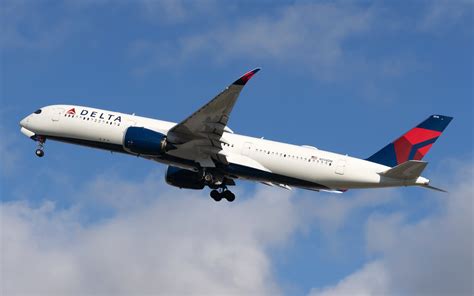
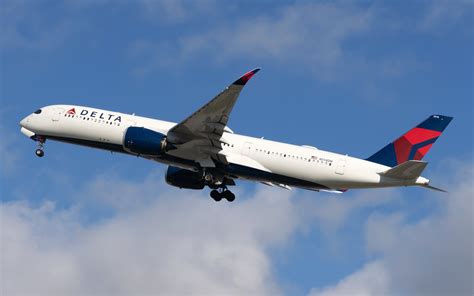
Delta’s current and only long-haul European route from LAX is the daily Paris CDG flight, introduced in 2018. It operates year-round with the flagship Airbus A350-900, although winter sees a reduction to three weekly frequencies. This Paris connection is crucial for SkyTeam’s global feed. In 2024, about 60% of passengers from LAX to Paris connected onward through CDG, emphasizing the route’s role as a feeder into Air France’s extensive European and African network.
Orlando’s Evolving Link to Amsterdam
Orlando International Airport (MCO) is not a Delta hub nor even a focus city. Yet its seasonal winter route to Amsterdam Schiphol persists, reflecting growing demand for Florida-Europe leisure and VFR (visiting friends and relatives) traffic. Introduced in 2018, the route initially operated year-round before shifting to a winter-only schedule. At one point, London Heathrow was also tested but eventually withdrawn.
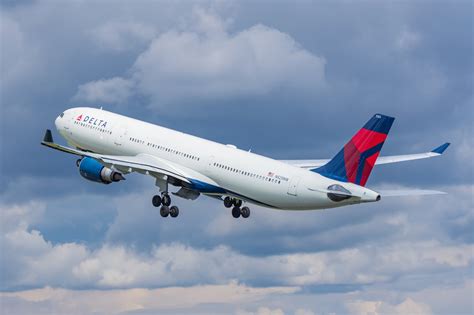
In its current form, Orlando’s only Delta-operated European route is a daily A330-300 service to Amsterdam, operating solely during winter. A striking 56% of passengers connect beyond AMS, using KLM’s immense intra-European and intercontinental reach. Notably, Air France resumed Paris-Orlando flights in mid-2024, signaling that SkyTeam still sees strong demand in Central Florida, albeit distributed among partners.
Tampa’s Short-Lived but Resurrected Amsterdam Route
Tampa International Airport (TPA) saw its first-ever Delta transatlantic route only in 2019, when a seasonal Amsterdam flight began. Unfortunately, the pandemic cut that launch short. It wasn’t until late 2024 that Delta resumed service, this time with four weekly flights initially, ramping up to daily operations by winter.
Despite being one of the newest entrants, the Tampa-Amsterdam route showed mixed performance in late 2024, with Delta transporting 26,000 passengers in November and December, achieving a load factor of just 79% — below the 88% average across all Delta Schiphol routes. Still, the route’s existence aligns with Delta’s growing interest in tapping Florida’s tourist and expatriate market to Europe.
A Closer Look at 2025 Route Operations
For travelers and analysts alike, understanding the nuances of Delta’s scheduling strategy is crucial. Here’s how these four unique routes are structured for the upcoming 2025 season:
Cincinnati (CVG) – Paris CDG
- Summer 2025: Daily service using A330-300
- Winter 2025: Three weekly flights using 767-400ER
Los Angeles (LAX) – Paris CDG
- Summer 2025: Daily service using A350-900
- Winter 2025: Three weekly flights using A350-900
Orlando (MCO) – Amsterdam AMS
- Summer 2025: No service
- Winter 2025: Daily service using A330-300
Tampa (TPA) – Amsterdam AMS
- Summer 2025: Four weekly flights using A330-300
- Winter 2025: Daily service using A330-300
Strategic Context: SkyTeam’s Role and Transatlantic Joint Ventures
Delta’s transatlantic approach is heavily influenced by its joint venture agreements with Air France and KLM. These partnerships allow the three airlines to coordinate scheduling, pricing, and capacity across the Atlantic. The presence of Delta-operated routes from non-hub cities like Cincinnati and Tampa isn’t a stand-alone business case but part of a broader network optimization strategy where Delta and its partners function as a single transatlantic carrier.
This coordination enables better aircraft utilization, allows access to underserved markets, and consolidates traffic via Amsterdam and Paris, which remain among the top European connecting hubs. The high percentage of connecting passengers further confirms that these flights function as spokes feeding larger SkyTeam hubs, rather than point-to-point services.
The Ghosts of Delta’s European Past
These four cities are not alone in once having transatlantic routes. A look back at Delta’s network evolution reveals numerous U.S. airports where European service has come and gone. Many of these services existed during the post-Northwest merger period or during brief expansions tied to joint venture ambitions. Some notable examples include:
- Chicago O’Hare to Paris CDG (2011–2017)
- Indianapolis to Paris CDG (2018–2020)
- Memphis to Amsterdam (2010–2012)
- Miami to London Heathrow (2011–2012)
- Pittsburgh to Paris CDG (2019–2018)
- Raleigh/Durham to Paris CDG (2016–2020, 2022–2023)
These routes were discontinued for various reasons — lack of profitability, poor connecting options, or shifting focus to other alliance partners. Yet their temporary existence highlights Delta’s experimental, often bold, approach to network development.
Looking Ahead: Growth or Further Consolidation?
While these single-route strategies seem limited on the surface, they reflect Delta’s disciplined, data-driven approach to long-haul network management. With fleet modernization, increased reliance on Airbus A330neo and A350 aircraft, and dynamic schedule adjustments, Delta may continue to test new routes from non-hub cities — but only when backed by robust connectivity partnerships and strategic demand metrics.
The lessons from Orlando, Tampa, Cincinnati, and Los Angeles suggest that Delta is committed to measured international growth, one that respects both alliance synergies and local market realities. In an industry where profitability hinges on each route’s performance, these singular transatlantic links are likely to remain the exception, not the rule.