International air travel is experiencing one of its most dramatic price shocks in recent years. Passengers attempting to fly between Asia and Europe are facing ticket prices that have surged to levels rarely seen in commercial aviation. In some cases, economy-class fares have increased tenfold, transforming what was once a relatively predictable intercontinental route into an extremely expensive and uncertain journey.
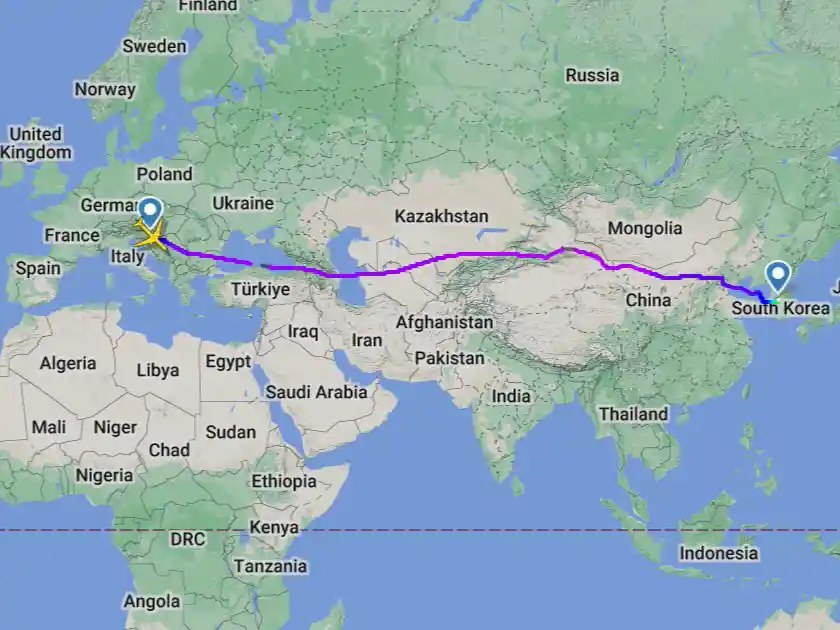
The cause of this sudden disruption lies in the escalating conflict involving US-Israeli forces and Iran, which has severely affected airspace across the Middle East. With multiple airports temporarily shutting down and airlines forced to suspend or reroute flights, a critical corridor for global aviation has fractured. The consequences ripple far beyond the region itself, particularly along the heavily traveled Asia–Europe aviation corridor.
Travelers who once relied on smooth connections through Gulf megahubs now find themselves scrambling for alternative routes, often at staggering prices.
A Critical Aviation Corridor Suddenly Disrupted
The Middle East has long functioned as the central bridge between Europe and Asia. Airlines based in the Gulf—especially Emirates, Qatar Airways, and Etihad Airways—built massive hub-and-spoke networks designed precisely for this purpose. Passengers from dozens of Asian cities could connect through Dubai, Doha, or Abu Dhabi and continue onward to Europe with minimal travel time.
When conflict forced large portions of regional airspace to close and operations to shrink dramatically, that bridge effectively collapsed.
These three Gulf carriers collectively handle roughly one-third of all passenger traffic between Asia and Europe. Removing such a massive chunk of capacity from the market almost overnight has produced a classic supply shock. Thousands of seats disappeared from booking systems while tens of thousands of passengers still needed to travel.
Airlines across Asia have suddenly become the remaining lifeline.
Asian Airlines Become the New Escape Route
With Middle Eastern hubs constrained, travelers are increasingly routing themselves through major Asian aviation centers such as Hong Kong, Singapore, and Tokyo. Airlines including Cathay Pacific and Singapore Airlines have emerged as the most viable alternatives for passengers seeking to reach Europe.
These carriers already operate extensive long-haul networks connecting Asia with cities like London, Paris, Frankfurt, and Amsterdam. Under normal conditions, their flights complement the services offered by Gulf airlines. Now they are absorbing an enormous surge in demand.
The sudden influx of passengers—many attempting to escape disrupted transit routes—has rapidly filled available seats. Flights that typically have moderate load factors are now departing almost completely full.
Once aircraft reach capacity, the only mechanism left to balance demand is price.
Ticket Prices Skyrocket to Extraordinary Levels
Airfare tracking platforms and booking websites are now showing numbers that would have seemed implausible only weeks ago. One-way economy-class tickets between Asia and Europe have appeared at prices up to ten times higher than their usual levels.
A clear example comes from the Singapore–London route, one of the busiest long-haul connections in the world. A seat on Singapore Airlines departing Singapore Changi Airport for London Heathrow Airport recently appeared online for over $2,500.
Only days earlier, during the height of the disruption, the same flight briefly reached $8,500 for a single economy ticket.
Such spikes are not the result of arbitrary pricing but rather a collision between overwhelming demand and drastically limited supply. Aircraft simply cannot be added overnight. Long-haul fleets are scheduled months in advance, and aircraft availability, crew logistics, and airport slots limit how quickly airlines can expand capacity.
Flights Selling Out Across the Network
The surge in demand has produced another major problem: entire routes selling out for days at a time.
One of the clearest examples comes from Qantas’ Perth–London nonstop service, one of the longest commercial flights in the world. The airline has reportedly sold out economy seats for at least ten consecutive days, leaving only premium cabin seats—or nothing at all—for travelers hoping to reach Europe.
Similar shortages are appearing across other Asian carriers as well. Popular routes such as:
- Singapore to London
- Hong Kong to Frankfurt
- Tokyo to Paris
- Seoul to Amsterdam
are experiencing extremely limited availability. When seats do appear, they are often priced far above their historical averages.
Aviation analysts note that this type of market distortion occurs whenever a major transit hub suddenly disappears from global aviation networks.
Massive Flight Cancellations Across the Middle East
The disruption is not merely theoretical. Data from aviation analytics firm Cirium reveals the scale of operational collapse in the region during the first week of the crisis.
Across eight days, airlines scheduled 29,343 flights, yet 16,493 were cancelled, representing a cancellation rate of over 56 percent. On several days, more than 65 percent of scheduled flights failed to operate.
Those figures illustrate why travelers were suddenly stranded in massive numbers.
Airports throughout the Gulf became temporary holding zones for thousands of passengers who had already begun journeys but could no longer complete them. Connecting itineraries collapsed as flights vanished from schedules with little notice.
Tens of Thousands of Stranded Travelers
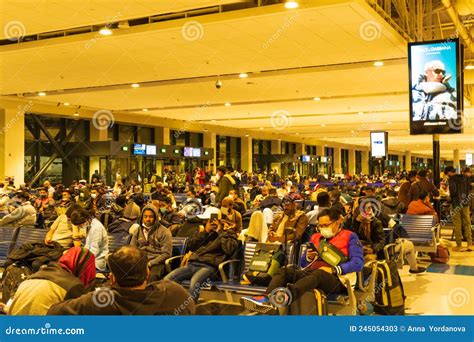
The sudden shutdown created chaos inside major transit hubs.
Airports in Dubai, Doha, and Abu Dhabi saw enormous crowds of travelers waiting for alternative flights. In the United Arab Emirates alone, more than 20,000 passengers were stranded, according to regional reports.
Governments and airport authorities scrambled to manage the situation. Emergency accommodations were arranged, with authorities covering hotel rooms, meals, and transportation for stranded travelers.
Some passengers chose even more unusual escape routes. Long bus journeys across borders became common as travelers attempted to reach airports in neighboring countries that still had operational flights.
Buses carrying exhausted passengers traveled into Oman and Saudi Arabia, where some travelers finally found flights out—often at extremely high prices.
Why Prices May Remain Elevated
Airline economists and industry analysts believe the current surge in prices could continue for several days or even weeks, depending on how quickly stability returns to the region.
According to aviation consultant Linus Benjamin Bauer, the disruption temporarily benefits Asian airlines because their hubs remain outside the conflict zone. However, he emphasizes that the shift is likely short-term rather than structural.
Once Middle Eastern carriers restore full operations, their massive networks will again dominate the Asia-Europe market.
Still, restoring normal conditions will take time. Aircraft schedules must be rebuilt, crews repositioned, and passenger demand gradually redistributed across the system. Even after flights resume, backlogged demand from stranded travelers may keep prices elevated.
The Fragility of Global Air Travel Networks
The current crisis highlights an often-overlooked reality of modern aviation: the system is remarkably efficient but surprisingly fragile.
Over the past two decades, airlines have optimized routes around major hub airports that function like the circulatory system of global travel. When one of those hubs fails—especially a region as strategically located as the Middle East—the shock travels quickly through the entire network.
Flights become longer, connections disappear, and prices rise sharply.
For travelers hoping to move between Asia and Europe today, the lesson is clear. What was once a routine intercontinental trip has temporarily transformed into one of the most expensive and unpredictable journeys in global aviation. Until stability returns to Middle Eastern airspace and airlines restore their full schedules, passengers may continue to face eye-watering ticket prices simply to get home.