Overview of Entebbe International Airport
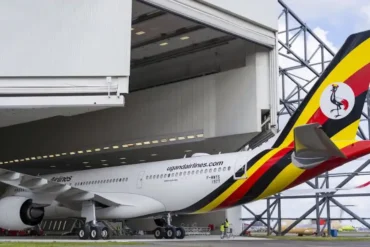
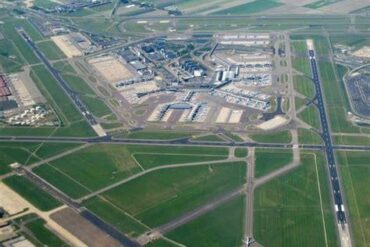
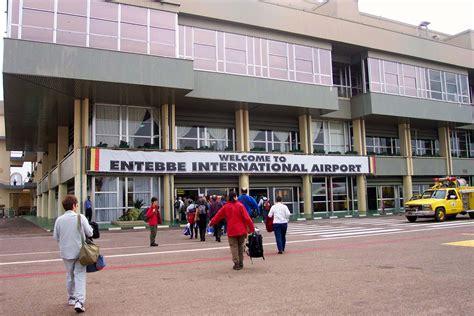
Entebbe International Airport (EBB) is Uganda’s sole international gateway and a linchpin of East Africa’s aviation network. Positioned on the northern shore of Lake Victoria, just 6 kilometres from Entebbe town and 40 kilometres from the capital city Kampala, the airport is operated by the Republic of Uganda under the Civil Aviation Authority (CAA). With its role as a key hub for Uganda Airlines and Eagle Air, EBB supports both passenger and cargo operations that are vital to the nation’s infrastructure and economic growth.
Strategic Location and Historical Legacy
Built during British colonial rule, the airport was established at a location selected for its logistical advantage on Lake Victoria. It was reopened in 1951 with expanded runway capabilities to accommodate de Havilland Comet jetliners, which signalled Uganda’s commitment to modern air travel. The airport’s modern terminal, a landmark built between 1972 and 1973 by Energoprojekt and designed by architect Aleksandar Keković, ushered in a new era of regional aviation.
The airport holds global historical relevance due to the dramatic Operation Entebbe in 1976, when Israeli commandos executed a daring hostage rescue following the hijacking of Air France Flight 139. The operation made headlines worldwide and transformed the airport into a site of military and political interest.
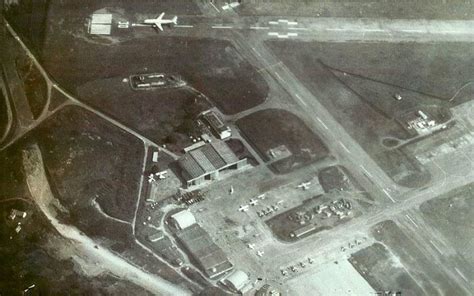
The devastation of 1979, during the Uganda–Tanzania War, left significant damage at the airport. Nevertheless, EBB rebuilt and adapted, becoming a linchpin in Uganda’s post-war reconstruction.
Modernization and Infrastructure Expansion (2015–2033)
Recognizing the growing needs of aviation traffic, Uganda launched an ambitious modernization plan in 2015. The airport’s three-phase upgrade through 2033—valued at US$586 million—seeks to transform EBB into a state-of-the-art facility that can serve increasing global and regional demand.
Phase I: Foundational Overhaul (2015–2018)
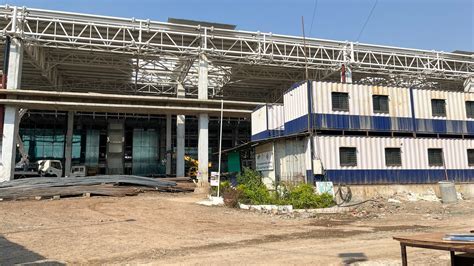
Backed by a US$200 million loan from Exim Bank of China, Phase I focused on expanding cargo capacity and updating terminal facilities. The Chinese-built cargo centre, operational since March 2022, tripled the airport’s handling capacity from 50,000 to 100,000 metric tonnes per year. This enhancement serves Uganda’s growing exports in floriculture, agriculture, and mineral resources.
Runway 12/30 also underwent major renovation, completed in 2019. When this phase concludes in 2024, the airport will handle 3.5 million passengers annually, up from the current 2 million.
Phase II: Fueling Future Capacity (2019–2023)
Though delayed by the COVID-19 pandemic, Phase II is now nearing fruition. The expansion of fuel storage infrastructure, executed by Tristar Energy Limited, includes underground tanks with 12 million litres of capacity and a 7-kilometre pipeline network. These developments will scale up to 23 million litres by 2029, reinforcing Uganda’s energy security and aviation efficiency.
Phase III: Innovation and Passenger Comfort (2024 Onward)
The upcoming phase, budgeted at US$160.5 million, will fund a new control tower, multi-story car park, and expanded lounges for departures and arrivals. With this final upgrade, EBB aims to match the standards of premier international airports across Africa and beyond.
Expanding Passenger Facilities
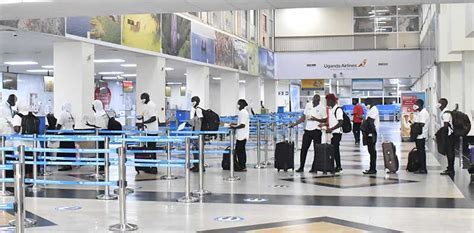
In 2016, Uganda launched a separate initiative to enhance passenger experience. With a USh 42.6 billion (US$11.4 million) budget from the Civil Aviation Authority and implemented by Seyani Brothers Limited, the departure and arrival lounges were expanded and modernized by December 2017. These enhancements are separate from the larger infrastructure overhaul and reflect Uganda’s prioritization of traveller comfort.
Airline Connectivity and Network Reach
Entebbe International Airport maintains vital connectivity to the African continent and major international hubs. Passenger services span a rich array of destinations:
- Ethiopian Airlines, Kenya Airways, Egyptair, RwandAir, and Uganda Airlines offer multiple intra-African routes.
- Global carriers like Emirates, Qatar Airways, Turkish Airlines, KLM, and Brussels Airlines link Uganda to Europe, the Middle East, and Asia.
- Upcoming direct service to London-Gatwick by Uganda Airlines will begin on 18 May 2025, adding a critical European link.
The presence of UN Humanitarian Air Service ensures logistical access to conflict and crisis zones, reinforcing EBB’s strategic humanitarian value.
Cargo Operations and Logistics Powerhouse
Entebbe’s role as a cargo hub is growing exponentially. The airport is served by industry giants including:
- Ethiopian Airlines Cargo
- Emirates SkyCargo
- Qatar Airways Cargo
- Uganda Air Cargo
- Etihad Cargo
These carriers operate flights to key logistics centres such as Dubai, Brussels, Frankfurt, and Johannesburg. In the first half of 2024 alone, EBB processed over 32,794 metric tonnes of cargo, underscoring its expanding relevance in global trade.

Ground Handling Services
Four certified ground handling firms now operate at EBB:
- Menzies Aviation Uganda (MAU)
- DAS Handling Limited (ACC3/RA3 certified)
- Fresh Handling Limited, focused on perishable goods
- Uganda Airlines Ground Handling, which began self-service in September 2022
This diversity ensures competition and quality across logistical and passenger service segments.
Passenger Traffic Trends and Growth
Since 2002, international passenger traffic has shown remarkable growth. While 2009 and 2014 saw minor declines, numbers have surged from 118,527 in 1991 to over 2.2 million by 2024. The COVID-19 pandemic caused a severe dip in 2020, with only 565,541 passengers, but traffic has rebounded strongly since then. From January to June 2024, Entebbe handled over 1.06 million international passengers.
Safety, Certification, and Global Standards
Entebbe’s reputation as a safe and regulated airport was reinforced in September 2023, when it and Uganda Airlines underwent the ICAO Safety Oversight Audit. These certifications ensure compliance with international aviation standards, boosting confidence among carriers and passengers alike.
Controversies and Clarifications
In 2021, a wave of media reports alleged that Uganda risked losing Entebbe Airport to China due to a loan default with Exim Bank. The Ugandan government vehemently denied these claims. The Attorney General dismissed the news as “fake,” and the Ministry of Finance clarified that Uganda maintained full control over the airport and was merely seeking to amend terms—not surrender assets.
Separately, SriLankan Airlines caused a stir by tweeting in April 2021 about transporting 102 metric tonnes of printed material. After public concern, it was confirmed that the cargo comprised Ugandan currency printed abroad, a legal and commercially legitimate consignment handled transparently.
Accidents and Notable Incidents
Entebbe has seen its share of aviation incidents:
- 1976: The hijacking of Air France Flight 139 and subsequent Operation Entebbe remains the airport’s most iconic event.
- 2000: A DAS Air Cargo DC-10 overran the runway into Lake Victoria. No fatalities occurred.
- 2009: An Aerolift Il-76 crashed after takeoff, killing all 11 onboard. Investigation revealed expired engines and falsified maintenance logs.
- 2018: A Bulgarian Emirates flight attendant tragically committed suicide while the plane was parked.
Economic and Regional Impact
Entebbe International Airport is not just Uganda’s air travel gateway but a powerful driver of its tourism, commerce, and international diplomacy. Its ongoing modernization strengthens its status as an aviation nerve centre for East and Central Africa.
As Uganda looks ahead, the strategic development of Entebbe will be critical for achieving its Vision 2040 goals, positioning the country as a competitive regional hub in air logistics, tourism, and international trade.