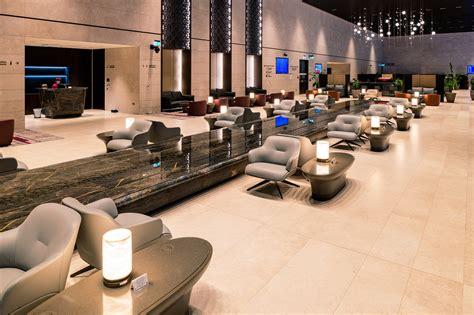
Flying business class in 2025 is defined as much by what happens on the ground as by the experience in the air. Across the world’s major hubs, business class lounges have evolved into strategic infrastructure, shaping how premium travelers experience long connections, irregular operations, and tightly banked departure schedules. We now judge airlines not only by seat width or onboard dining, but by how effectively their lounges support productivity, recovery, and calm during the most demanding phases of modern travel.
The shift is structural rather than cosmetic. As premium demand concentrates around a limited number of global hubs, airlines are processing unprecedented volumes of high-yield passengers within narrow time windows. Business class lounges are no longer quiet side rooms for early arrivals; they are high-capacity environments that must function reliably under pressure, absorbing hundreds or thousands of guests without sacrificing comfort or dignity. In this context, the most notable lounges in 2025 are those that balance scale, layout, and operational discipline to create spaces that genuinely work.
This transformation has been accelerated by the gradual decline of international first class. As first class cabins disappear from many fleets, business class has become the default premium product for corporate travelers, entrepreneurs, and long-haul leisure passengers alike. The lounge, therefore, carries greater symbolic and practical weight than ever before. It is where journeys are prepared, recovered from, and often judged. Airlines that understand this reality have invested accordingly, building lounges that operate more like calm, premium terminals than traditional waiting rooms.
Business Class Lounges as Core Premium Infrastructure
The most successful airlines in 2025 treat business class lounges not as optional perks, but as essential components of their hub strategy. We see this most clearly at airports built around tightly coordinated connection banks, where dozens of long-haul flights arrive and depart within compressed timeframes. In these environments, lounge design must account for passenger flow, dwell time, acoustics, and service scalability, not just visual appeal.
A modern business class lounge must deliver several experiences simultaneously. It must allow passengers on short connections to eat and refresh quickly, while offering those on longer layovers the ability to work, rest, or mentally decompress. Noise management, spatial zoning, and service pacing have become as important as food quality or furniture design. The airlines that excel in 2025 are those that have designed lounges around real-world usage patterns, rather than idealized notions of exclusivity.
Crucially, reliability now defines luxury. A lounge that looks spectacular but collapses under peak demand no longer meets premium expectations. Travelers increasingly value predictability: knowing there will be space to sit, a proper meal available without queues, and showers that are accessible and well maintained. In this sense, the best business class lounges in 2025 succeed by removing friction, not by adding novelty.
Qatar Airways and the Power of Deliberate Separation
Among global network carriers, Qatar Airways stands apart for the way it integrates business class lounges into the operational heart of its hub. At Doha Hamad International Airport, the airline operates multiple flagship business class lounges, most notably the Al Mourjan Business Lounge and the Al Mourjan Garden Lounge. Together, these spaces demonstrate how thoughtful separation and sheer capacity can transform the premium ground experience.
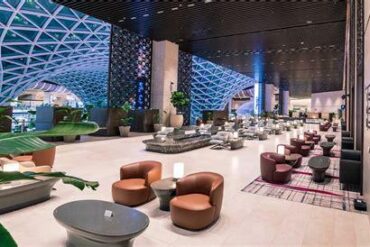
Rather than concentrating passengers into a small number of multifunctional zones, Qatar Airways disperses activity across clearly distinct areas. Dining spaces, quiet seating, work zones, and relaxation areas are physically and visually separated, reducing congestion and acoustic spill even during peak departure waves. This design choice is particularly effective at Doha, where ultra-long-haul arrivals often converge before onward departures within short windows.
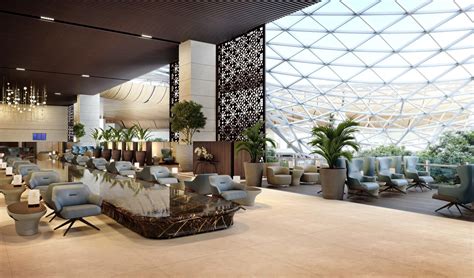
What makes these lounges truly notable in 2025 is their performance under stress. Despite handling large volumes of connecting premium passengers, they consistently maintain a sense of calm and space. Acoustics remain controlled, seating availability is reliable, and service flows smoothly. Qatar Airways has effectively accepted that exclusivity alone cannot preserve quality at scale; instead, it has invested in capacity, redundancy, and intelligent layout. The result is a lounge experience that feels composed rather than crowded, even at its busiest.
Precision Over Spectacle at Singapore Airlines and ANA
While some airlines pursue size as the primary solution to crowding, Singapore Airlines and All Nippon Airways (ANA) illustrate a different philosophy. At their respective hubs, both carriers prioritize precision, zoning, and operational discipline, creating business class lounges that feel measured and predictable rather than expansive or theatrical.
Singapore Airlines’ SilverKris Business Class Lounges at Singapore Changi Airport exemplify this approach. Seating is carefully segmented into dining, working, and relaxation zones, reducing noise bleed and visual clutter. Food service emphasizes freshly prepared hot meals delivered through controlled service points rather than sprawling buffets. Shower suites and quiet areas are positioned to minimize queues, reinforcing a sense of order even during peak periods.
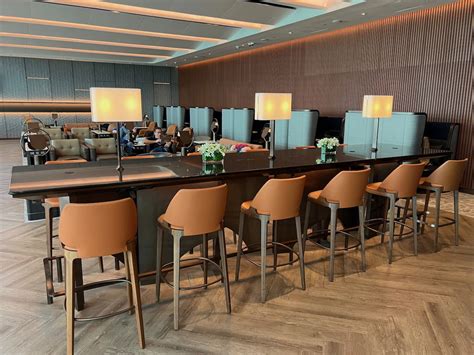
ANA’s business class lounges at Tokyo Haneda and Tokyo Narita push this philosophy further. Layouts are linear and functional, guiding passenger movement intuitively through the space. Signature noodle bars offer fast, high-quality meals that cater perfectly to short connection times, while seating arrangements emphasize personal space and quiet. In an era when many lounges struggle to cope with volume, ANA demonstrates that efficiency itself can be a form of luxury, particularly for time-sensitive travelers.
Turkish Airlines and Emirates: Mastering Volume at Global Crossroads
Few airlines face the challenge of scale as acutely as Turkish Airlines and Emirates. Both rely heavily on sixth-freedom traffic, with Istanbul and Dubai serving as global crossroads for long-haul and ultra-long-haul journeys. Their business class lounges must accommodate enormous passenger volumes across multiple daily waves, often under intense time pressure.
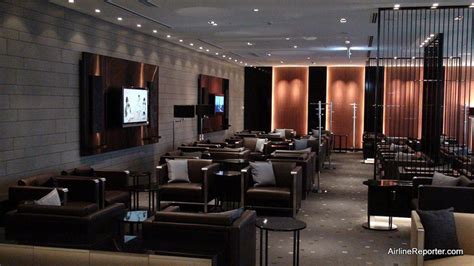
At Istanbul Airport, Turkish Airlines adopts an experiential approach to volume. Its flagship business class lounge is designed to keep passengers moving and engaged during long layovers. Live cooking stations, extensive food counters, private relaxation areas, and leisure-focused amenities encourage guests to spread out rather than cluster. This strategy works particularly well for travelers facing multi-hour connections, where variety and stimulation enhance comfort.
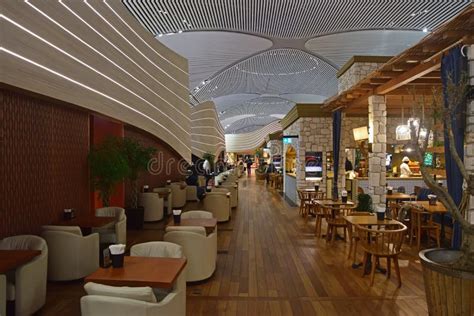
Emirates takes a more functional approach at Dubai International Airport. Its business class lounges span entire concourses, effectively acting as extensions of the terminal itself. Passengers can dine, work, shower, and in some cases board directly from the lounge level. While the atmosphere can feel less intimate during peak periods, the operational efficiency is unmatched. For travelers connecting quickly between long-haul flights, seamless movement from lounge to aircraft remains a powerful advantage in 2025.
European Airlines and the Challenge of Legacy Infrastructure
For much of the past decade, European airlines have lagged behind their Middle Eastern and Asian counterparts in business class lounge quality. Many European lounges were originally designed around short-haul premium traffic and high turnover, leaving them ill-suited to today’s connection-heavy, long-haul travel patterns. As premium demand has rebounded, these limitations have become increasingly visible.
In response, several major European carriers have begun investing more seriously in their business class ground product. Air France has expanded and modernized its lounges at Paris Charles de Gaulle, emphasizing improved dining, natural light, and clearer zoning. Lufthansa has focused on increasing capacity and consistency at hubs such as Frankfurt and Munich, acknowledging that business class passengers now expect reliable lounge access even during peak periods.
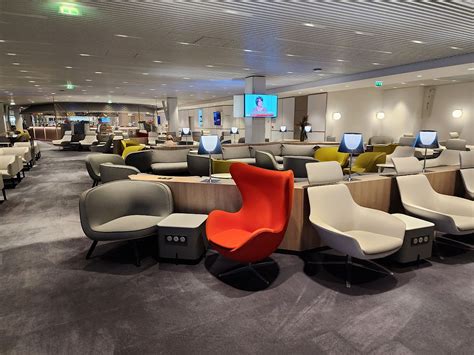
Despite these efforts, Europe faces structural constraints that are difficult to overcome. Slot pressure, fragmented terminal layouts, and the coexistence of short- and long-haul traffic complicate lounge design. While progress is evident, European lounges in 2025 still struggle to match the scale and purpose-built efficiency seen in Doha, Dubai, or Singapore. Nevertheless, the shift in mindset is significant. Business class lounges are no longer treated as secondary amenities, but as critical tools for retaining premium loyalty.
Why Business Class Lounges Matter More Than Ever
In 2025, business class lounges have become one of the clearest indicators of how seriously an airline treats its premium passengers. The most notable examples are not defined by extravagance alone, but by their ability to reduce friction, absorb volume, and provide a sense of composure within some of the world’s busiest airports.
For travelers, lounge quality has become a decisive factor in choosing routes and hubs. A well-designed business class lounge can transform a long connection into a productive or restorative experience, while a poorly executed one can undermine even the strongest onboard product. As airlines continue to refine access controls, capacity management, and service models, lounges will play an even more central role in premium competition.
Ultimately, the airlines leading the way in 2025 understand that luxury lies in reliability. By designing business class lounges that work in real-world conditions, they have elevated the ground experience into a genuine extension of the premium journey.