The aviation industry thrives on predictability, certification stability, and carefully balanced international supply chains. When a political leader threatens to disrupt that balance, the reaction is immediate—and often visceral. Donald Trump’s recent threat to decertify Canadian-built aircraft and impose a 50% tariff on planes manufactured in Canada has triggered precisely that reaction, sending US airlines scrambling to assess operational risk, fleet exposure, and potential fare chaos.
The statement, delivered via social media, accused Canada of blocking certification of US-built Gulfstream aircraft. Whether the threat evolves into policy or fades into rhetoric, the signal alone is enough to unsettle airlines that depend heavily on Canadian aerospace manufacturing. In commercial aviation, uncertainty is not just inconvenient—it is financially radioactive.
Why Canadian Aircraft Matter More Than Most Travelers Realize
US passengers often associate domestic flying with Boeing or Airbus, but the regional aviation backbone of the United States is deeply intertwined with Canadian manufacturing, particularly Bombardier’s CRJ series. These aircraft quietly connect smaller cities to major hubs, enabling the hub-and-spoke model that underpins airline profitability.
Remove that backbone, and the system trembles. Decertification would mean aircraft grounded, routes canceled, and regional connectivity shattered—especially for smaller communities that rely on regional jets as their only air link.
American Airlines and the Hidden Dependency of American Eagle
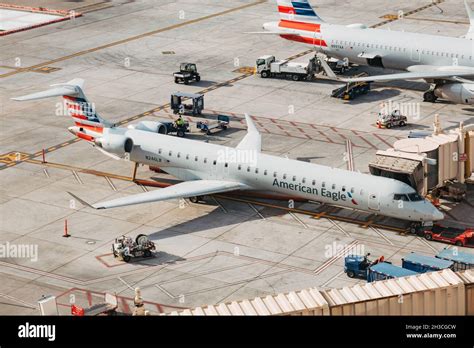
American Airlines’ regional arm, American Eagle, is a prime example of this dependency. In February alone, the airline scheduled over 81,000 regional flights, with tens of thousands operated by Bombardier CRJ700 and CRJ900 jets. These flights collectively deliver nearly two million seats, forming a crucial bridge between secondary cities and American’s major hubs.
While Embraer aircraft handle a larger share of flights, the CRJ fleet represents a massive chunk of capacity. A sudden decertification would force American Airlines to either ground aircraft or scramble for replacement capacity—an operational nightmare with limited immediate solutions.
Delta’s Exposure: A Regional Network Built on CRJs
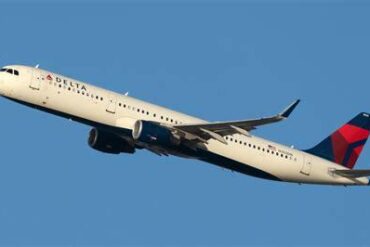
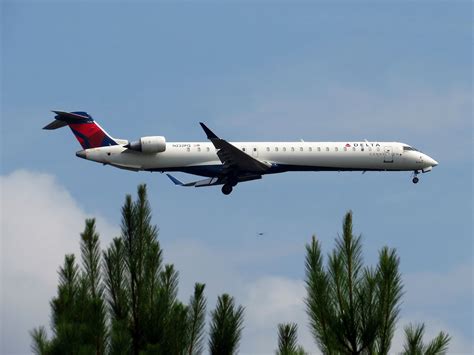
Delta Air Lines faces an even sharper exposure. Delta Connection relies more heavily on Bombardier CRJ aircraft than any other major US carrier, with more than half of its scheduled regional flights operated on Canadian-built jets. Endeavor Air and SkyWest Airlines use multiple CRJ variants to maintain Delta’s intricate domestic network.
If certification were revoked, tens of thousands of flights and roughly two million seats could vanish almost overnight. For Delta, this is not a marginal risk—it is a structural threat to its feeder system.
United Airlines: Less Vulnerable but Still Not Immune
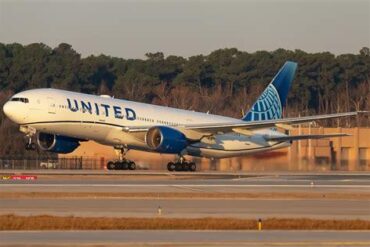
United Airlines is comparatively insulated, with a larger share of regional flights flown by Embraer aircraft. Still, nearly 20,000 United Express flights in February alone are scheduled on Bombardier aircraft, representing over a million seats.
Even this “lower exposure” scenario would be disruptive. Airlines plan fleets years in advance, and swapping aircraft types is not like swapping rental cars. Pilot training, maintenance infrastructure, spare parts supply chains, and contractual obligations all lock airlines into specific aircraft families.
Cross-Border Fallout and Air Canada’s US Operations
The threat extends beyond US carriers. Air Canada operates thousands of flights into the United States using Canadian-built aircraft, offering nearly 200,000 seats in a single month. Tariffs or certification conflicts could complicate cross-border aviation, potentially triggering retaliatory measures and escalating into a broader aviation trade dispute.
In a sector where international agreements underpin safety and commerce, weaponizing certification is an extreme move with unpredictable ripple effects.
The Real Fear: Capacity Collapse and Fare Inflation
Airlines are panicking not because of politics, but because of physics and economics. Aircraft cannot be replaced instantly. Production slots for new jets are sold out for years, leasing markets are tight, and alternative aircraft types require certification, pilot training, and operational adjustments.
If Bombardier jets were grounded or heavily taxed, airlines would face a sudden capacity shortfall. Less capacity almost always means higher ticket prices, reduced frequency, and diminished connectivity for smaller cities. The people most affected would not be corporate executives or political elites, but everyday travelers and regional economies.
Bombardier’s Strategic Role in North American Aviation
Bombardier’s CRJ program shaped regional aviation for decades, enabling airlines to profitably serve routes that would be impossible with larger aircraft. Although Bombardier exited commercial aviation manufacturing, its legacy fleet remains embedded in North American operations, and there is no instant substitute.
This creates a paradox: policymakers can threaten decertification, but the practical consequences would land squarely on US consumers and businesses.
Certification as a Geopolitical Weapon
Using aircraft certification as leverage is unusual and controversial. Certification is typically managed by regulators like the FAA and Transport Canada, designed to be insulated from political whims. Turning certification into a bargaining chip risks undermining trust in global aviation governance.
Airlines fear not just the immediate policy but the precedent. If certification becomes a geopolitical weapon, every future trade dispute could threaten fleet legality, destabilizing a system built on international mutual recognition.
Markets Hate Uncertainty, and Airlines Hate It More
Financial markets and airline executives share a common fear: unpredictability. Aircraft are capital-intensive assets with lifespans measured in decades. A single policy shift can alter depreciation schedules, lease valuations, and network strategy.
Even if the threat never materializes, the signal itself introduces strategic uncertainty. Airlines must consider contingency planning, legal risks, and potential diplomatic retaliation—all of which add cost and complexity.
A Policy That Could Backfire on US Interests
The irony is sharp. Decertifying Canadian aircraft would likely harm US airlines, US travelers, and US regional economies far more than Canadian manufacturers. The integrated North American aerospace ecosystem means punitive measures rarely stay confined to one side of the border.
Aviation is a deeply interdependent system. Disrupt one node, and the shockwaves propagate through supply chains, ticket prices, employment, and connectivity.
What Happens Next in the Aviation Chess Game
The White House has reportedly clarified that existing Canadian-built aircraft already in service would not be affected, tempering immediate panic. Still, the episode exposes how fragile global aviation policy stability can be when politics enters the cockpit.
Airlines will continue monitoring policy signals, recalculating fleet risk, and preparing contingency scenarios. Travelers may not notice these calculations—until routes disappear or fares spike.
In modern aviation, policy volatility is as dangerous as turbulence, and the industry just felt a sudden jolt at cruising altitude.