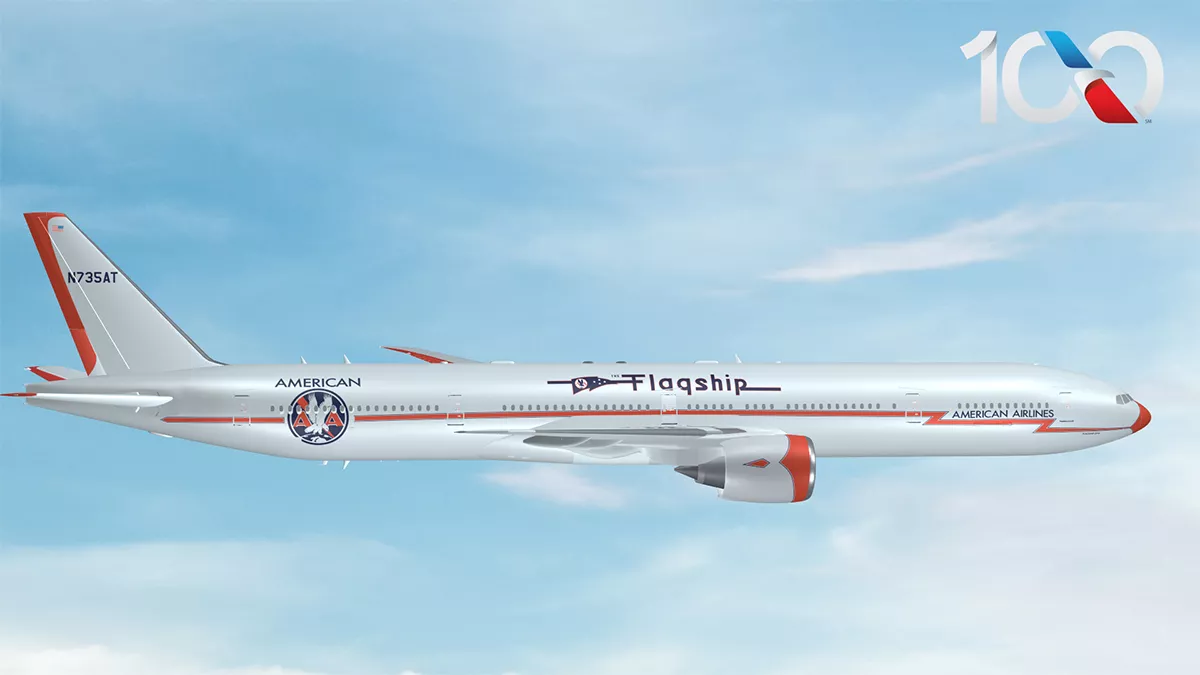
American Airlines is approaching a milestone few corporations ever reach: one hundred years of continuous operation in an industry defined by disruption, risk, and relentless technological change. From fragile biplanes hauling mail sacks across the Midwest to long-range jets stitching together continents, the airline’s evolution mirrors the evolution of American commercial aviation itself. Over the last century, American Airlines did not simply adapt to change; it repeatedly pushed the industry forward, redefining what flying meant for businesses, families, and an increasingly mobile nation.
The story of American Airlines is not a smooth ascent. It is a narrative of experimentation, collapse, reinvention, and scale. Each era forced the airline to answer the same existential question in a new way: how do you make flight reliable, profitable, and indispensable to everyday life? The answers shaped route networks, aircraft design, airport infrastructure, customer service standards, and even the economic geography of the United States.
By tracing American Airlines’ century-long journey, a clearer picture emerges of how the U.S. airline industry transformed from a government-supported novelty into a global system of mass transportation, and why American Airlines remains one of its central architects.
From Mail Contracts to a National Airline
American Airlines was founded on April 15, 1926, though the company that would become today’s global carrier did not yet resemble a unified airline. Early U.S. aviation was fragmented, experimental, and heavily dependent on government airmail contracts, which provided the only stable revenue for fledgling operators. American Airlines emerged from a patchwork of small carriers, most notably Robertson Aircraft Corporation and Colonial Air Transport, which were consolidated under the name American Airways in 1930.
This consolidation was itself transformative. At a time when most airlines operated short, disconnected routes, American Airways began assembling something closer to a national network. The goal was consistency: scheduled flights, standardized operations, and predictable service. That approach helped demonstrate that aviation could move beyond stunts and novelty into a dependable transportation system.
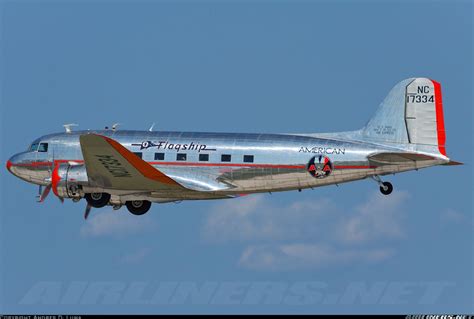
The most consequential decision of this era came through collaboration with Douglas Aircraft Company. American Airlines pushed for an aircraft designed specifically for passengers rather than mail. The result was the Douglas DC-3, introduced in 1936. The DC-3 changed aviation economics overnight. It could operate profitably on passenger revenue alone, without mail subsidies, and it offered comfort, range, and reliability unmatched at the time.
The DC-3 effectively made modern airline business models possible, and American Airlines became one of its most prominent operators. By the late 1930s, the airline had decisively shifted its focus from mail to people, helping normalize scheduled passenger travel across the United States.
World War II and the Foundations of Scale
The outbreak of World War II temporarily redirected the trajectory of U.S. aviation, but it also accelerated its maturity. Airlines like American Airlines gained operational experience, technical expertise, and maintenance capabilities that would later underpin postwar expansion. Aircraft production scaled dramatically, navigation improved, and public familiarity with flight increased.
When peace returned, the United States possessed an aviation ecosystem ready for mass growth. American Airlines entered the postwar years with hard-earned credibility, trained personnel, and a growing appetite from the public for fast, long-distance travel.
Defining the Jet Age of American Travel
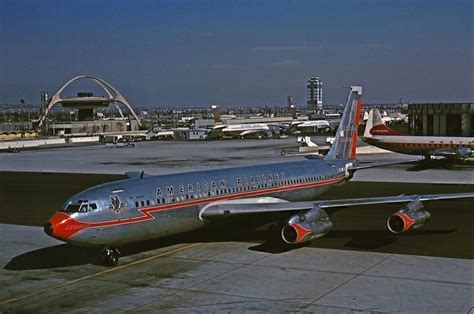
The 1950s and 1960s marked the most visible transformation in the airline’s history: the arrival of the jet age. American Airlines was among the early adopters of jet aircraft, introducing types such as the Boeing 707 and Douglas DC-8. These aircraft collapsed distances. Journeys that once required overnight train travel or multiple stops could now be completed in a single afternoon.
In 1959, American Airlines launched the first scheduled transcontinental jet service between New York and Los Angeles using the Boeing 707. This was more than a technical milestone. It reshaped business culture, media distribution, and personal mobility. Coast-to-coast travel became routine rather than exceptional.
Jet aircraft also forced airlines to rethink how they operated. American Airlines invested heavily in hub development, concentrating flights through strategic cities such as Dallas–Fort Worth, Chicago, and New York. This hub-and-spoke model allowed greater route density, higher aircraft utilization, and broader national coverage.
Service Innovation and the Passenger Experience
While speed and scale defined the jet age, service differentiation became equally important. American Airlines pioneered several concepts that later became industry standards. In 1940, it introduced the first airline lounges for customers, recognizing that air travel involved more than time spent in the air.
In 1957, the airline opened the American Airlines Stewardess College in Fort Worth, the world’s first facility dedicated solely to training flight attendants. This institutionalized professionalism in cabin service and reinforced the idea that flying should be both efficient and hospitable.
By 1966, American Airlines further shaped onboard culture with the launch of American Way, one of the earliest inflight magazines. These initiatives helped define a distinct passenger experience, reinforcing brand loyalty long before digital marketing existed.
Deregulation, Loyalty, and Intensifying Competition
The late twentieth century introduced structural upheaval. U.S. airline deregulation removed government control over fares and routes, unleashing intense competition. Airlines now had to survive on operational efficiency, pricing strategy, and brand loyalty alone.
American Airlines responded with innovation. In 1981, it launched AAdvantage, the world’s first modern frequent flyer program. Loyalty programs transformed consumer behavior, turning airline choice into a long-term relationship rather than a transactional decision. AAdvantage quickly became one of American Airlines’ most powerful strategic assets.
By 1991, the airline had flown its one billionth passenger, a symbolic marker of how deeply air travel had integrated into everyday American life.
Crisis, 9/11, and the Fight for Survival
The turn of the century tested the airline like no previous era. September 11, 2001, fundamentally altered aviation economics, security protocols, and passenger psychology. Demand collapsed. Costs surged. The industry entered a prolonged period of instability.
American Airlines faced rising fuel prices, aggressive low-cost competitors, and shrinking margins. In 2011, its parent company filed for Chapter 11 bankruptcy protection. The move was not an end, but a reset. Bankruptcy allowed the airline to restructure labor agreements, modernize operations, and prepare for consolidation.
The US Airways Merger and a New Scale
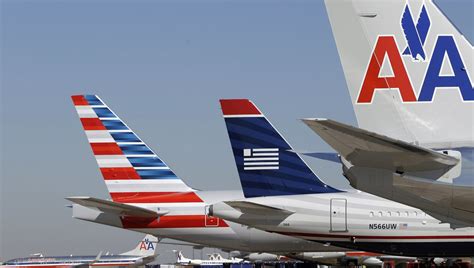
That reset culminated in 2013 with the merger between American Airlines and US Airways, creating the world’s largest airline at the time. The merger reshaped the U.S. airline landscape, strengthening American’s hub network and restoring financial stability.
By 2015, the integration was complete. The combined airline emerged leaner, larger, and better positioned to compete globally. The merger underscored a central truth of modern aviation: scale is survival.
Modernization, Sustainability, and the Digital Airline
In the last decade, American Airlines has focused on modernization beyond aircraft alone. Data-driven decision-making, advanced revenue management, and network optimization now guide strategy. Operational reliability and on-time performance have become competitive differentiators in a crowded market.
Sustainability has also moved to the forefront. American Airlines has committed to reducing emissions through fuel-efficient aircraft, operational improvements, and investment in sustainable aviation fuels. These initiatives reflect growing pressure from regulators, investors, and passengers alike.
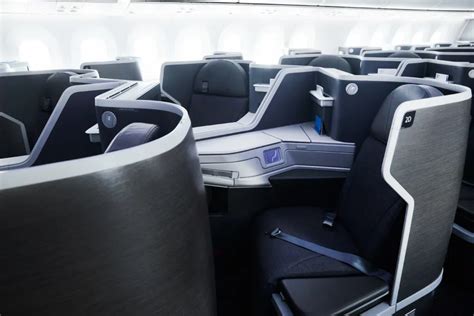
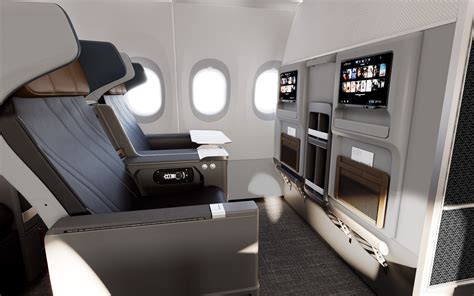
A defining symbol of this era is the introduction of the Airbus A321XLR, which American Airlines will deploy on long-range transatlantic routes. The aircraft combines narrowbody economics with widebody reach and introduces the airline’s new Flagship Suites, signaling a renewed focus on premium experience.
A Fleet Built for the Next Century
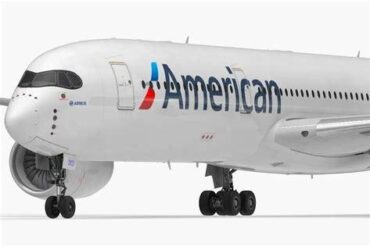
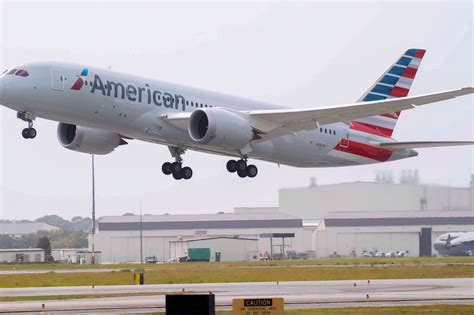
Today, American Airlines operates one of the largest and most diverse fleets in the world, with over 1,000 mainline aircraft spanning Airbus and Boeing platforms. From high-density domestic narrowbodies to long-haul Boeing 787 Dreamliners, the fleet reflects a strategy built around flexibility and scale.
Behind the scenes, extensive maintenance bases in Tulsa, Dallas–Fort Worth, Pittsburgh, and Charlotte support this complexity, while regional partners under the American Eagle brand extend the network into smaller markets.
Looking forward, the airline’s interest in Boom Supersonic’s Overture hints at a willingness to once again explore the frontiers of speed, echoing its jet-age boldness.
Why American Airlines’ First 100 Years Matter
As American Airlines approaches its centennial, its significance extends beyond corporate longevity. The airline helped prove that commercial flight could be safe, scalable, and central to modern life. It shaped aircraft design, normalized hub-based networks, pioneered loyalty economics, and weathered crises that reshaped the industry.
The United States may lack an official flag carrier, but American Airlines has spent a century carrying the nation’s economic, cultural, and technological ambitions across the sky. Its history is inseparable from the history of U.S. aviation itself.
If the first hundred years were about proving that flight could change the world, the next century will test how responsibly, sustainably, and intelligently that power is used. Based on its past, American Airlines is unlikely to remain a passive observer.