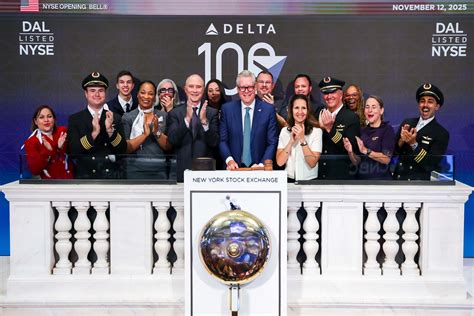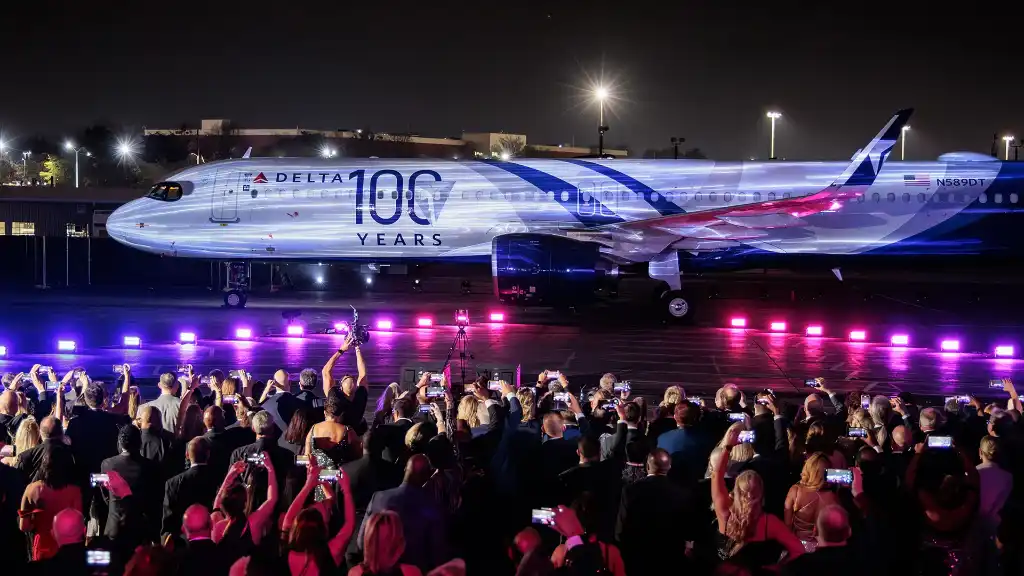
In 1925, long before the roar of jet engines became commonplace in the skies, a small company named Huff-Daland Dusters took root in the red soil of Macon, Georgia. What began as a crop-dusting operation designed to battle the scourge of the boll weevil has since transformed into one of the most formidable aviation giants in the world—Delta Air Lines. Now, as Delta turns 100, it isn’t just celebrating a centennial; it’s reflecting on a century of innovation, resilience, and an unwavering connection to its Southern roots.
From Dust to Departure Gates: Delta’s Humble Beginnings
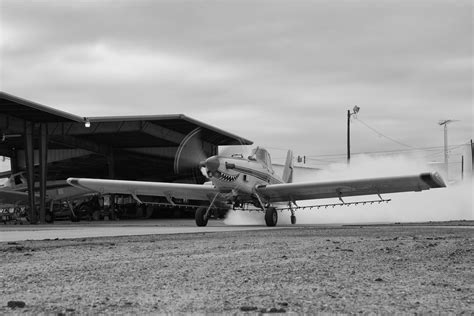
When C.E. Woolman, an agricultural engineer with a vision, helped establish Huff-Daland Dusters, few could have imagined that it would one day evolve into an airline flying more than 200 million passengers annually. Initially headquartered in Monroe, Louisiana, and later moved to Atlanta, Delta’s first aircraft were repurposed military biplanes. These rudimentary machines crisscrossed farmlands spraying pesticides, not ferrying passengers.
It wasn’t until 1929 that Delta took its first tentative step into passenger aviation, launching a route from Dallas, Texas to Jackson, Mississippi, with brief stops in Louisiana. A round-trip ticket? $90—a king’s ransom at the time, equivalent to nearly $1,700 today. Back then, flying wasn’t about convenience or comfort; it was about courage, novelty, and exclusivity.
Fast forward to the present, Delta now operates over 5,000 flights daily, connecting travelers to more than 300 destinations across six continents. It offers everything from in-flight Wi-Fi and seat-back screens to luxury Delta One suites, transforming air travel from mere transportation to an elevated experience.
Atlanta: The Global Gateway and Heart of Delta
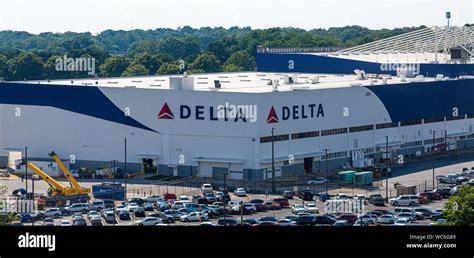
Delta’s story cannot be told without paying tribute to its adopted home: Atlanta, Georgia. As one of the largest employers in the state, Delta is not merely a company based in Georgia—it is a pillar of the community, an economic engine, and a cultural icon. Atlanta’s Hartsfield-Jackson International Airport, the world’s busiest airport, thrives in large part due to Delta’s presence.
The airline’s headquarters, situated adjacent to the airport, hum with the energy of over 90,000 employees worldwide—many of them Georgia natives whose lives and livelihoods are intertwined with Delta’s ascent. Atlanta is not just a hub for Delta’s planes; it’s a crucible of the company’s history, growth, and innovation.
The Delta Flight Museum: A Journey Through the Skies
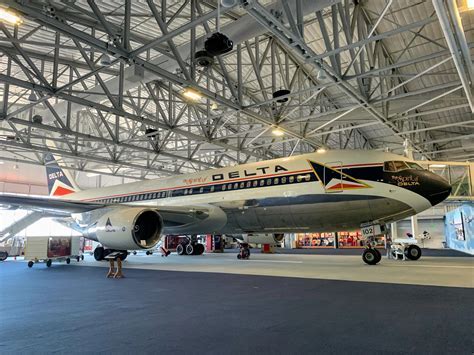
Just a stone’s throw from the bustling terminals, the Delta Flight Museum stands as a beacon for aviation history. Housed in two repurposed 1940s hangars, this museum offers an immersive and educational experience that traces Delta’s evolution across ten decades. Visitors can explore aircraft from every era, including the revered “Spirit of Delta,” a Boeing 767 bought and gifted by Delta employees in 1982 as a tribute to the company’s resilience.
Interactive exhibits, full-motion flight simulators, and a vast collection of memorabilia bring Delta’s story to life. Aviation enthusiasts, students, and families alike are treated to a comprehensive chronicle of not just Delta’s milestones, but also the broader story of commercial aviation’s development.
Adding a hands-on element to this historical journey, the museum hosts monthly surplus sales. On the second Friday of each month, visitors can purchase authentic Delta artifacts—from cockpit panels to engine fan blades and galley carts. These events are not only popular among collectors but serve as a way to preserve and share Delta’s tangible legacy with the public.
The Human Element: Delta’s People and Culture
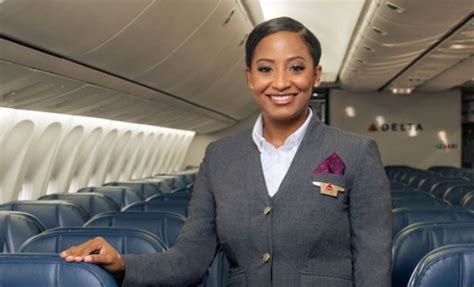
Behind the aircraft and innovations are the people who make Delta soar. With a culture rooted in customer service, professionalism, and loyalty, Delta has consistently ranked among the top airlines for customer satisfaction. Much of this is credited to a workforce that treats passengers as more than ticket holders—they treat them like guests.
Delta’s commitment to its employees is exemplified in its profit-sharing program, which has become legendary in corporate America. In 2020, just before the pandemic rocked the airline industry, Delta paid out $1.6 billion in bonuses—the equivalent of two months’ salary—to its global workforce. Such practices have fostered deep employee loyalty and helped maintain the airline’s reputation for exceptional service.
Innovations That Changed Air Travel
Delta has not merely kept pace with industry trends—it has often set them. From the introduction of the Red Coat service agents in the 1950s, who provided concierge-level assistance, to pioneering electronic ticketing and baggage tracking via mobile apps, Delta has consistently aimed to enhance the passenger experience.
More recently, the airline has invested heavily in sustainable aviation, committing to net-zero emissions by 2050 and incorporating sustainable aviation fuel (SAF) into its operations. Its cutting-edge fleet includes the Airbus A220, a whisper-quiet, fuel-efficient aircraft that offers superior comfort and significantly reduced carbon emissions.
These innovations are not mere vanity projects—they reflect Delta’s larger vision of being an airline for the future, responsive not only to market demands but also to global responsibilities.
A Century of Loyalty: Delta’s Enduring Legacy
As Delta marks its centennial, it does so not just with fanfare, but with the quiet dignity of a company that has earned its place in the skies. It has weathered economic downturns, terrorist attacks, technological disruptions, and most recently, a global pandemic that brought aviation to a near standstill. Through it all, Delta has demonstrated resilience, adaptability, and a tireless drive for excellence.
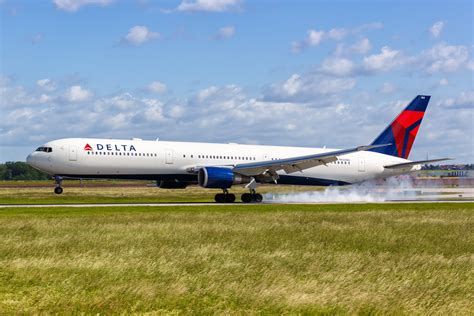
Today, its fleet of over 900 aircraft, its SkyTeam alliance, and its award-winning SkyMiles program stand as pillars of a company that continues to shape the way we travel. Whether you’re a frequent flyer boarding for business or a family heading out on vacation, chances are Delta has been part of your journey.
Looking Ahead: The Next 100 Years in Flight
With its eyes fixed firmly on the future, Delta is doubling down on digital transformation, customer personalization, and sustainability. Artificial intelligence is increasingly used to optimize everything from scheduling to maintenance, ensuring a smoother experience for travelers and better efficiency for operations. Investments in biometric boarding, eco-friendly airports, and customer data analytics promise an even more tailored and seamless flying experience.
As the company sets course for its second century, it does so with the wind of a rich legacy at its back and the promise of innovation guiding its wings. What started as a modest operation in Georgia is now a global symbol of aviation excellence—a brand that has not only moved people but also connected cultures, economies, and dreams.
To walk through Delta’s story is to witness the story of modern air travel itself: a tale of ambition, adversity, and ascent. And as the airline celebrates its 100th year, passengers across the globe are invited to celebrate not just where Delta has been—but where it’s headed.