Arkia Israeli Airlines Ltd, Israel’s second-largest airline, has evolved into a key player in both domestic and international aviation. Established in 1949 as Israel Inland Airlines, it was formed out of necessity—to bridge the transportation gap between Tel Aviv and the newly developed southern city of Eilat. Over the decades, Arkia has transformed from a modest regional operator into a bold competitor in global aviation, driven by innovation, strategic expansion, and a resilient commitment to service.
The Foundation of Arkia: Pioneering Civil Aviation in Israel
Founded in the nascent days of the Israeli state, Arkia’s origins are deeply rooted in national development. The airline launched operations in 1950 with De Havilland DH.89 aircraft, followed shortly by the inclusion of Douglas DC-3s. In its inaugural year, Arkia transported 13,485 passengers—an impressive feat for a fledgling operation relying on a single Curtiss Commando aircraft.
The early 1950s were marked by consistent growth and increased demand. As Eilat gained strategic and economic importance, Arkia provided a critical air link from the central region. By the end of the decade, the airline was operating two daily flights on the Tel Aviv–Eilat route and had expanded its annual passenger numbers to over 70,000. This era also saw the launch of Israel’s first civilian helicopter service in October 1959, cementing Arkia’s place in the annals of national aviation.
In a symbolic moment of growing international stature, Eleanor Roosevelt arrived in Eilat aboard an Arkia aircraft on March 26, 1959. This image of diplomacy and progress marked the airline’s expanding role beyond transport—Arkia had become an emblem of Israel’s post-independence connectivity.
Expansion and Integration: The 1960s to 1980s
By the late 1960s, Arkia’s ambitions extended beyond domestic lines. Between 1967 and 1968, it introduced the Handley Page Dart Herald 200 turboprop, which enabled longer and more versatile routes. Destinations now included Jerusalem and Sharm-el-Sheikh, indicating a transition from basic domestic operations to strategic regional connectivity.
The airline further expanded through the creation of Kanaf Arkia, a subsidiary established via the acquisition of a 50% stake in Kanaf Airlines and Aviation Services. By the end of the decade, Arkia’s network spanned the entire country, from Rosh Pina in the north to Ofira in the far south. In 1980, Kanaf Arkia completed a full merger, unifying the operations and laying the groundwork for international growth.
Throughout the 1980s, Arkia evolved aggressively. It penetrated the international charter market, launching flights beyond Israeli airspace and diversifying into aircraft maintenance. These developments reflected Arkia’s ability to balance innovation with pragmatism.
A New Millennium: Privatization and International Horizons
The 2000s brought a pivotal shift in ownership and direction. In 2006, the Nakash brothers—owners of Jordache Enterprises—acquired a 70% stake in Arkia through their purchase of Knafaim’s share. This infusion of private capital redefined the airline’s strategic priorities.
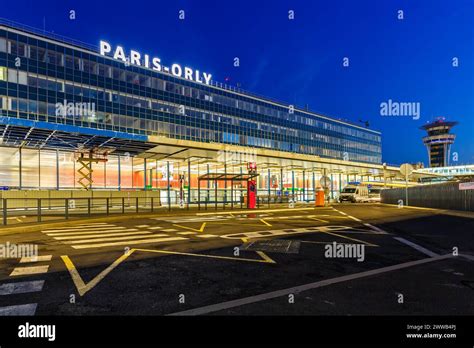
With government policy liberalizing aviation in 2007, Arkia received authorization to operate scheduled flights to Dublin and Larnaca, filling routes previously served by El Al. Encouraged by this success, the airline applied for further scheduled operations to major global cities including New York City, Bangkok, Barcelona, Berlin, Moscow, and Paris. The Paris route was approved in February 2008, with the airline offering both economy and business class services.
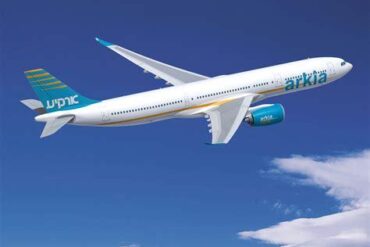
Simultaneously, Arkia sought to modernize its fleet. It initially ordered Boeing 787 Dreamliners, but later reassigned the order to a leasing subsidiary of MG Aviation and instead opted for four Airbus A330neo aircraft, reflecting a strategic pivot towards efficiency and operational flexibility.
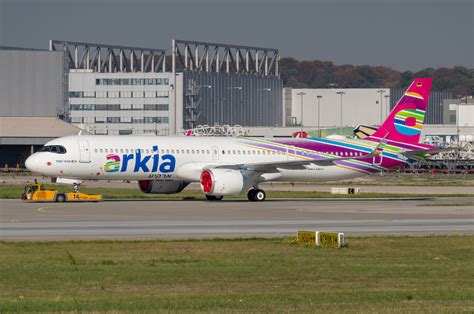
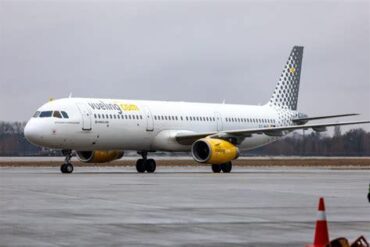
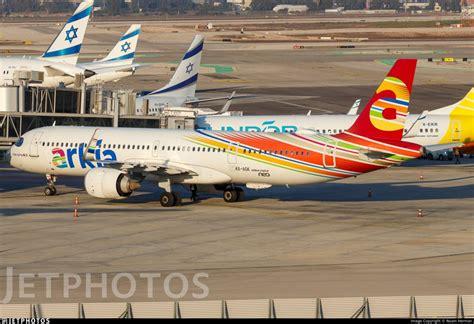
In 2018, Arkia became the worldwide launch customer for the Airbus A321LR, a long-range narrow-body jet designed for mid-haul international routes. This move signified Arkia’s entry into more competitive markets without sacrificing cost-effectiveness.
Modern Moves: New York Service and Fleet Enhancements
Arkia continued to scale its international presence in the 2020s. In May 2024, the airline began wet-leasing a Boeing 737-700 from Ukrainian operator SkyUp, bolstering its short-term capacity. More significantly, in January 2025, it announced the start of direct flights between Tel Aviv and New York City, scheduled to launch on February 8, 2025 using Airbus A330-900 aircraft operated by Iberojet.
A second frequency was confirmed in May 2025, with flights to begin in June 2025 on Boeing 787-9 Dreamliners operated by Neos Air. These developments mark Arkia’s most assertive entry into transatlantic service and symbolize its aspirations to become a global carrier.
Current Fleet and Capacity
As of September 2022, Arkia operates a lean but modern fleet:
- 2 Airbus A321LR: 219 seats; ideal for mid-range international routes.
- 1 Embraer 190: 110 seats; suitable for regional and domestic markets.
- 3 Embraer 195: 122 seats; offering slightly larger capacity for dense short-haul routes.
This fleet composition highlights Arkia’s preference for fuel-efficient, flexible aircraft that match Israel’s geographic and market-specific needs. The decision to forego large wide-body aircraft in favor of leasing arrangements reflects both fiscal discipline and market responsiveness.
Signature Livery: A Bold New Look
In May 2017, Arkia introduced a striking new livery to accompany the arrival of its new aircraft. Featuring a lowercase “a” on the tail fin and multicolored stripes across the rear fuselage and winglets, each aircraft’s color scheme is unique. This design embodies the brand’s modern identity—diverse, dynamic, and vibrant.
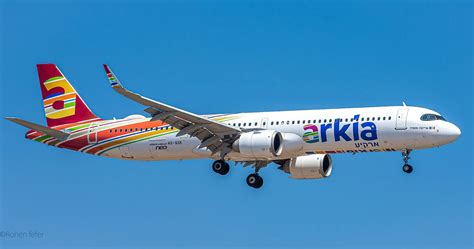
The livery change was not just aesthetic; it signaled a turning point in Arkia’s visual and corporate identity, appealing to a global audience while maintaining a distinctly Israeli character.
Safety and Resilience: The 2002 Mombasa Incident
Arkia’s strong safety record was tested on November 28, 2002, when Flight 582, a Boeing 757-300, narrowly escaped a terrorist attack. Shortly after takeoff from Moi International Airport in Mombasa, Kenya, two surface-to-air missiles were launched at the aircraft. Both missed. The flight continued safely to Tel Aviv, landing without incident approximately 20 minutes before a nearby hotel bombing in Mombasa.
The incident underscored both the risks associated with international operations and the competence of Arkia’s flight crew. It remains a defining moment in the airline’s history, reinforcing its commitment to security and crisis response.
Strategic Position in Israeli Aviation
Arkia occupies a unique position in Israel’s aviation sector. As the second-largest airline behind El Al, it caters to a broad spectrum of passengers—domestic commuters, international tourists, and corporate travelers. Its ability to pivot between charter, scheduled, and wet-lease operations allows it to adapt to seasonal demand and geopolitical shifts.
By maintaining a hub at Ramon Airport, Arkia also services southern Israel with unparalleled efficiency, enabling faster access to Eilat and surrounding destinations. Its presence at Ben Gurion Airport, Israel’s main international gateway, secures its competitiveness on longer routes.
Looking Ahead: Global Aspirations with Local Roots
As Arkia prepares for its next phase of growth, it remains deeply anchored in its national legacy while pursuing global aspirations. The launch of transatlantic services, the continual modernization of its fleet, and the refinement of its brand signal a maturing airline ready to challenge regional and international competitors.
From transporting just over 13,000 passengers in 1950 to launching direct service to New York City in 2025, Arkia’s trajectory has been nothing short of extraordinary. In a world of shifting travel patterns and evolving customer expectations, Arkia’s adaptability, heritage, and vision make it not just a survivor, but a contender in the global aviation landscape.