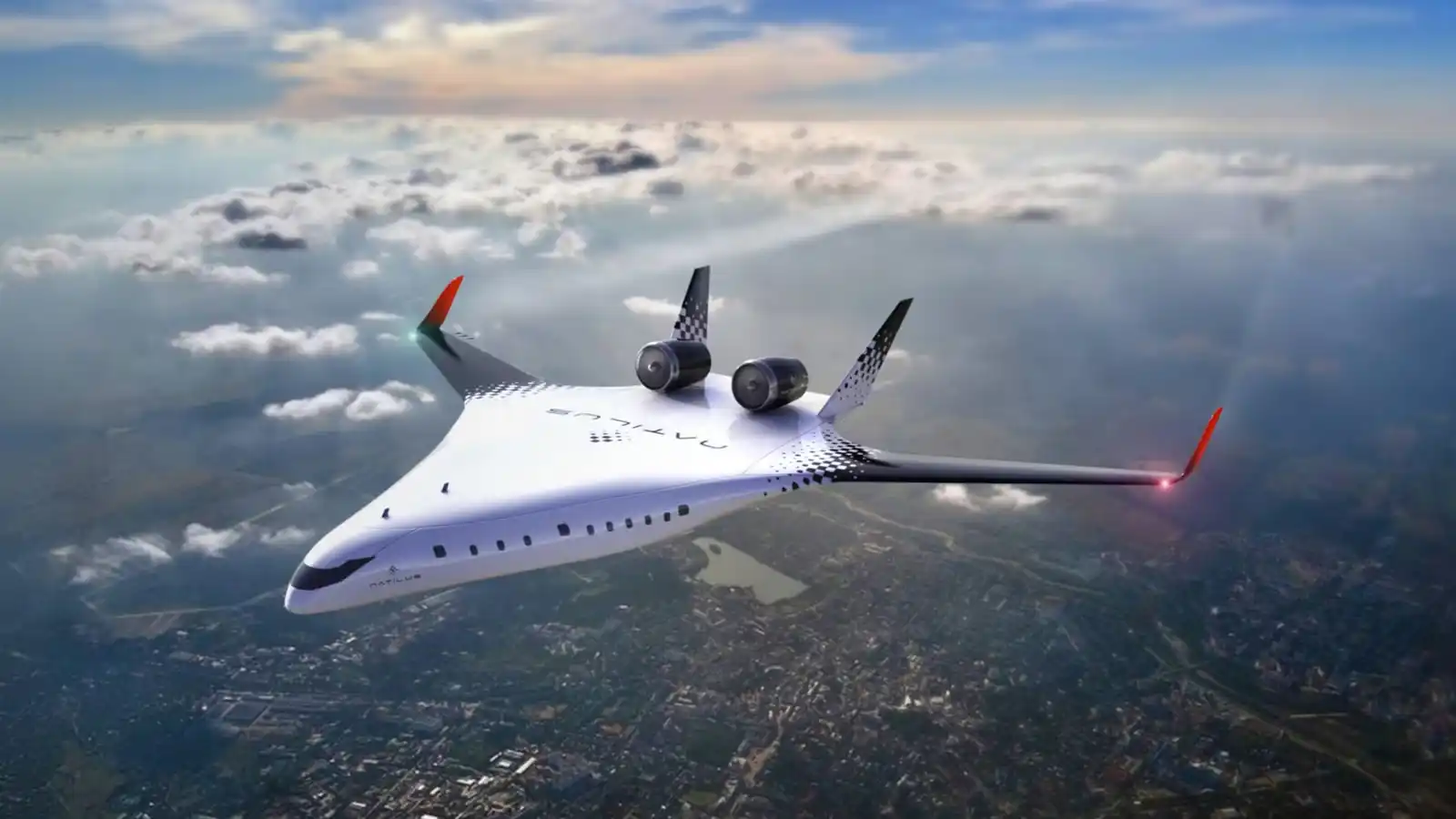
The commercial aviation market rarely welcomes credible challengers to entrenched giants, yet Natilus is assembling the kind of leadership, capital, and engineering ambition that forces incumbents to pay attention. The California-based startup has recruited former Boeing senior executives from both civil and defense programs, a signal that this is not a hobbyist experiment but a deliberate attempt to outbuild the 737 MAX with a new aircraft architecture. The pitch is audacious and unusually specific: a blended-wing-body airframe designed to reset the economics of single-aisle travel and high-volume cargo, built by veterans who know exactly where legacy manufacturing models creak under modern pressure.
The strategic gravity of these hires extends beyond name recognition. Former leaders from Boeing’s advanced programs bring lived experience in certification labyrinths, supply-chain fragility, and the brutal cadence of rate increases. Their presence shapes Natilus’s approach to production engineering from day one, treating manufacturability as a design constraint rather than an afterthought. This discipline is visible in the startup’s early commitment to a 3.5 million square foot factory vision near the U.S.–Mexico border, a deliberate choice aimed at logistics flexibility, cross-border talent access, and a cost structure that can survive price competition with Airbus and Boeing.
The investment stack reinforces the seriousness of the attempt. Backing from Draper Associates, the venture firm behind category-defining bets like Tesla, Skype, and Robinhood, aligns Natilus with a school of capital that favors technological step-changes over incrementalism. Draper’s thesis centers on mass appeal and broad utility, and Natilus’s blended-wing-body platform fits that logic by promising structural efficiency that compounds across fuel burn, payload, and operational tempo. This is the rare aerospace startup narrative where capital strategy, manufacturing ambition, and airframe physics pull in the same direction.
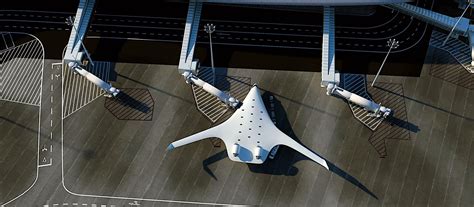
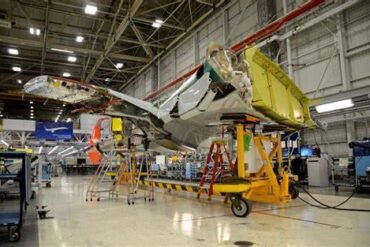
Inside a San Diego warehouse, the first prototype—Kona, a turboprop freighter—takes shape with the practical calm of a team that has shepherded aircraft from drawing boards to flightlines before. The location is not romantic, and that is the point. Proximity to suppliers, trucking routes, and cross-border manufacturing ecosystems reduces friction at the exact moment when startups typically bleed time and cash. The Kona’s timeline points to a maiden flight in 2028, followed by the Horizon passenger variant in 2029, with certification targeted for 2030. These dates sound aggressive until you remember the playbook of alumni who once scaled Boeing’s production tempo and learned, painfully, how delays metastasize when industrialization lags behind design intent.
The blended-wing-body concept is not new in research circles, yet Natilus’s execution reframes it as an industrial product rather than a laboratory curiosity. By distributing lift across a wide, lifting fuselage, the design trims drag and unlocks volumetric efficiency that tube-and-wing aircraft leave on the table. Natilus claims 30% lower fuel burn and up to 50% reductions in operating costs and carbon emissions relative to traditional single-aisle jets. Those numbers, while subject to certification reality checks, outline a compounding advantage: lower fuel per ton-mile makes new routes viable, and lower costs expand the economics of secondary airports that struggle under current narrowbody constraints.
Cargo economics provide the wedge into this transformation. The founders built Natilus after noticing a persistent mismatch in e-commerce logistics: freighters often depart full by volume yet underweight by mass, leaving revenue in the air. The Kona’s lifting-body fuselage is engineered to swallow bulky loads without wasting structural margin, creating a middle ground between slow, cheap ocean freight and fast, expensive air cargo. This repositioning matters in transpacific trade lanes where delivery windows drive pricing power. Optional crew configurations further tilt the cost curve by enabling higher utilization, an idea borrowed from defense logistics but tuned for commercial operations.
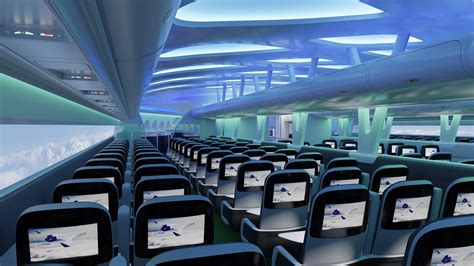
The Horizon passenger model pushes the concept into consumer experience without turning it into a novelty act. Flexible cabin architecture allows four-seat booths facing each other above a full-length cargo bay, a layout that reframes single-aisle travel as modular rather than rigid. Airlines gain a tool to tune capacity by route and season, while belly cargo scales with demand instead of being an afterthought. This design logic reflects the operational literacy of Boeing veterans who have watched airlines contort schedules and payloads around airframes that were never optimized for today’s logistics mix.
Leadership composition is where Natilus signals its intent to grow up fast. Kory Mathews, former vice president of Boeing’s Phantom Works, joins the board with a mandate to bridge advanced concepts and production reality. Dennis Muilenburg, former Boeing CEO, has invested through New Vista Capital, adding a layer of institutional memory about crisis management, regulatory scrutiny, and the reputational stakes of safety culture. These are not ornamental affiliations. They anchor a governance model that treats certification as a product feature and supply-chain resilience as a competitive moat.
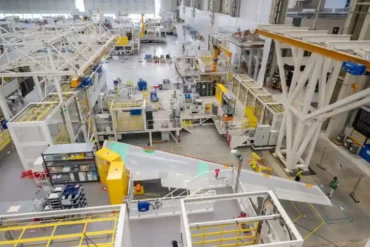
The claim to outbuild the 737 MAX is less about raw unit counts in the near term and more about throughput per square foot, cycle time per aircraft, and the manufacturability of complex composite structures at scale. Natilus’s factory vision prioritizes flow over monumentality, emphasizing parallelized assembly lines, digital twins for quality assurance, and supplier co-location to compress lead times. This is where aerospace often trips over its own heritage. Legacy factories evolved for metal airframes and long amortization cycles; Natilus designs its plant for composite-rich structures and faster iteration, borrowing manufacturing philosophy from automotive and spaceflight startups without inheriting their cavalier attitude toward certification rigor.
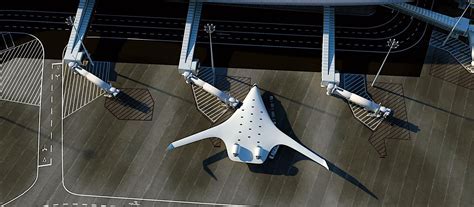
None of this escapes risk. Blended-wing-body aircraft pose certification challenges around evacuation, pressurization loads, and passenger perception. Airports are tuned to cylindrical fuselages; gates, jet bridges, and turnaround choreography will need adaptation. The market’s memory of disrupted programs remains fresh, and airlines price risk with ruthless clarity. Natilus counters with backlog claims exceeding $24 billion, signaling that operators see enough upside to reserve early slots in exchange for cost and performance advantages. In aviation, intent becomes reality only when metal flies on schedule, but intent backed by credible operators reshapes supplier behavior long before first flight.
The broader implication is cultural as much as technical. Natilus frames itself as the next Boeing, not in nostalgia but in ambition: a vertically integrated manufacturer that marries audacious design with industrial discipline. The blended-wing-body platform becomes a lever to rethink not only aerodynamics but the business model of aircraft production, from optional autonomy in cargo operations to modular interiors that decouple revenue from fixed cabin layouts. The incumbents will respond, because physics is persuasive when it pays for itself. As this new airframe inches toward daylight, aviation faces a familiar paradox: radical shapes look strange until they look inevitable.