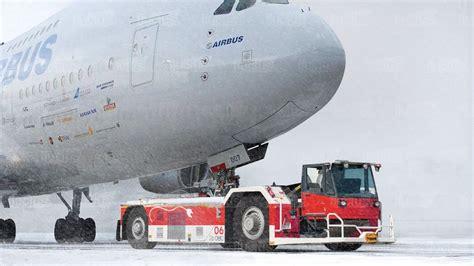
From a casual glance, pushback operations at airports might seem uniform and routine. Yet, those who spend time near the ramp or nose around behind the terminals will quickly realize there’s an impressive variety of pushback trucks in use. These powerful vehicles are not only crucial for maneuvering aircraft safely away from gates but also represent a diverse array of engineering philosophies, applications, and constraints dictated by aircraft type, airport layout, and budget.
The variety becomes especially noticeable when one observes different nose gear lifting systems, electric versus diesel propulsion, towbar versus towbarless configurations, and the sheer difference in vehicle size and torque capacity. Each type of pushback truck has a unique purpose — some are suited for long-haul airliners, others for nimble turboprops — and using the wrong one can have catastrophic results.
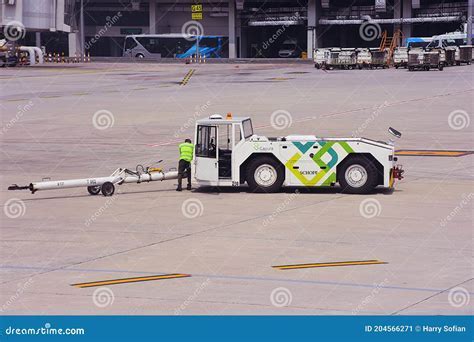
Towbarless Pushback Tractors: Muscle Without the Metal Link
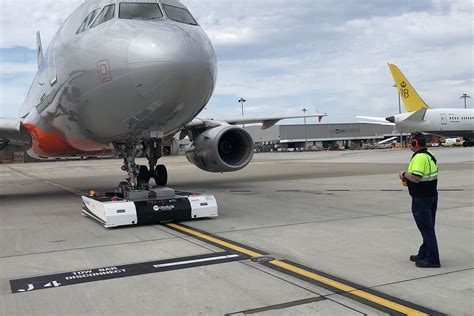
Among the most technologically advanced solutions on the ramp are towbarless pushback tractors. These vehicles cradle the aircraft’s nose wheel in a mechanical clamp and lift it gently off the ground, eliminating the need for a traditional towbar. This design significantly reduces turnaround time and enhances maneuverability, particularly in tight ramp areas or when towing across longer distances.
Popular models like the Goldhofer AST-2 X or TLD TPX-200-MTX dominate international hubs where heavy widebodies like the Boeing 787 or Airbus A350 frequently taxi. They offer:
- Increased safety by reducing the risk of towbar failure.
- Tighter turning radius, ideal for congested aprons.
- Electric drive options, making them quieter and more eco-friendly.
Despite these advantages, towbarless units come with a steep price tag ranging from $150,000 to over $250,000, plus higher maintenance demands and specialized operator training. Many airlines and ground handling services avoid their use unless operationally necessary, especially during simple gate pushbacks.
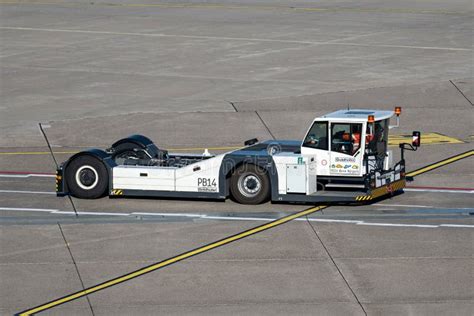
Towbar-Based Pushbacks: Time-Tested Precision for Light to Mid-Weight Aircraft
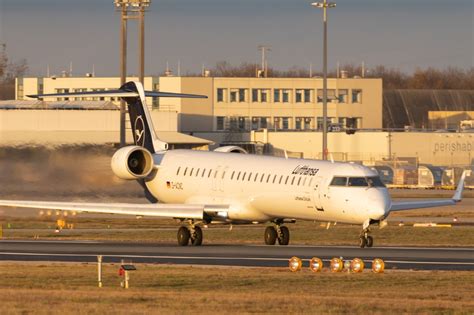
Towbar-based pushback trucks are the most common sight at smaller airports and regional gates. These vehicles use interchangeable towbars, each designed to match the nose gear assembly of specific aircraft types. For example, a single ramp may stock different bars for the Saab 340, Q400, CRJ900, 737, and even the 787.
While these units lack the fancy mechanics of their towbarless counterparts, their simplicity is an asset. They’re less expensive, easier to maintain, and suitable for the vast majority of day-to-day operations. However, their use comes with logistical challenges:
- Incorrect towbar selection can damage nose gears.
- Their design limits turning ability, especially on tight ramps.
- Certain models are ill-suited for uneven or slippery terrain due to lower torque and traction.
In some operations, these vehicles are used exclusively for widebodies, while towbarless units handle tighter spaces or longer repositioning jobs.

Electric vs. Diesel Pushback Units: The Power Debate
Propulsion systems play a central role in the effectiveness and sustainability of pushback tractors. A growing number of operators are investing in electric pushbacks to minimize emissions, cut fuel costs, and align with ESG commitments. Electric systems, such as the TLD TPX-100-E, are now powerful enough to handle narrowbodies like the Airbus A320 or Boeing 737.
Yet, there’s a reason diesel giants like the TUG GT50 or FMC B600 Paymover continue to operate in high-traffic airports: raw torque. Diesel-powered tractors can be fitted with substantial weight packages, increasing drawbar pull (DBP) — the critical measurement of how much the vehicle can tow and stop safely. While electric units can handle standard pushbacks, diesels still dominate heavy tow applications, such as repositioning a KC-10 Extender or A330 across the airfield.
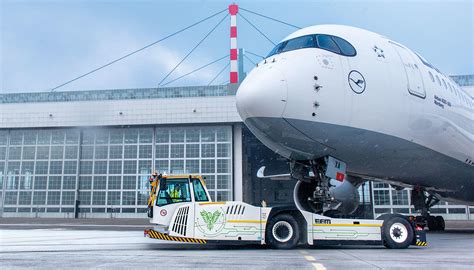
Drawbar Pull: The Critical Metric You Never See
While aircraft maximum takeoff weight (MTOW) is a well-known specification, Drawbar Pull (DBP) is the unsung hero behind safe pushback operations. DBP is loosely calculated as 10 times the vehicle weight, although weather, ramp slope, tire conditions, and braking systems all play a role.
A TUG MA50, weighing around 5,000 lbs, can safely push and stop a load up to 50,000 lbs. That’s fine for a CRJ900 but dangerously inadequate for something like a 737 MAX or A330. In fact, using the wrong tractor not only risks damaging the aircraft but also endangers the crew. One anecdote out of KSMF involved using a GT35 (narrowbody rated) on a heavy A330. The pilot didn’t set the brakes before towbar disconnect. The aircraft began to roll, bent the towbar in half, and almost damaged the tractor. Luckily, no aircraft damage occurred, but the pushback unit and towbar were both sidelined.
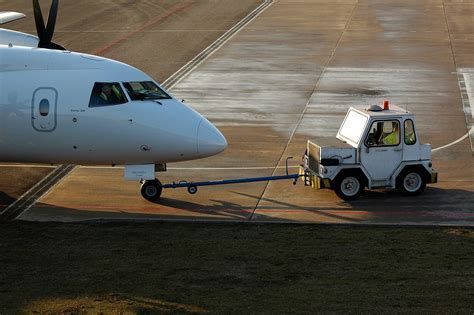
The Hidden Complexity of Fleet Compatibility
Pushback fleets are rarely standardized. In fact, some operators have over 10 different types of tractors due to mergers, legacy equipment, or aircraft-specific requirements. For instance, one Reddit user working in Europe noted their ramp required dedicated towbars for 737s, 787s, and turboprops due to incompatible nose gear assemblies.
Moreover, mismatched equipment across different airline fleets can lead to inefficiencies in training, equipment management headaches, and greater risk of operational error. Smaller airfields often rely on shared-use tugs that must perform well with multiple aircraft types, driving compromises in safety and efficiency.
Pushbacks Beyond the Ramp: Long Haul Tows and Maintenance Transfers
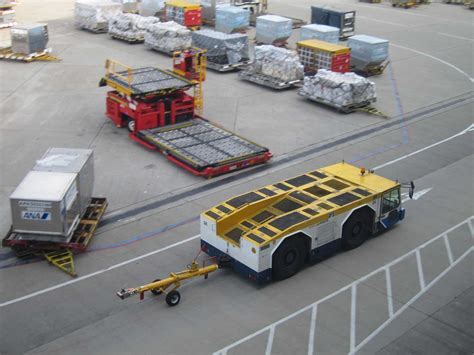
Not all pushbacks are gate departures. Some require moving aircraft across taxiways to maintenance hangars, remote hard stands, or even from delivery zones. These long-haul operations demand:
- Higher DBP ratings, especially for widebodies.
- Tighter safety protocols due to the higher stakes of runway crossings.
- Special clearances, including from tower or ground control.
Towbarless tugs often shine in this environment due to their superior vehicle control and load feedback systems. These tractors also avoid the complications of towbar slack or bounce, reducing risk during sharp turns or braking.
Why Bigger Isn’t Always Better
Ironically, the biggest pushback tractors aren’t always used for the heaviest planes. In some companies, they’re assigned to smaller aircraft due to spatial constraints. For example, a towbarless tractor that physically cannot get under the low nose of a Q400 or CRJ900 may be reassigned to a nearby 737 gate instead.
Yet, operators must be cautious. Overpowered units can cause excessive torque on light aircraft, snapping shear pins or damaging hydraulic systems. Some ramp agents have even reported “riding the brake” the entire push to prevent overstressing a regional jet.
Standardization: A Future Worth Towing Toward?
Industry veterans and ground support engineers alike speculate whether the future holds greater standardization in pushback equipment. With airlines consolidating fleets and retiring older aircraft, the opportunity exists to phase out bespoke systems and embrace a smaller number of modular tugs with adjustable capacity and electric drivetrains.
Benefits of such standardization would include:
- Lower maintenance costs.
- Improved safety through uniform training.
- Reduced spare parts inventory.
- Better fleet optimization during disruptions.
Still, any movement toward uniformity must navigate legacy contracts, differing aircraft geometries, and the vast ecosystem of airport environments — from icy ramps in Canada to desert heat in Dubai.
Final Thoughts
What may appear to be a simple procedure — backing an aircraft away from a gate — is in fact a complex ballet of mechanical precision, safety engineering, and ground logistics. The wide variety of pushback trucks in use today reflects not chaos, but adaptation: each unit tailored to the operational profile, fleet makeup, and budgetary priorities of the airline or handler.
Understanding these variations isn’t just trivia for GSE nerds. It’s critical to prevent aircraft damage, streamline operations, and lay the groundwork for the next evolution of airport technology.