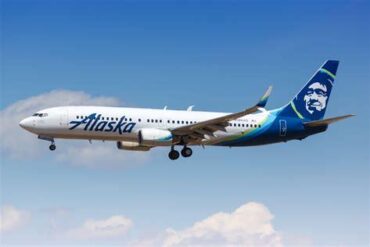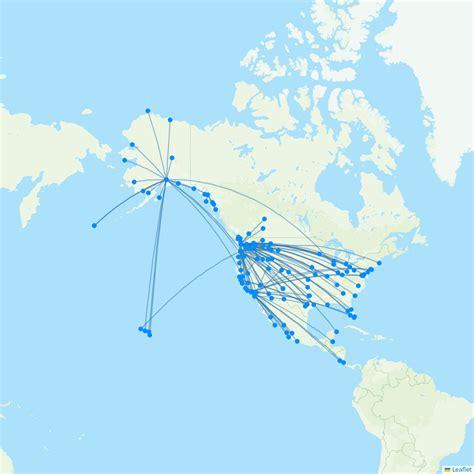
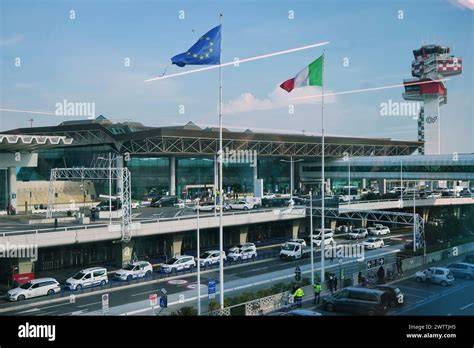
On June 3, 2025, Alaska Airlines made a striking announcement: the launch of its first-ever European route, connecting its Seattle hub to Rome Fiumicino Airport starting in May 2026. The move is bold, timely, and possibly transformative—but it also raises substantial questions. Given the airline’s relatively limited long-haul experience and the competitive landscape, industry watchers are asking: does this Rome route really make sense for Alaska Airlines?
Why Rome, and Why Now?
From a strategic perspective, Rome presents both an opportunity and a challenge. According to recent Cirium Diio data, Seattle-Rome had over 43,000 round-trip passengers in 2024—making it the largest unserved European city from Seattle. The pent-up demand has been persistent, with travelers previously relying on indirect routing through hubs like Frankfurt, Paris, or New York.
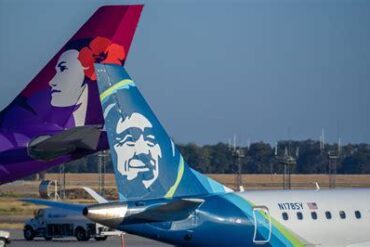
But the timing of Alaska’s move is equally significant. The airline only recently expanded into long-haul service, launching Seattle–Tokyo Narita. With the Boeing 787-9 soon to be integrated under Alaska’s banner following the acquisition of Hawaiian Airlines in 2024, the Rome route is likely to be one of the first true tests of the combined airline group’s international ambition.
The Aircraft: Alaska’s New Long-Haul Tool
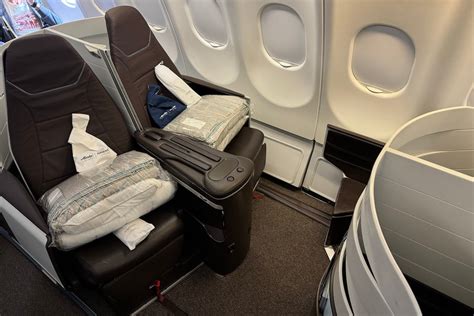
Though official livery mockups are yet to be revealed, the Rome route will most likely be flown using a 300-seat Boeing 787-9, a flagship aircraft previously associated with Hawaiian Airlines. These jets are well-suited for ultra-long-haul missions thanks to their fuel efficiency, passenger comfort, and cargo capacity.
What’s worth noting, however, is that while the aircraft is optimal for the range, its size raises the stakes. Filling a widebody four times a week on a long leisure-focused route demands precision in pricing, marketing, and network feed. Any miscalculation could lead to suboptimal load factors or worse—unsustainable losses.
Leisure-Focused, Low-Yield—But Still Smart?
The route’s economics will hinge on balancing high demand with yield challenges. Rome is undoubtedly a tourist magnet, especially in summer, but that comes at a price. Leisure routes tend to be yield-sensitive, offering thinner margins compared to premium business routes. That issue is amplified on transatlantic flights where operating costs—fuel, crew, and maintenance—are substantial.
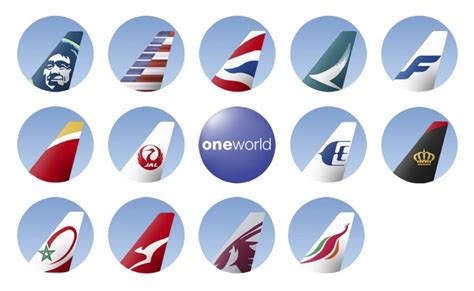
Yet, Alaska Airlines enters the route with a key advantage: monopoly. No other airline flies nonstop from Seattle to Rome, allowing Alaska to set pricing strategies without immediate price wars. Also, being part of the oneworld alliance offers codeshare and interline opportunities with partners like British Airways, Finnair, and Iberia, potentially helping backfill empty seats from secondary U.S. cities and Europe.
How Underserved Is the West Coast to Italy?
Rome has experienced a boom in North American connectivity. Q3 2025 will see over 2 million round-trip seats, a record that surpasses pre-pandemic levels by 33%. However, despite this surge, the Western U.S. and Canadian regions remain significantly underserved. In 2024 alone, 75% of the 670,000 West Coast–Rome passengers routed through indirect paths.
New entrants like Norse Atlantic (Rome–Los Angeles) and United Airlines (Denver–Rome) are beginning to plug the gap, but major metro areas such as Vancouver (49,000 passengers), Phoenix (44,000), San Diego (33,000), and Portland (21,000) remain reliant on one-stop itineraries. Alaska Airlines could leverage its strong West Coast connectivity to consolidate one-stop travel through Seattle into a lucrative feeder system.
Connecting the Dots With the oneworld Alliance
Alaska’s membership in oneworld is perhaps one of the most underutilized assets in its long-haul strategy—until now. Rome offers an opportunity to coordinate with Iberia, Finnair, and British Airways for onward European connections. While this requires robust interline agreements and seamless scheduling, the alliance network could play a pivotal role in elevating Rome from a seasonal experiment to a permanent fixture.
Another opportunity lies in Rome’s positioning as a gateway to Southern and Eastern Europe, including Greece, the Balkans, and parts of North Africa. With oneworld partners covering these areas well, Alaska could gain access to traffic flows far beyond Italy.
Rome vs. Other European Cities: Was It the Best Bet?
While Rome holds the title of Seattle’s most unserved European city, other contenders arguably offered better yield potential. Madrid, for instance, had 33,000 round-trip passengers from Seattle in 2024—fewer than Rome, but with yields around 30% higher due to a better balance of premium and business traffic. Additionally, Madrid is shorter in distance, cutting down on operational costs.
One might ask whether Alaska’s preference for leisure-heavy markets, reminiscent of WestJet’s transatlantic strategy, will shape future choices. Barcelona and Athens, Seattle’s next largest unserved cities, also skew heavily toward leisure but have similarly large demand pools.
Strategically, this hints at Alaska building a transatlantic identity around high-volume, low-yield leisure travel, rather than business-centric routes. That model can work—if seasonality and demand elasticity are carefully managed. Alaska’s Rome route, likely to be seasonal in its first year, gives the carrier a buffer to learn and adapt.
Operational Challenges and Competitive Pressure
Launching a long-haul European route for the first time introduces operational complexity. The crew logistics, maintenance rotations, and ground handling in a foreign market all require careful coordination. While Alaska has the 787-9 through Hawaiian’s integration, the backend logistics for European operations are fundamentally different from domestic and Pacific routes.
Additionally, Alaska must brace for competitive retaliation. If demand to Rome proves solid, competitors like Delta, which already has a strong transatlantic portfolio from Seattle, may decide to enter the market. Even if that doesn’t happen immediately, Alaska’s pricing power could face pressure once the route is proven viable.
Long-Term Vision or One-Off Experiment?
This move could signal the beginning of a more aggressive international strategy by Alaska Airlines. Rome may serve as a litmus test for future transatlantic destinations, particularly as the airline gains experience operating the 787-9. If successful, Alaska might gradually roll out other seasonal routes to Barcelona, Athens, or even Lisbon—cities with strong leisure demand and favorable competition dynamics.
On the other hand, failure could make the airline more conservative in its expansion outlook. A poor performance in Rome could delay or derail broader European ambitions, particularly if profitability is dragged down by seasonality and operational inefficiencies.
Conclusion: Calculated Risk with Strategic Upside
So, does Alaska Airlines’ first European route make sense? From a market demand and network synergy standpoint, the answer is yes. Rome has long been underserved from Seattle, and the airline’s West Coast strength gives it a foundation to succeed. But the route is not without risk. The low yields, seasonal traffic, and operational complexities pose real challenges.
Ultimately, Alaska Airlines’ Rome service is a calculated risk—a bet on brand expansion, network leverage, and pent-up demand. If the airline can navigate these hurdles, Rome could become the first of many successful European destinations in Alaska’s evolving international playbook.