The Boeing 737 series stands as one of the most widely recognized and commercially successful aircraft in the history of aviation. With millions of passengers transported across the globe each year, the platform’s ability to adapt to market needs has played a central role in its legacy. Among the many variants, a unique version known as the Boeing 737 MAX 8‑200 has garnered attention for one peculiar reason: its surprising capacity to carry more passengers without increasing the aircraft’s dimensions.
The Legacy of the Boeing 737 Platform
The Boeing 737 family, introduced in the 1960s, has evolved across generations to meet the increasing demands of commercial aviation. Today, its latest iteration—the 737 MAX series—represents Boeing’s strategic answer to the Airbus A320neo, offering enhanced fuel efficiency, advanced aerodynamics, and improved passenger capacity. Yet, within this lineup, one model, the MAX 8‑200, is creating buzz due to its unusual configuration.
What Sets the Boeing 737 MAX 8‑200 Apart
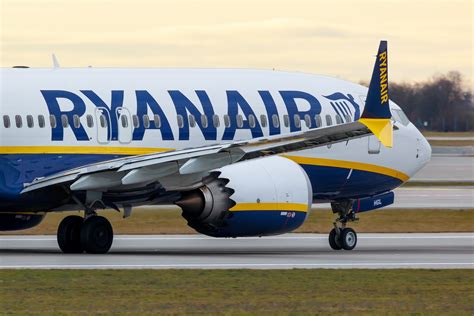
At first glance, the MAX 8‑200 appears identical to its sibling, the MAX 8. Both share the same airframe dimensions, wing span, and engine architecture. However, the MAX 8‑200’s capability to carry up to 210 passengers in a single-class layout—significantly more than the MAX 8’s 178 in two-class configuration—raises the question: how can the same airframe accommodate 32 additional seats?
The answer lies in a series of calculated design decisions and technical innovations focused on densification without sacrificing safety standards.
The High-Density Layout: Engineering Efficiency
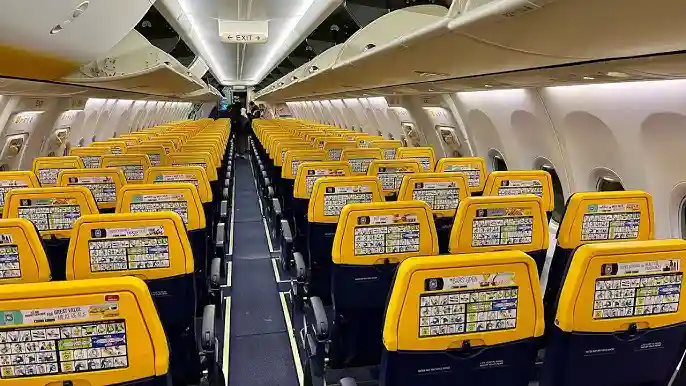
To understand this transformation, we must explore the concept of seat pitch—the distance from one point on a seat to the same point on the seat in the row ahead. In most commercial aircraft, this distance averages around 30 to 32 inches, offering a balance between passenger comfort and capacity.
In the MAX 8‑200, however, seat pitch is reduced, allowing more seats to be placed within the same cabin length. This strategy, known as a high-density layout, enables additional rows of seating while retaining basic passenger amenities. Though this inevitably leads to a more compact seating arrangement, low-cost carriers like Ryanair, who operate the MAX 8‑200 extensively, consider it a trade-off worth making for the increased revenue per flight.
Strategic Use of Emergency Exits
Safety regulations enforced by aviation authorities such as the FAA mandate that all passengers must be able to evacuate within 90 seconds in the event of an emergency. As more seats are added, the number of emergency exits must also increase to accommodate a higher passenger count.
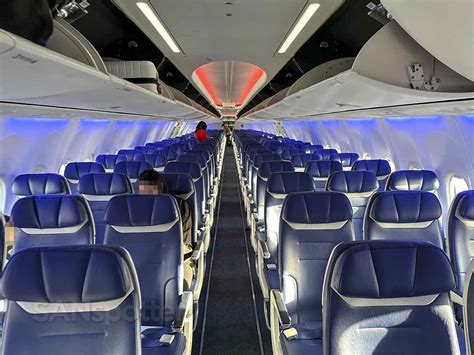
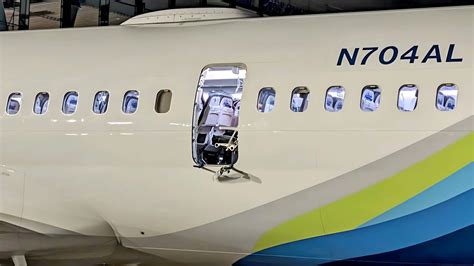
This is precisely what Boeing did with the MAX 8‑200. Engineers incorporated two additional Type II emergency exits mid-cabin, increasing the total number from eight to ten. These doors are rarely used under normal operations but are critical for meeting regulatory certification requirements when seating exceeds certain thresholds. This clever inclusion allows Boeing to legally and safely certify the MAX 8‑200 for up to 210 passengers.
Why the MAX 8‑200 Exists: The Business Case
The design motivations for the MAX 8‑200 stem directly from the demands of low-cost carriers that operate on a high-frequency, low-margin model. These airlines profit through volume, and their business model thrives when more passengers can be transported on fewer aircraft.
By offering more seats per flight:
- Airlines reduce cost per available seat mile (CASM)
- Increased passengers mean higher ancillary revenue (baggage, food, priority boarding)
- Optimized cabin layout supports fast turnarounds, improving fleet efficiency
The MAX 8‑200 provides the perfect platform for airlines like Ryanair, which has configured its fleet with 197 seats, just shy of the 210 maximum, to maintain some balance between comfort and economics.
Engineering Enhancements Beyond the Cabin
While the seating capacity is the headline quirk, the MAX 8‑200 incorporates additional refinements. To compete directly with the Airbus A320neo, Boeing included several performance upgrades in the MAX family:
- LEAP-1B Engines: These advanced engines offer double-digit fuel savings and lower emissions compared to previous generations.
- Split Scimitar Winglets: Designed for improved aerodynamic performance, they reduce drag, increasing overall fuel efficiency.
- Digital cockpit upgrades: Featuring improved avionics and user interface enhancements.
- Noise reduction technology: Making the aircraft quieter and more eco-friendly.
These changes not only modernize the MAX platform but also make it attractive to cost-sensitive carriers seeking fuel efficiency, operational reliability, and fleet commonality.
Competitive Pressure from Airbus: The A320neo Challenge
When Airbus launched the A320neo, it significantly upped the ante in the narrow-body market. The aircraft’s ability to deliver substantial fuel savings and versatile cabin configurations forced Boeing to innovate quickly.
The MAX 8‑200, as a direct countermeasure, ensures Boeing retains its edge by offering:
- Comparable or better seat capacity
- Enhanced economics for budget carriers
- A solution that avoids an entirely new aircraft design, leveraging proven airframes
Passenger Experience Considerations
Naturally, the pursuit of high capacity often invites scrutiny over passenger comfort. With reduced seat pitch and narrower lavatories, the MAX 8‑200 may not appeal to travelers who value extra legroom or premium amenities. However, it’s important to understand the target audience for this aircraft type.
Travelers on budget airlines are typically flying short-haul routes under three hours. For these passengers, the priority is affordable fares, not luxury. The trade-off in comfort is acceptable for most, especially when weighed against significant cost savings.
Despite the tighter configuration, Boeing and its airline partners have ensured the MAX 8‑200 includes:
- Modern LED lighting for cabin ambiance
- Quieter engines for reduced cabin noise
- Optional in-seat USB charging (depending on carrier)
Boeing’s Philosophy: Incremental Innovation Over Radical Change
Perhaps the most remarkable aspect of the MAX 8‑200 is what it doesn’t do. Boeing resisted the temptation to design an entirely new narrow-body platform and instead focused on incremental improvements to a proven legacy system. This strategy reduces R&D costs, leverages existing production lines, and facilitates pilot and maintenance crew training.
This philosophy mirrors a trend across industries where modular upgrades and platform consistency enable faster innovation cycles without alienating core users. In Boeing’s case, it provides a strategic hedge—remaining competitive without overextending resources.
Conclusion: A Quirk That Pays Dividends
The Boeing 737 MAX 8‑200 stands as a prime example of how engineering nuance and strategic foresight can deliver outsized commercial benefits. By introducing minor yet impactful changes—like reducing seat pitch, adding emergency exits, and enhancing performance features—Boeing managed to transform a familiar airframe into a revenue-generating machine for the budget airline segment.
In an industry where margins are razor-thin and competition is fierce, this seemingly “weird” quirk becomes a stroke of genius. It shows how intelligent tweaks, rather than wholesale reinvention, can help legacy platforms not only survive but thrive in modern aviation.