Atlanta’s Hartsfield-Jackson International Airport (ATL) has long stood as the central nervous system of Delta Air Lines’ global operation, a bustling epicenter where widebody aircraft launch and land in a choreographed ballet of intercontinental travel. Among the stars of this performance is the Airbus A330, a versatile and powerful long-haul jet that forms the backbone of Delta’s international service. In the height of the summer 2025 travel season, the A330 is once again proving its worth on some of Delta’s most in-demand routes from Atlanta.
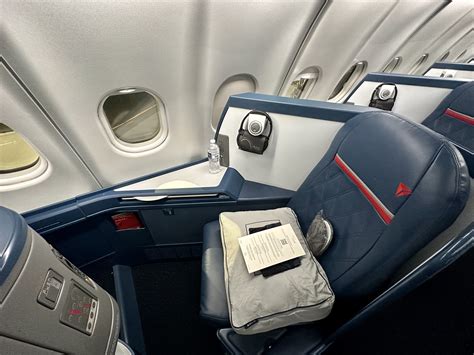
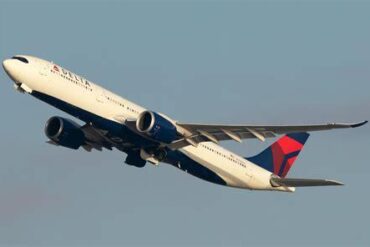
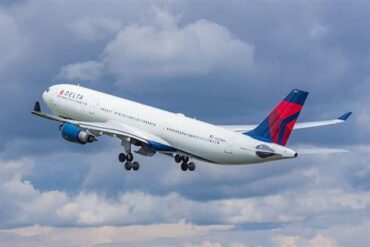
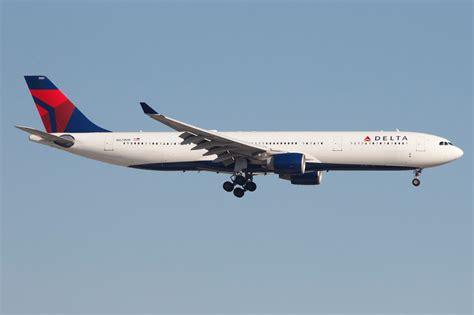
Delta deploys three variants of the Airbus A330: the A330-200 (332), A330-300 (333), and the cutting-edge A330-900neo (339). Each aircraft offers a sophisticated three-cabin layout—Delta One, Premium Select, and Main Cabin—with lie-flat seats in first class and both paid and forthcoming free Wi-Fi. Despite sharing similar interior layouts, each A330 model fulfills a unique role in Delta’s route network.
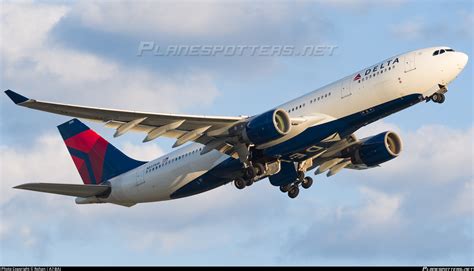
International Powerhouses: The Top Long-Haul Routes
Based on round-trip frequency, the top-performing A330 routes from Atlanta for July 2025 are:
- São Paulo (GRU) – 124 round trips
- Amsterdam (AMS) – 124 round trips
- Athens (ATH) – 114 round trips
These three routes dominate the leaderboard with an intensity that reveals not just strong demand, but also Delta’s confidence in assigning widebody aircraft to these transoceanic journeys. The choice of the A330, particularly the A330-300 and A330-900neo, on these routes underscores a commitment to passenger comfort and cargo capacity on long sectors.
Not far behind are other heavy hitters in Europe, including Paris (CDG), Rome (FCO), Madrid (MAD), Dublin (DUB), and London Heathrow (LHR)—each logging 62 round trips monthly. Meanwhile, Barcelona (BCN) punches above its weight with 70 flights, indicating robust demand for leisure travel to Spain.
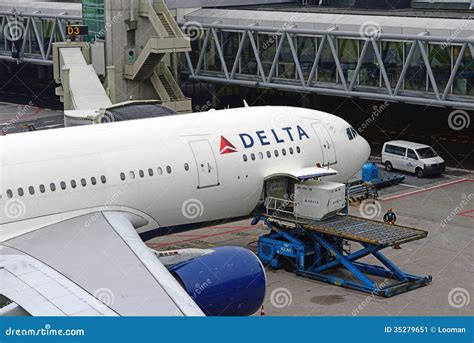
Seat Count: Measuring Passenger Volume
While round-trip frequency is a basic measure of activity, available seat count offers deeper insight into the number of travelers Delta is positioning through ATL. The top routes by available seats in July 2025 include:
- GRU – 34,968 seats
- ATH – 32,034 seats
- BCN – 19,706 seats
- CDG, FRA, LHR, MAD – ~17,484 seats each
These totals reflect the combination of flight frequency and aircraft configuration. Not all A330s have identical seat maps, and differences in Premium Select or Comfort+ layouts can skew available capacity. Yet, even accounting for those variances, Delta’s European network shows remarkably consistent volume.
Racking Up the Miles: Distance-Based Route Power
Another valuable metric is total mileage, which underscores not just demand but operational commitment and range utilization. Delta’s longest A330 round-trips from Atlanta by total distance are:
- Lagos (LOS) – 23,372 miles
- Buenos Aires (EZE) – 19,996 miles
- Barcelona (BCN) – 18,336 miles
- Amsterdam (AMS) – 17,604 miles
Deploying A330s on ultra-long-haul routes like Lagos and Buenos Aires reflects both the range of these jets and their cargo potential, particularly for high-yield international markets. Lagos is especially notable, as it is not only Delta’s longest A330 route from ATL but also a strategic route into West Africa, supported by strong VFR (visiting friends and relatives) and business traffic.

ASM: Available Seat Miles As Operational Benchmark
When combining seat capacity and distance, we arrive at Available Seat Miles (ASM), a key performance indicator in airline operations. This metric reflects an airline’s ability to generate revenue across both distance and seating. Here, Delta’s top ASM-producing A330 routes from ATL in July 2025 are:
- Athens (ATH) – 172.6 million ASM
- São Paulo (GRU) – 162.7 million ASM
- Amsterdam (AMS) – 153.6 million ASM
The high ASM on these routes confirms Delta’s dedication to long-haul coverage and its competitive posture in transatlantic and South American markets. Interestingly, Athens emerges as the leader, a nod to Greece’s sustained summer demand and perhaps the success of Delta’s marketing efforts targeting Mediterranean-bound leisure travelers.
Where Each Variant Operates: Route and Fleet Pairing
Delta doesn’t assign its A330 fleet randomly. Each aircraft type is matched to a route based on range, runway limitations, ground facilities, and projected load. The A330-200 is frequently seen on routes like Lagos (LOS), Naples (NAP), and Ezeiza (EZE)—where its longer range and slightly smaller size offer flexibility. The A330-300, Delta’s workhorse, dominates GRU, AMS, and CDG, while the A330-900neo takes high-profile assignments such as Athens, London, and Tel Aviv.
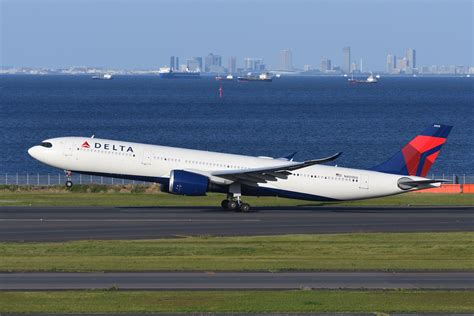
This distribution isn’t random—it’s a balancing act of fleet optimization and profitability. Sometimes, gate size or wingtip clearance decides where a plane goes. In other cases, it’s the presence of free Wi-Fi, or the demand for lie-flat seats in Delta One on overnight routes.
Notable Mentions: Honolulu and The Continental U.S.
Though most of Delta’s A330 operations from ATL are international, there are notable domestic standouts. Honolulu (HNL) sees 62 round trips on the A330, indicating continued demand for premium cabin and high-capacity leisure travel to Hawaii. The aircraft’s widebody comfort, combined with long flight time from the mainland, makes it an ideal fit.
By contrast, some of the shortest flights operated by A330s from ATL—like Detroit (DTW), Phoenix (PHX), and JFK—see minimal frequency, often driven by fleet repositioning or short-term aircraft substitutions.

The Strategic Role of ATL as a Widebody Hub
ATL’s role in Delta’s A330 deployment cannot be overstated. As the largest hub in the airline’s network, it serves as a launching point for intercontinental routes that span Europe, South America, Africa, and beyond. The A330’s blend of range, economy, and passenger comfort makes it a staple aircraft for these operations.
Beyond just volume, ATL provides the infrastructure to support widebody traffic at scale: ample runway length, extensive maintenance facilities, and coordinated airspace management. These advantages allow Delta to maximize the A330’s potential, reinforcing Atlanta’s status as a global gateway.
Conclusion: A330 Dominance and Future Potential
Delta Air Lines’ deployment of Airbus A330s from its Atlanta hub in summer 2025 reveals a carefully orchestrated strategy built around demand, operational efficiency, and passenger experience. From São Paulo to Amsterdam, Lagos to Athens, the A330 fleet covers vast mileage, moves thousands of travelers, and supports Delta’s premium transatlantic brand.
Looking forward, the growing presence of the A330-900neo hints at fleet modernization that emphasizes fuel efficiency and enhanced onboard features. As long as ATL remains the busiest airport in the world—and Delta its primary tenant—the A330 will continue to define what global travel from Atlanta looks like.