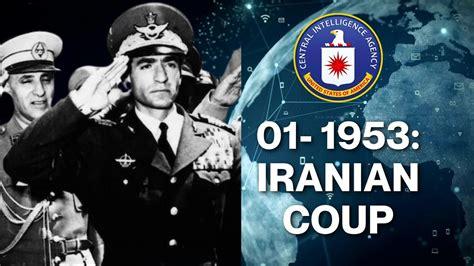
The streets of Iran are once again echoing with slogans, rage, and a sense of historical déjà vu. As mass protests spread across cities and towns, the question haunting policymakers, analysts, and protesters alike is not whether Iran is at a breaking point, but who will shape what comes next. In Washington, the language has turned sharp and declarative. In Tehran, repression has turned lethal. And in exile, a familiar royal name is resurfacing with renewed purpose, framed by supporters as a symbol of national rescue rather than imperial memory.
What gives this moment its unsettling gravity is not merely the scale of unrest, but its unmistakable historical symmetry. More than seven decades ago, Iran stood at a similar crossroads when a popular nationalist movement threatened Western control of oil and regional influence. The solution chosen then was covert, decisive, and devastating in its long-term consequences. That operation—known as Operation Ajax—reshaped Iran, the Middle East, and America’s reputation for generations.
Today, as the name Reza Pahlavi reenters Iran’s political imagination, whispers of Operation Ajax 2.0 no longer sound conspiratorial. They sound strategic.
By revisiting the original coup of 1953 and examining the political engineering behind it, the present moment reveals itself not as an isolated crisis, but as a calculated intersection of protest, power, oil, and memory.
In the modern information age, coups no longer require tanks alone. They require narratives, symbols, and legitimacy carefully curated across borders.

The Strategic Weight of Iran in American Power Calculations
Iran has never been merely another Middle Eastern state in American strategic doctrine. Its geography bridges Central Asia, the Caucasus, the Persian Gulf, and the Indian Ocean. Its energy reserves rank among the world’s largest. During the Cold War, Iran was viewed as a critical buffer against Soviet expansion. In the twenty-first century, it is seen as a linchpin in countering Russian and Chinese influence across Eurasia.
This enduring strategic obsession explains why Washington has repeatedly treated Iran not as a sovereign political entity, but as a problem to be managed or redesigned. When Iran’s internal politics align with U.S. interests, engagement follows. When they do not, intervention—covert or overt—becomes tempting.
The current unrest has revived that impulse. Statements promising “rescue” and declarations that assistance is “on its way” echo the moral framing used before many regime-change operations. Such language signals more than solidarity; it signals intent.
Mohammad Mosaddegh and the Original Sin of Nationalized Oil
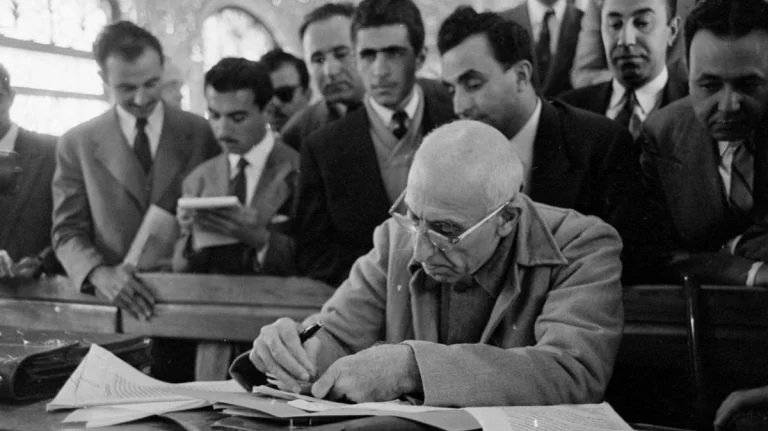
To understand why Operation Ajax remains so radioactive in Iranian memory, one must return to Mohammad Mosaddegh, a democratically elected prime minister whose crime was not tyranny, but nationalism. In 1951, Mosaddegh moved to nationalize Iran’s oil industry, ending the exploitative monopoly of the Anglo-Iranian Oil Company, the predecessor of BP.
This decision electrified Iranian society. For the first time, oil wealth symbolized sovereignty rather than foreign extraction. For Britain, it represented an existential economic threat. For the United States, it introduced uncertainty during a period when Cold War alliances were treated as sacred.
Mosaddegh was not a communist, nor an anti-Western ideologue. Yet his insistence on Iranian control over Iranian resources marked him as intolerable to Western planners. Nationalism, when it disrupts profits, is often treated as extremism.
Economic Warfare Before Military Action
Britain’s first response to nationalization was not tanks, but strangulation. A sweeping embargo cut Iran off from steel, sugar, industrial equipment, and global oil markets. The objective was simple: collapse Iran’s economy until the public turned against Mosaddegh.
When economic pressure failed to deliver regime change quickly enough, covert planning accelerated. Britain understood that it could not overthrow Mosaddegh alone. American participation was essential—not only for resources, but for legitimacy.
Washington initially hesitated, wary of direct intervention. That hesitation vanished as Cold War calculations hardened. Iran’s instability was reframed as a potential communist opening, regardless of Mosaddegh’s actual politics. Fear became justification.
Inside Operation Ajax: Manufacturing Chaos as Strategy
Operation Ajax was not a spontaneous uprising. It was a meticulously engineered campaign combining propaganda, bribery, psychological warfare, and military coordination. CIA and MI6 operatives funded street protests, paid newspaper editors, and manipulated religious leaders to portray Mosaddegh as anti-Islamic and authoritarian.
The brilliance of the operation lay in its invisibility. Iranians were made to believe the chaos was organic. That illusion held until declassified documents decades later exposed the architecture of deception behind the unrest.
When violence erupted in Tehran in August 1953, the Shah initially fled, fearing failure. His return days later, escorted by loyal military units, marked the success of the coup. Mosaddegh surrendered. Democracy ended. The monarchy was restored—not by popular will, but by foreign design.
The Shah’s Return and the Price of Foreign Legitimacy
Mohammad Reza Shah’s reinstatement came at a cost. While Western governments celebrated a strategic victory, the Iranian public absorbed a different lesson: their democracy had been stolen to protect foreign oil interests.
American oil companies soon replaced British dominance, slicing Iran’s resources into profit-sharing arrangements favorable to the West. The Shah ruled with U.S. backing for 26 years, building a security state enforced by SAVAK, Iran’s feared intelligence service.
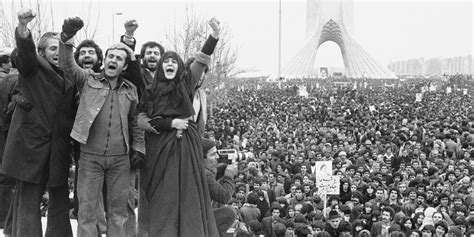
The irony was devastating. The very intervention meant to secure Western influence planted the seeds of its destruction. By 1979, the Shah’s regime collapsed under the weight of popular anger fueled by decades of repression and humiliation.
Anti-Americanism as a Direct Consequence, Not an Accident
The Islamic Revolution did not emerge from religious fervor alone. It emerged from a historical grievance rooted in 1953. The memory of Operation Ajax transformed America from a distant power into an intimate enemy.
After the revolution, U.S. oil companies were expelled, diplomatic ties severed, and Iran repositioned itself as a challenger to American dominance in the region. What was framed as a short-term strategic win became a long-term geopolitical catastrophe.
This pattern—intervention followed by backlash—remains painfully consistent across modern history.
Reza Pahlavi Jr. and the Revival of a Royal Narrative
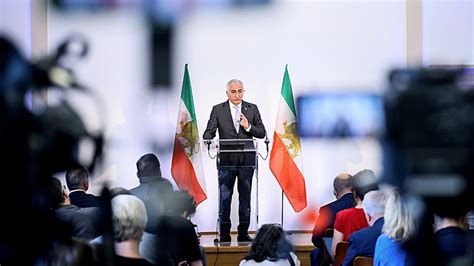
Today, Reza Pahlavi, son of the last Shah, presents himself not as a monarch-in-waiting, but as a unifying figure for a post-Islamic Republic Iran. Living in exile since 1978, he has carefully crafted a public image aligned with democracy, human rights, and secular governance.
Among protesters, chants of “Pahlavi will return” suggest a yearning not necessarily for monarchy, but for stability, dignity, and remembered prosperity. Yet symbolism cuts both ways. For many Iranians, the Pahlavi name remains inseparable from foreign domination.
The question Washington must confront is whether elevating Reza Pahlavi risks replaying the same narrative trap that doomed his father.
Operation Ajax 2.0: Same Tools, New Terrain
Modern regime change no longer requires overt coups. Sanctions, information warfare, diplomatic isolation, and social media amplification can destabilize governments more subtly. Yet the core logic remains unchanged: identify a crisis, elevate a palatable alternative, and apply pressure until power shifts.
If Reza Pahlavi returns to Iran under the shadow of U.S. intervention, even tacitly, the parallels to 1953 will be impossible to ignore. Any new government perceived as externally installed will inherit the same legitimacy crisis that haunted the Shah.
History suggests that foreign-designed solutions rarely survive local realities.
The Lesson Washington Continues to Ignore
Operation Ajax succeeded tactically and failed strategically. It delivered short-term control and long-term resistance. It secured oil access and fueled revolutionary ideology. It replaced one problem with a far more enduring one.
As Iran stands at another turning point, the temptation to engineer outcomes remains strong. But history does not forgive repetition. It compounds consequences.
Iran’s future, if it is to avoid another cycle of intervention and backlash, must be shaped by Iranians alone. Anything less risks transforming today’s protests into tomorrow’s revolution—and tomorrow’s enemy.
The shadow of 1953 still stretches across Tehran. Whether it darkens the future again depends not on power, but on memory.