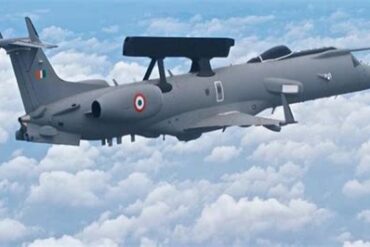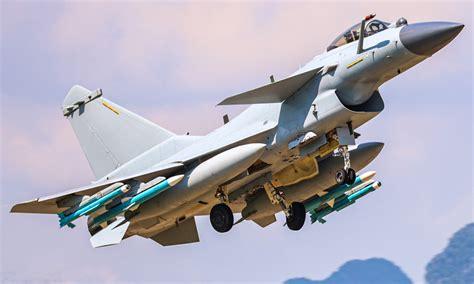
In a landmark development reshaping South Asia’s electronic warfare dynamics, India has successfully captured the electronic and digital signatures of key Pakistani air assets, including the Chinese-origin J-10C multirole fighter and PL-15E long-range air-to-air missile, during a classified operation known as Operation Sindoor. The operation, conducted in early 2025, yielded a highly valuable trove of electromagnetic data, signaling a breakthrough for India’s defence intelligence and countermeasure capabilities.
This strategic win came amid heightened tensions along the Line of Control, where Indian ELINT (Electronic Intelligence) platforms, passive radar arrays, and signals intelligence (SIGINT) drones recorded and extracted emissions from Pakistan Air Force’s (PAF) most advanced combat platforms. According to informed sources, this includes:
- Radar and datalink emissions from the KLJ-10A AESA radar used in J-10C and JF-17 Block III fighters.
- Digital telemetry from PL-15E BVR (Beyond Visual Range) missiles.
- Signal profiles from the HQ-9 strategic surface-to-air missile system.

The captured signal library represents a multidimensional gain for Indian electronic warfare forces. Electronic signatures, once acquired and decoded, become crucial assets in mission planning, suppression of enemy air defences (SEAD), and real-time threat response systems. Indian officials confirmed the data includes frequency hopping patterns, radar acquisition cycles, thermal emission profiles, and missile seeker behavior under combat conditions — vital details that allow simulation of real combat environments.
Strategic Leap in India’s Electromagnetic Dominance
The capture of the PL-15E’s signal emissions is considered particularly consequential. Known for its over-140 km no-escape zone and active AESA radar seeker, the missile poses a significant threat to high-value aerial assets. By analyzing its radar frequency bands and electronic fingerprint, Indian aerospace command can now update its missile approach warning systems, optimize RF jamming strategies, and refine spoofing algorithms to protect aircraft such as the Netra AEW&C, Rafale, and IL-78 refuelers.
The same applies to the HQ-9 SAM system, a Chinese analogue to the Russian S-300. By decoding its radar pulse repetition intervals and engagement envelopes, Indian mission planners can train pilots in advanced radar evasion techniques and preprogram onboard computers for offensive sorties across heavily defended Pakistani airspace.
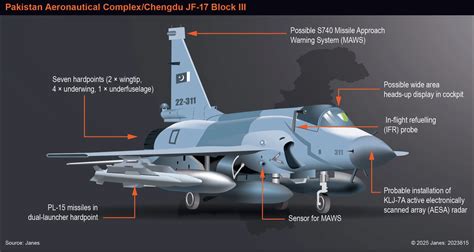
Sources within India’s Defence Intelligence Agency (DIA) and DRDO (Defence Research and Development Organisation) confirm that the captured signatures have been uploaded to India’s integrated threat recognition database. This massive library serves as the backbone of India’s future-centric network-centric warfare doctrine, allowing for rapid identification and engagement of adversary threats.
Game-Changing Capabilities for Indigenous Defence Programs
The intelligence coup feeds directly into India’s indigenous development programs, including the Advanced Medium Combat Aircraft (AMCA) project. By incorporating the electronic fingerprints of systems like the PL-15E and HQ-9 into AMCA’s sensor fusion and stealth countermeasures architecture, Indian designers gain a powerful advantage in shaping survivable, multi-spectral fighter aircraft for the future battlespace.
Moreover, training simulators developed by entities like Bharat Electronics Limited (BEL) and Hindustan Aeronautics Limited (HAL) are now being updated with real-world adversary signal patterns. This development marks a monumental step in pilot training realism, ensuring that aircrews are not only familiar with adversary radar behaviors but can also simulate electronic combat scenarios with near-combat fidelity.
Implications for Strategic Partnerships and Export Markets
India’s triumph isn’t limited to domestic advantages. According to defence analysts, the classified electronic intelligence package is being selectively shared with strategic partners such as the United States, Japan, and Australia under the Quad alliance, and Middle Eastern nations that rely on Indian-origin radar or missile systems. These data transfers enhance India’s position as an emerging regional hub of electronic warfare expertise.
In the export realm, Indian firms are now equipped to harden indigenous platforms like Akash SAMs, Astra missiles, and UTTAM AESA radars against threats originating from Chinese-manufactured systems. This enhancement provides India’s defence industry a competitive edge, particularly for clients wary of rising Chinese-Pakistani interoperability in contested regions.
How Operation Sindoor Delivered the Electromagnetic Window
The success of Operation Sindoor, insiders reveal, hinged on Pakistan’s deployment of its Chinese-built platforms during live operational scenarios. Indian analysts describe it as the “electromagnetic window” they had long waited for. Under combat stress, platforms emit full-bandwidth radar signatures and enter combat-mode telemetry sequences, revealing hidden operational traits otherwise cloaked in peacetime exercises.
It was under these specific high-pressure engagements that India’s airborne and ground-based electronic surveillance units captured:
- Emission spikes during missile lock-on sequences.
- Tactical datalink traffic patterns from airborne fighter nodes.
- Pulse-Doppler radar shifts and agile beam steering transitions.
- Critical electro-optical emission baselines from targeting pods and fire-control radars.
With the Indian Air Force’s Netra AEW&C, Phalcon radars, and signals drones like the Rustom-II, ELINT teams triangulated positions, resolved source frequencies, and archived waveform patterns in real time — all while Pakistani forces remained unaware of the extent of the monitoring.
Ripple Effects on Pakistan’s Tactical Posture
The exposure of PAF’s most advanced systems has triggered urgent internal reviews, according to regional analysts. Pakistan may now be forced to:
- Change radar emission protocols and frequency usage.
- Redesign network datalink architectures to avoid future signal leakage.
- Consider acquiring low-probability-of-intercept (LPI) radar systems from China or other suppliers.
However, such changes are neither instantaneous nor without cost. Adapting avionics and missile systems to operate in new electronic regimes often requires hardware modifications, firmware upgrades, and extensive pilot retraining, all of which consume critical time and budget.

ELINT: The New Currency of Air Superiority
In the era of information-centric warfare, victory is not always declared in air-to-air kills or territory held — but in bytes captured, emissions decoded, and systems understood. India’s ELINT success against Pakistan illustrates the value of preemptive electronic dominance, especially as both nations race to modernize their aerial fleets and integrate AI-enhanced battle management systems.
India’s victory does not just augment its real-time combat survivability — it reshapes how its military perceives, anticipates, and neutralizes threats. The integration of captured signatures into AI-based radar systems, multi-domain operational dashboards, and automated threat simulators sets India apart as a digitally empowered force prepared for 21st-century warfare.
As the geopolitical climate in the Indo-Pacific continues to tense and as Pakistan and China deepen defence collaborations, India’s ability to preemptively map, analyze, and outmaneuver these threats through superior electromagnetic intelligence will likely remain a defining factor in the region’s power balance.
For now, Operation Sindoor’s success secures more than just classified emissions — it delivers airspace leverage, strategic depth, and a clear message: India has entered the era of spectral warfare not as a challenger, but as a leader.