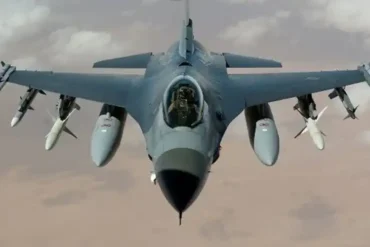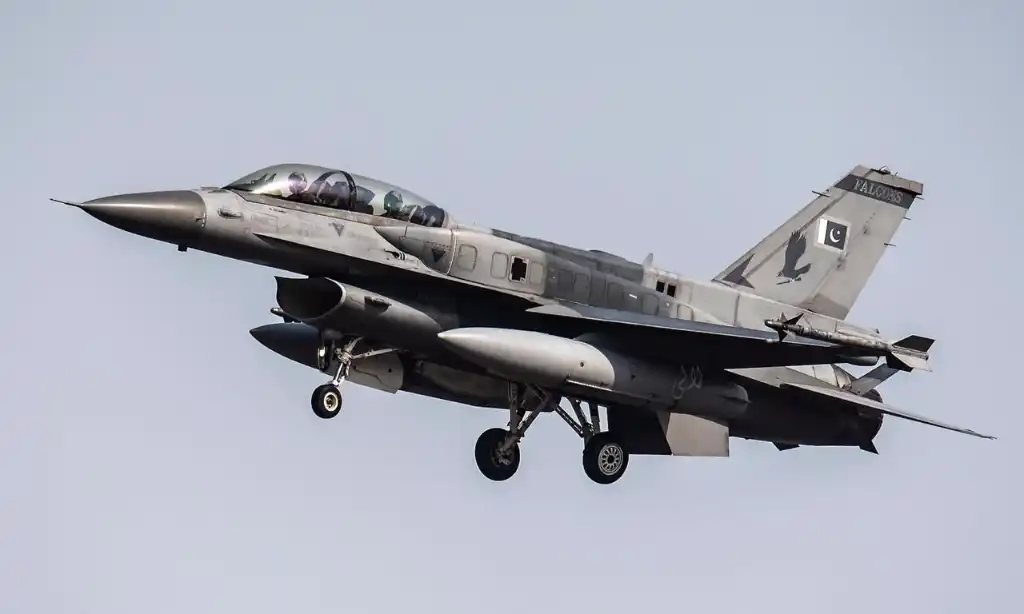
In a disclosure that rattles the very foundations of U.S. nuclear non-proliferation policy, former CIA counterproliferation officer Richard Barlow has made explosive claims about Washington’s longstanding knowledge of Pakistan’s nuclear capabilities, particularly the modification of U.S.-supplied F-16 fighter jets to deliver nuclear weapons. This revelation sheds new light on the covert compromises made during the Cold War era, where strategic alliances often overshadowed global security ethics.
Washington’s Knowledge of Pakistan’s Nuclear Delivery Systems
According to Barlow, the U.S. government had undeniable intelligence in the 1980s showing that Pakistan’s fleet of F-16s had been modified to deliver nuclear payloads. These findings weren’t speculative or circumstantial — they were confirmed by engineers and physicists from national laboratories.
“We knew that the F-16s were capable of delivering the Pakistani nuclear weapons as they existed at that time, without any doubt,” Barlow stated in a high-impact interview with ANI.
Despite this clear knowledge, U.S. administrations under Presidents Ronald Reagan and George H.W. Bush continued to certify Pakistan as a non-nuclear state, ensuring the uninterrupted flow of military aid and strategic cooperation. This deliberate misrepresentation persisted up until 1989.
The Strategic Trade-Off: Afghan War vs. Non-Proliferation
Barlow’s disclosures must be understood within the geopolitical calculus of the time. The U.S. was deeply invested in Pakistan’s support during the Soviet-Afghan War, and intelligence concerning nuclear weapons was seemingly sidelined in favor of Cold War priorities.
Pakistan played a crucial logistical and intelligence role in helping the U.S. support Afghan Mujahideen against Soviet forces. The strategic value of this alliance was deemed so high that nuclear proliferation risks were systematically downplayed.
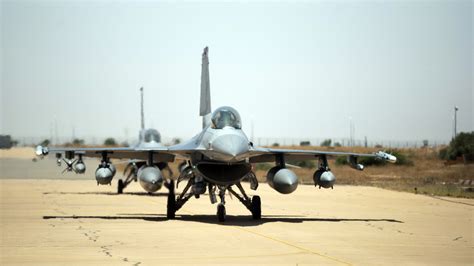
This utilitarian approach was not without consequences. Barlow disclosed that even as U.S. satellites and intelligence operations recorded nuclear weapons being physically loaded onto F-16 aircraft, American presidents continued to issue misleading certifications, shielding Pakistan from the consequences mandated by the Pressler Amendment.
Inside the CIA: Truth vs. Political Expediency
Barlow’s candid reflections on his time within the CIA reveal internal tensions between intelligence professionals and political leadership. According to him, the CIA consistently provided accurate and detailed briefings on Pakistan’s nuclear developments — but decisions were often overridden at the executive level.
“All we can do is provide the elected officials and senior policymakers with the best available intelligence… What they do after that is not our place,” Barlow lamented.
This created an ethical and operational rift within the intelligence community, as professionals like Barlow watched their work manipulated or ignored in the name of foreign policy pragmatism.
The 1987 ‘Brass Tacks’ Crisis: Nuclear Flashpoint in South Asia
Barlow also revisited the 1987 ‘Brass Tacks’ military standoff between India and Pakistan — a critical moment that brought the subcontinent to the brink of nuclear war. During this time, Pakistani nuclear scientist Dr Abdul Qadeer Khan made veiled threats alluding to a nuclear deterrent.
Even at this early stage, U.S. technical experts had already validated Pakistan’s nuclear capabilities. Despite these confirmations, the U.S. withheld pressure on Pakistan, preferring to maintain Islamabad’s support against Soviet forces in Afghanistan.
Barlow explained that Prime Minister Benazir Bhutto had minimal involvement in the nuclear decision-making process, which was largely controlled by military leadership, particularly General Mirza Aslam Beg and President Ghulam Ishaq Khan.
The 1990 Near-Nuclear Confrontation
By 1990, tensions between India and Pakistan once again escalated, this time amid concerns that nuclear-armed aircraft could be deployed. According to Barlow, this period was more dangerous than recent India-Pakistan conflicts, due to immature command structures and fragile diplomatic channels.
“There was a significantly greater chance of miscalculation in 1990,” Barlow warned.
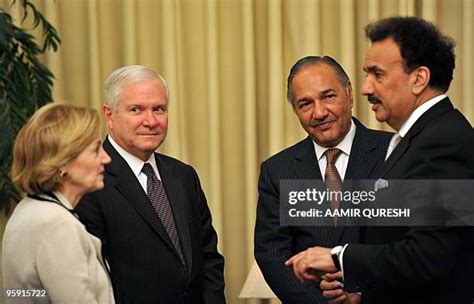
The crisis was ultimately defused by Defense Secretary Robert Gates, who was dispatched by President Bush to simultaneously engage leaders in New Delhi and Islamabad. The diplomatic maneuver averted a catastrophe but did little to slow Pakistan’s nuclear ambitions.
The Pressler Amendment and Washington’s Complicity
Passed in 1985, the Pressler Amendment required the U.S. President to annually certify that Pakistan did not possess a nuclear device as a precondition for continued military aid. This legislation should have empowered the U.S. to halt assistance based on the CIA’s findings.
Yet, Barlow revealed that even after the 1990 nuclear standoff, some factions within the U.S. government pushed to continue certifying Pakistan. When intelligence operatives refused to comply with what they saw as political theater, the certifications ceased — but not before significant damage had already been done.
A Sabotaged Sting Operation: The Enemy Within
One of the most egregious betrayals Barlow recounted was the sabotage of a joint CIA-Customs operation intended to apprehend Brigadier General Inam-ul-Haq, a Pakistani military officer orchestrating nuclear smuggling efforts.
Undercover operatives had laid a trap for Arshad Parvez, a Pakistani agent attempting to procure Maraging 350 steel, a vital component in uranium enrichment. The operation was to culminate in Pennsylvania, where arrests would be made.
However, the mission was compromised when senior U.S. State Department officials allegedly tipped off Islamabad, allowing the key suspect to evade capture.
“They were having a collective heart attack because they knew it was over — the aid, et cetera,” Barlow recalled.
“These were people in my own government, the enemy within.”
His words painted a damning portrait of an intelligence community not only ignored but actively undermined by elements within its own ranks.
Media Echoes and Public Accountability
Barlow’s warnings and revelations were not confined to internal channels. Journalist Seymour Hersh published a bombshell exposé in The New Yorker in 1993, echoing the CIA’s findings and warning the world of the U.S. duplicity regarding Pakistan’s nuclear posture.
Despite such reports, there was little public outcry or policy change at the time, underlining how deeply embedded the strategic calculus of Cold War alliances had become in American foreign policy.
Today, Barlow’s statements add further weight to what many in the intelligence community have long believed — that short-term geopolitical gains often trump long-term global security imperatives.
Conclusion: The Long Shadow of a Compromised Decade
The tale of Pakistan’s nuclear capability and Washington’s willing blindness is more than a Cold War footnote. It is a cautionary account of how geopolitical necessity can override institutional integrity, and how truth can be buried beneath layers of strategic compromise.
Richard Barlow’s courage in speaking out, despite personal and professional fallout, underscores the need for transparency and accountability in global security governance. His revelations serve not only as a historical record but also as a wake-up call for how future decisions involving nuclear proliferation must be handled — with clarity, courage, and an unwavering commitment to the truth.