Modern military aviation represents one of the most technologically advanced and financially demanding sectors on Earth. Maintaining air superiority, global reach, and nuclear deterrence requires aircraft that push engineering limits—and budgets—further every decade. While fighter jets often dominate headlines with their stealth and speed, they are not always the most expensive machines to operate.
In reality, the highest operating costs in military aviation belong to a mix of stealth bombers, strategic transports, airborne command centers, and elite fighter aircraft. These platforms combine advanced avionics, specialized maintenance procedures, large crews, and enormous fuel consumption. Every hour in the air represents a massive investment in logistics, engineering, and operational readiness.
Some aircraft burn tens of thousands of dollars in fuel alone during a single mission. Others require dozens or even hundreds of maintenance hours for every hour of flight. Add in stealth coatings, specialized spare parts, and highly trained personnel, and the true cost of operating these aircraft becomes staggering.
Understanding these aircraft is also a window into how modern militaries prioritize strategic capability over financial efficiency. These machines exist not because they are economical, but because they provide capabilities no cheaper alternative can match.
Below are six military aircraft whose operating costs represent the absolute peak of modern aviation spending.
6. Eurofighter Typhoon — Around $65,000 Per Flight Hour
The Eurofighter Typhoon stands among the most advanced fourth-generation-plus fighter aircraft ever built. Developed through a complex partnership between the United Kingdom, Germany, Italy, and Spain, the Typhoon embodies decades of European aerospace expertise and political cooperation.
Unlike many fighter jets produced by a single nation, the Typhoon’s multinational design introduces significant logistical complexity. Components are manufactured across multiple countries, and the supply chain requires coordination among several defense industries. This collaborative structure contributes to the aircraft’s operating cost of approximately $60,000 to $65,000 per flight hour.
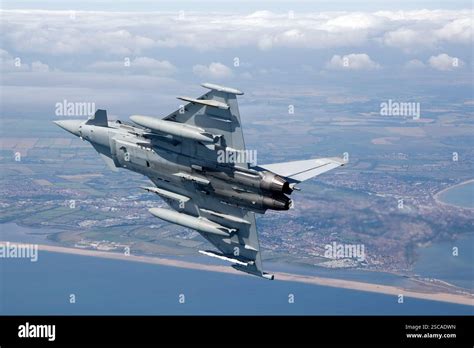
One of the primary reasons for its high operational expenses is the aircraft’s twin EJ200 turbofan engines. While these engines deliver exceptional thrust and agility, they also consume more fuel and require more maintenance than single-engine fighters such as the F-16.
The Typhoon also carries a highly sophisticated electronic suite. Its Captor-E Active Electronically Scanned Array (AESA) radar enables superior target detection, electronic warfare capability, and long-range missile guidance. Maintaining these systems requires highly specialized technicians and constant software upgrades.
Despite its cost, the Typhoon offers extraordinary versatility. It can perform air superiority, ground attack, reconnaissance, and maritime strike missions within a single sortie. The aircraft is also capable of carrying the advanced Meteor beyond-visual-range missile, which many analysts consider one of the most capable air-to-air weapons currently deployed.
Interestingly, the Typhoon incorporates 15 interchangeable modules designed to reduce maintenance time. This modular architecture allows ground crews to quickly replace damaged components rather than perform lengthy repairs.
While not a stealth aircraft, the Typhoon remains one of the most formidable non-stealth fighters ever developed—and its operating cost reflects the immense engineering behind it.
5. Lockheed Martin F-22 Raptor — Around $85,000 Per Flight Hour
The Lockheed Martin F-22 Raptor is widely considered the most dominant air superiority fighter ever created. Designed during the late Cold War, the aircraft introduced a revolutionary combination of stealth technology, supercruise capability, and extreme maneuverability.
Operating this advanced fighter costs approximately $85,000 per flight hour, making it the most expensive fighter jet currently in service.
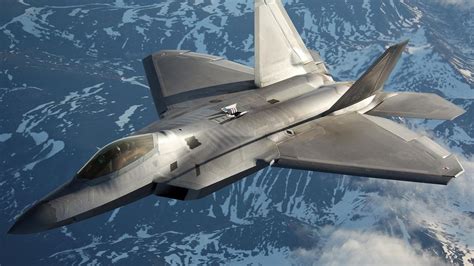
Several factors contribute to these immense costs. The Raptor’s stealth capabilities rely on a specialized radar-absorbent material (RAM) coating applied across its entire airframe. Maintaining this coating requires constant inspection, repair, and replacement, often performed in controlled environments.
Unlike conventional fighters, the F-22 was engineered almost entirely from scratch. Its development introduced numerous technologies that had never previously existed in operational aircraft, including advanced composite structures and highly integrated avionics.
The aircraft’s Pratt & Whitney F119 engines allow the Raptor to fly at supersonic speeds without using afterburners—a capability known as supercruise. This provides exceptional tactical advantages but demands sophisticated maintenance procedures and extremely precise engineering tolerances.
Another factor increasing operational costs is the aircraft’s limited production run. Only 187 operational F-22s were ultimately built before the program ended in 2011. Such a small fleet means spare parts, technical expertise, and maintenance infrastructure must support a relatively tiny number of aircraft.
Even so, the Raptor’s capabilities remain unmatched in several critical areas. It can detect enemy aircraft long before being detected itself, launch missiles from beyond visual range, and maneuver aggressively in close-range engagements.
In many ways, the F-22 represents the peak of air superiority design—an aircraft built with performance as the ultimate priority, regardless of cost.
4. Lockheed C-5M Super Galaxy — Around $100,000 Per Flight Hour
The Lockheed C-5M Super Galaxy is one of the largest military aircraft ever built and serves as a cornerstone of the United States Air Force’s global logistics network. With its enormous cargo hold and intercontinental range, the C-5 allows the military to transport tanks, helicopters, and entire units across continents within hours.
However, moving such immense loads comes at a substantial cost. Operating the C-5M requires roughly $100,000 per flight hour.
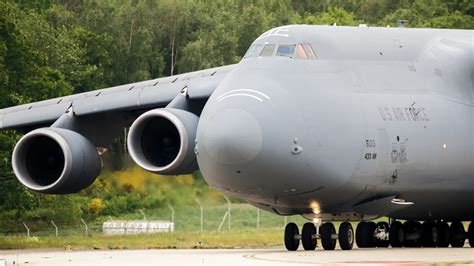
Nicknamed “FRED” (Freaking Ridiculous Economic Disaster) by some pilots due to its high expenses, the C-5 was originally developed during the Vietnam War era to support global military deployments.
The aircraft’s massive size explains much of its operational cost. With a wingspan of nearly 223 feet and four enormous General Electric CF6 engines, the C-5 burns extraordinary amounts of fuel during long-distance missions.
Yet its capabilities remain unmatched. The aircraft can carry over 280,000 pounds of cargo, including oversized military vehicles that cannot fit inside most transport aircraft. Its distinctive nose-up loading system allows vehicles to drive directly into the cargo bay.
The latest C-5M modernization program introduced improved engines, digital avionics, and upgraded flight systems. These improvements significantly enhanced fuel efficiency and reliability compared to earlier versions.
Despite these upgrades, maintaining such a colossal aircraft still requires extensive logistics support, specialized equipment, and highly trained maintenance crews.
With the destruction of the Antonov An-225 Mriya in 2022, the C-5 now effectively stands as the largest operational strategic airlifter in the world.
3. Northrop Grumman B-2 Spirit — Around $130,000 Per Flight Hour
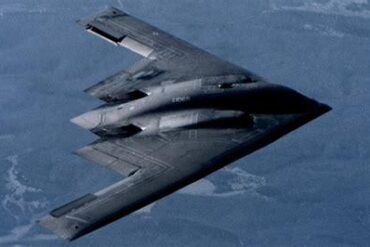
Few aircraft symbolize technological ambition quite like the Northrop Grumman B-2 Spirit. This stealth bomber, instantly recognizable by its flying wing design, remains one of the most advanced aircraft ever built.
Its operating cost is equally remarkable, reaching approximately $130,000 per flight hour.
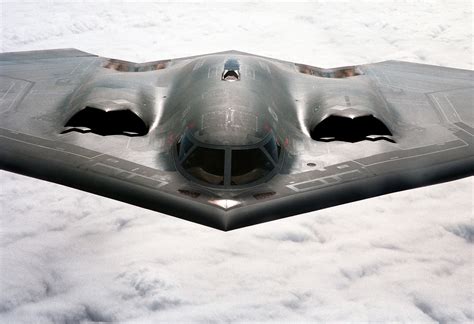
The B-2 was originally developed to penetrate heavily defended Soviet airspace during the Cold War. Its unique shape, composite materials, and specialized coatings allow it to remain almost invisible to radar.
Creating such a stealth aircraft required revolutionary engineering. The B-2 introduced advanced fly-by-wire flight control systems, integrated sensors, and highly sophisticated mission computers long before such technologies became standard.
One of the largest contributors to its operating cost is the bomber’s fragile stealth coating. The aircraft requires roughly 119 hours of maintenance for every hour of flight, largely due to the delicate radar-absorbing materials covering its surface.
Production limitations also play a major role. The United States originally planned to build 200 B-2 bombers, but the collapse of the Soviet Union led to budget cuts that reduced the fleet to only 21 aircraft. Such a small number makes maintenance, spare parts production, and technician training far more expensive.
Despite these challenges, the B-2 remains a cornerstone of the U.S. nuclear and conventional strike capability. It can deliver both precision-guided conventional weapons and nuclear payloads anywhere on the planet.
Until the arrival of its successor—the B-21 Raider—the Spirit continues to represent one of the most technologically ambitious and expensive aircraft ever created.
2. Air Force One (VC-25A) — Around $200,000 Per Flight Hour
When the President of the United States travels by air, the aircraft used is commonly known as Air Force One. Behind the famous blue-and-white livery lies one of the most sophisticated aircraft ever built.
Operating the current VC-25A fleet, which consists of heavily modified Boeing 747-200B aircraft, costs approximately $177,000 to $206,000 per flight hour.
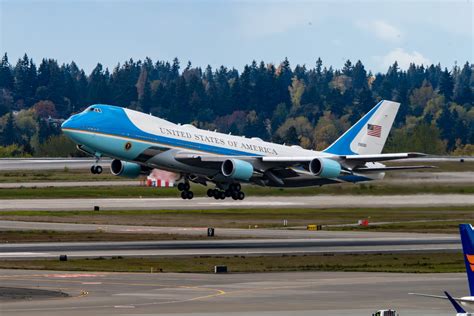
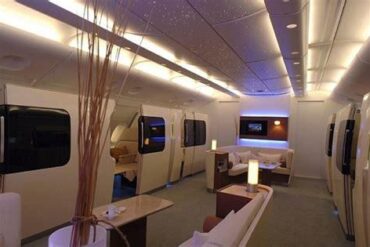
Unlike a standard passenger aircraft, Air Force One functions as a mobile command center capable of operating during national emergencies.
Its advanced systems include:
- Military-grade encrypted communications
- EMP shielding
- Defensive countermeasures against missiles
- Aerial refueling capability
- Multiple redundant power systems
These features allow the aircraft to remain airborne indefinitely during crises while maintaining full communication with military command structures.
The aircraft is also designed to operate independently at almost any airport. Built-in stairways and cargo loaders eliminate reliance on local ground equipment, ensuring security during international travel.
Operational costs extend far beyond the aircraft itself. Every presidential flight involves a large support operation, including additional aircraft transporting vehicles, security teams, and communications equipment. Often, a second VC-25A accompanies the mission as a backup aircraft.
The upcoming replacement, the VC-25B, will be based on the newer Boeing 747-8i platform. While more fuel-efficient, the development program for just two aircraft carries a staggering price tag of roughly $6 billion.
1. Boeing E-4B Nightwatch — Up to $300,000 Per Flight Hour
At the top of the list stands one of the most secretive and powerful aircraft ever built: the Boeing E-4B Nightwatch. Often referred to as the “Doomsday Plane,” this aircraft serves as the United States’ airborne command center during nuclear war or national catastrophe.
Operating the E-4B costs anywhere between $150,000 and $400,000 per flight hour, with typical missions averaging around $300,000 per hour.
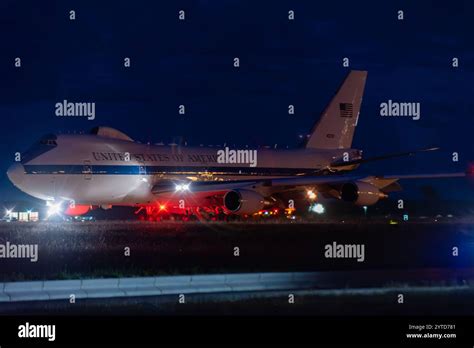
The aircraft is essentially a flying Pentagon. Based on the Boeing 747 platform, it houses an extensive command and control infrastructure capable of coordinating military operations across the globe.
Inside the aircraft are:
- Advanced communications arrays connecting to nuclear forces
- Hardened computing systems
- Satellite communications networks
- Extensive battle management facilities
The aircraft is designed to survive extreme conditions, including electromagnetic pulse (EMP) attacks, nuclear radiation, and thermal effects from nuclear detonations.
Unlike most military aircraft, the E-4B requires a very large onboard crew. Mission specialists, communications officers, technical staff, and military leadership all operate within the aircraft during exercises or crisis situations.
Only four E-4B aircraft currently exist, making them among the rarest and most strategically important aircraft in the world.
To ensure continued survivability and modernization, the U.S. Air Force is developing the E-4C Survivable Airborne Operations Center (SAOC). This new platform will replace the aging Nightwatch fleet with modified Boeing 747-8 aircraft equipped with modular open systems architecture.
Although these new aircraft will improve efficiency and maintenance reliability, their advanced communications systems and large operational crews mean they will likely remain among the most expensive aircraft ever flown.
Conclusion: The True Price of Airpower
Military aviation has always demanded extraordinary financial resources, but the aircraft on this list demonstrate just how far that cost can escalate. From stealth bombers requiring hundreds of maintenance hours to airborne command centers capable of directing nuclear forces, these machines exist at the intersection of engineering ambition and strategic necessity.
Their operating costs reflect far more than fuel consumption. They represent the immense investment required to maintain technological superiority, global reach, and strategic deterrence.
As future aircraft like the B-21 Raider, VC-25B, and E-4C SAOC enter service, the financial landscape of military aviation will continue to evolve. Yet one reality will remain unchanged: maintaining dominance in the skies will always come with an extraordinary price tag.
FAQs
Which military aircraft has the highest operating cost per hour?
The Boeing E-4B Nightwatch holds the highest estimated operating cost, with missions ranging between $150,000 and $400,000 per flight hour, depending on mission complexity and crew requirements.
Why are stealth aircraft so expensive to operate?
Stealth aircraft require specialized radar-absorbing materials, precision maintenance procedures, and highly trained technicians. These coatings must be constantly inspected and repaired to maintain low radar visibility.
Are fighter jets the most expensive military aircraft to operate?
No. While fighters like the F-22 Raptor are extremely costly, specialized aircraft such as strategic bombers, command centers, and large transport aircraft often have significantly higher operating costs due to their size, complex systems, and large crews.