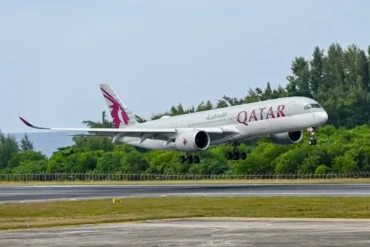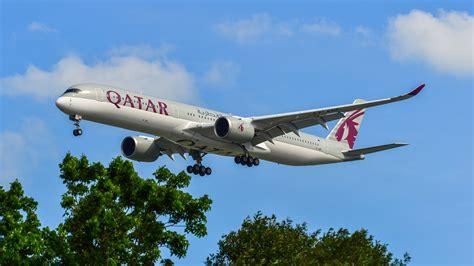
Qatar Airways enters the Winter 2025/26 season with a sharpened focus on long-haul strength, premium density, and global connectivity, and the Airbus A350-1000 stands at the core of that strategy. Designed for efficiency, long-range performance, and premium comfort, the aircraft defines the airline’s winter operations with an unmistakable blend of capability and scale. As winter travel surges across Europe, Asia-Pacific, the Americas, and regional Gulf markets, the A350-1000 becomes the airline’s most valuable tool in absorbing demand, protecting yields, and reinforcing its global hub model through Doha. This season’s deployment pattern reveals not only Qatar Airways’ tactical decisions, but also the airline’s long-term vision for growth.
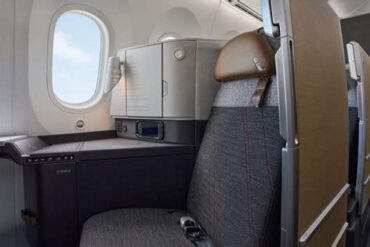
Its role becomes especially visible during winter peaks, where long-haul flows thicken and premium cabins sell at consistently strong yields. With up to 395 seats, extensive Qsuite availability, and a generous cargo belly, the A350-1000 allows the airline to pursue wide economic margins even on the longest intercontinental missions—an essential advantage as global travel continues its upward climb.
A350-1000: The Backbone of Qatar Airways’ Winter Network
The A350-1000 enters winter with unmatched versatility across Qatar Airways’ global portfolio. The aircraft’s aerodynamics, composite structure, and fuel efficiency give it an edge on routes where long flying times, high cargo loads, and premium density converge. Qatar Airways maximizes these traits by deploying the A350-1000 on the world’s most hotly contested long-haul corridors—routes where competition from airlines such as Emirates, Etihad, Lufthansa, and British Airways remains intense.
Its operational flexibility is equally visible in its deployment on short, high-density regional hops. Even flights as short as Doha–Dubai see heavy winter frequency from the A350-1000 because seasonal traffic surges demand widebody capacity. This use-case highlights the unique structure of Gulf aviation: short routes can justify large aircraft purely because connecting global flows are funneled through a centralized hub.
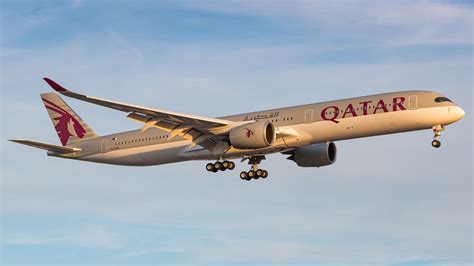
Global Deployment: Where the A350-1000 Flies This Winter
Winter 2025/26 data reveals a broad spectrum of missions operated by the A350-1000, stretching from ultra-long-haul transcontinental sectors to some of the shortest regional flights in the Middle East. The route with the highest winter activity is Doha–São Paulo, recording 242 flights each way. Its prominence reflects rising South American demand, strong cargo flows, and the strategic importance of Brazil in Qatar Airways’ long-term network.
Nearby in ranking is Doha–Denpasar (Bali), an extremely popular winter leisure route recording 240 flights. As Southeast Asia continues its post-pandemic bounce, this route solidifies Bali’s status as one of Qatar Airways’ most profitable seasonal leisure markets.
Across Asia-Pacific, Singapore, Seoul, Tokyo, Bangkok, and Kuala Lumpur remain pillars of winter connectivity. These destinations reflect a blend of premium corporate travel, Lunar New Year demand, and major cargo throughput. The A350-1000’s efficiency under heavy winter headwinds makes it especially suitable for these eastbound return legs, where block times often stretch significantly.
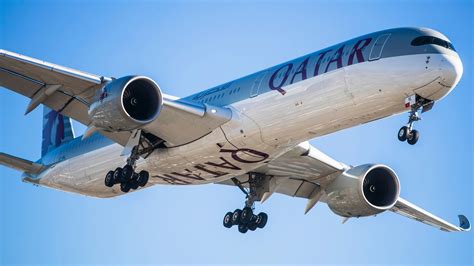
North America: A350-1000 Strengthens Transpacific and Transatlantic Reach
North America remains one of Qatar Airways’ fastest-expanding regions, and winter 2025/26 showcases the A350-1000 as its flagship workhorse across the continent. Miami, with 173 winter flights, anchors the airline’s U.S. portfolio with a heavy blend of premium and VFR (visiting friends and relatives) demand. As the southernmost hub for American Airlines, Miami also delivers substantial connecting traffic into Latin America and the Caribbean.
Other major U.S. destinations—including Dallas/Fort Worth, Los Angeles, San Francisco, Houston, and Atlanta—see approximately daily A350-1000 service. These markets thrive on corporate travel, long-haul leisure, and winter holiday surges. The aircraft’s leading fuel efficiency allows Qatar Airways to maintain profitability across these elongated sectors, many of which face strong seasonal headwinds.
The airline’s partnership with American Airlines amplifies these advantages, especially through DFW and LAX, where seamless U.S. domestic connectivity boosts load factors. The A350-1000’s winter performance acts as a stabilizing force on these demanding routes, allowing the airline to maintain schedule integrity even during adverse jet stream conditions.
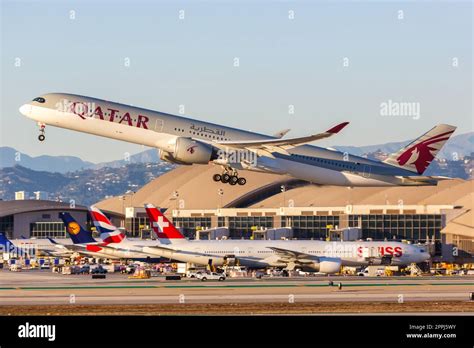
Europe: High-Yield Markets Powered by High-Capacity Aircraft
Europe continues to be Qatar Airways’ most competitive region, particularly in winter when corporate travel intersects with holiday peaks. Slot-restricted airports such as London Heathrow and Frankfurt benefit substantially from A350-1000 deployment, which allows Qatar Airways to maximize revenue per slot pair during the busiest months of the year.
Winter operations show strong A350-1000 activity in Paris Charles de Gaulle, Zurich, and Manchester, each receiving more than 100 flights. The aircraft’s high capacity and Qsuite configuration make it a natural fit for these routes, where premium travel demand remains elevated year-round.
Europe’s aviation environment, with its slot challenges, intense competition, and high seasonality, rewards airlines that can deploy high-density, efficient widebodies. Qatar Airways uses the A350-1000 as a strategic lever to outperform rivals in both operational efficiency and passenger experience.
Asia-Pacific: Demand Surges and Strategic Advantages
Asia-Pacific remains Qatar Airways’ most diverse and dynamic region. Winter yields grow significantly due to the convergence of business travel, long-haul transits to Europe, and massive leisure flows tied to regional holidays. Singapore, Bali, Seoul, Tokyo, and Bangkok all register more than 120 A350-1000 flights this winter, making the region the aircraft’s busiest deployment area after the Middle East.
Competition is fierce, especially from Chinese carriers benefiting from state backing and unrestricted access to Russian airspace on Europe-bound routes. Qatar Airways counterbalances these structural disadvantages through superior product quality, highly efficient scheduling, and the A350-1000’s lower trip cost. Cargo uplift—especially on Korea and Japan routes—strengthens route profitability even further.
Winter flying conditions in Asia often extend block times, yet the A350-1000’s fuel efficiency helps mitigate operational strain. This advantage becomes increasingly important as Asian carriers ramp up capacity and as geopolitical factors continue shaping flight paths across the region.
Cargo Capacity: The Hidden Engine Behind A350-1000 Deployment
Beyond passenger demand, the A350-1000’s role as a cargo-carrying powerhouse cannot be understated. With up to 66,000 lbs of bellyhold capacity, it significantly enhances revenue on routes where freight remains a critical profit driver—particularly São Paulo, Johannesburg, Tokyo, and Seoul.
Winter freight flows surge due to global retail cycles and manufacturing exports, and Qatar Airways leverages the A350-1000’s efficient cargo performance to build schedule resilience. The aircraft acts as an economic multiplier, enabling the airline to achieve stronger financial returns even during seasonal fluctuations.
This dual-strength—premium passenger capacity and major cargo scale—cements its place in the airline’s long-term fleet strategy.
Looking Ahead: The A350-1000’s Expanding Role
The winter 2025/26 deployment pattern provides a clear preview of Qatar Airways’ long-term direction. The A350-1000 will increasingly dominate Western Hemisphere routes, strengthen connectivity across Europe, and expand deeper into Africa. As more aircraft join the fleet fitted with Qsuite, Qatar Airways’ ability to command premium yields will grow in tandem.
Future seasons are poised to see even greater A350-1000 presence in the western United States, as well as upgrades on core trunk routes such as Singapore, London, Frankfurt, and Tokyo. Its performance advantages render older widebodies less competitive, reshaping the airline’s fleet strategy for the next decade.
Qatar Airways continues to anchor its winter strategy around efficiency, passenger appeal, and network resilience. The A350-1000, with its impressive reach and profitability, remains central to that mission and will only become more influential as global travel scales upward.