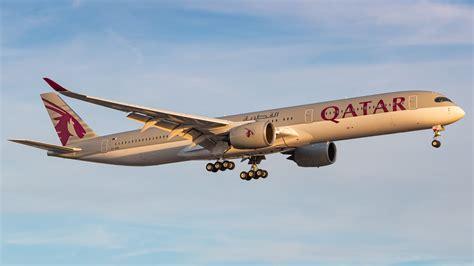
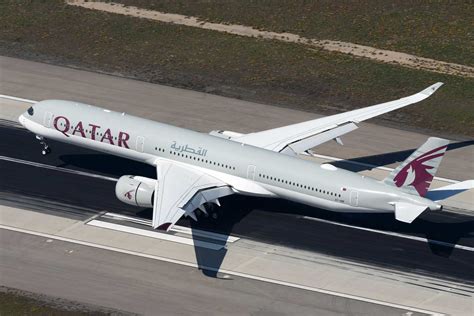
The evolution of the aviation industry has demanded a new generation of aircraft—sleek, efficient, long-range performers capable of balancing cost, comfort, and environmental responsibility. For Qatar Airways, a carrier synonymous with innovation and luxury, the Airbus A350-1000 represents the pinnacle of this new era. This aircraft is not just a technological marvel—it is a deliberate and strategic choice that reflects Qatar Airways’ ambitions to lead the skies well into the future.
The Rise of a Revolutionary Aircraft
When Airbus unveiled the A350 XWB program in 2006, it was more than just an answer to Boeing’s widebody dominance—it was a complete rethinking of the modern twinjet. Designed from a clean slate, the A350 family leveraged a blend of carbon-fiber-reinforced polymer (CFRP) fuselage and wings, next-generation aerodynamics, and ultra-efficient Rolls-Royce Trent XWB engines to achieve exceptional fuel economy and environmental performance.
The A350-900 made its debut first, followed by the stretched and structurally upgraded A350-1000 in 2016. With its longer fuselage, more powerful engines, and increased maximum takeoff weight, the A350-1000 was engineered for ultra-long-haul operations with high passenger demand, making it ideal for the mission profile Qatar Airways is known for.
A Historic Partnership: Qatar Airways as Launch Customer
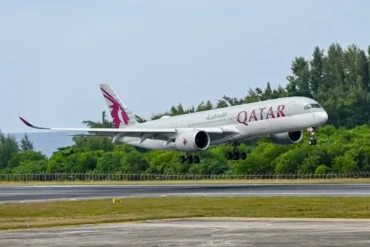
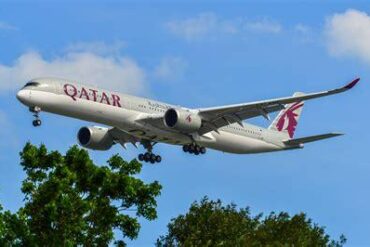
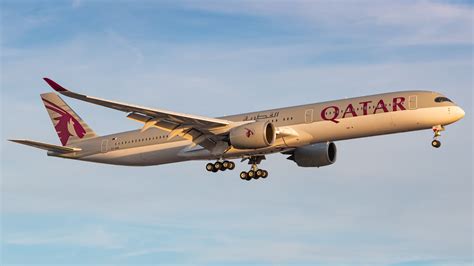
Qatar Airways was not merely a customer—it was the launch partner for both the A350-900 and the A350-1000, reflecting a mutual vision between Airbus and one of the world’s most forward-thinking airlines. The airline took delivery of its first A350-1000 in February 2018, quickly deploying it on flagship long-haul routes between Doha and London, and setting a benchmark for global operations.
As of late 2025, Qatar Airways operates 27 A350-1000 aircraft, with 15 additional airframes on order, positioning it as the second-largest operator of the type globally, behind only Singapore Airlines. This scale of investment underlines not only Qatar Airways’ confidence in the aircraft but also its long-term fleet planning strategy that prioritizes efficiency, flexibility, and passenger experience.
Strategic Deployment Across Global Routes
The A350-1000’s performance characteristics make it a natural fit for Qatar Airways’ hub-and-spoke network centered around Doha Hamad International Airport (DOH). The aircraft is routinely assigned to some of the airline’s most high-profile and demanding routes, such as:
- Doha to Ngurah Rai (Bali) International Airport (DPS) – Covering over 4,800 miles with 62 flights per direction monthly, this is one of the most frequent long-haul deployments.
- Doha to Los Angeles (LAX) and San Francisco (SFO) – Two of the longest routes in the network, requiring maximum fuel efficiency and cabin comfort.
- Doha to Dubai (DXB) – At just 235 miles, this short route demonstrates the A350-1000’s high-capacity versatility, delivering 17,140 seats over 52 flights each way.
These applications showcase the aircraft’s adaptability, allowing Qatar Airways to serve both dense regional corridors and ultra-long-haul intercontinental sectors with equal efficiency.
Fuel Efficiency Meets Environmental Responsibility
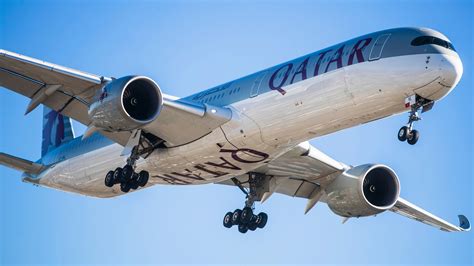
The A350-1000’s Rolls-Royce Trent XWB-97 engines are central to its performance. Delivering over 97,000 pounds of thrust, they enable the aircraft to fly farther while consuming significantly less fuel compared to older quadjets. Qatar Airways benefits immensely from this, as it continues to seek ways to reduce its carbon footprint while expanding its global network.
Constructed from over 50% composite materials, the A350-1000 is both lighter and stronger than its aluminum predecessors. Combined with aerodynamic refinements like curved wingtips and laminar flow design, these features reduce drag and fuel burn. For Qatar Airways, which operates in the hot and arid climate of the Middle East, the aircraft’s high-temperature takeoff capabilities are critical to year-round operational stability.
Elevating the Passenger Experience
Qatar Airways is known globally for setting the standard in passenger experience, and the A350-1000 provides the perfect platform to execute that vision. Its spacious cabin layout, high ceilings, reduced cabin noise, and higher humidity levels contribute to reduced fatigue and enhanced comfort on long-haul journeys.
At the heart of this offering is Qsuite, Qatar Airways’ award-winning business class product. The A350-1000 accommodates this configuration perfectly, offering private suites with sliding doors, lie-flat beds, and a customizable quad seating arrangement. The aircraft’s wider fuselage allows for generous aisle space and a tranquil cabin atmosphere, ensuring passengers arrive refreshed, no matter how long the flight.

Operational Flexibility & Fleet Commonality
One of the key advantages for Qatar Airways lies in the commonality between the A350-900 and A350-1000. Both aircraft share a common type rating, systems architecture, and cockpit design, which means pilots and cabin crew can easily transition between the two. This reduces training costs, scheduling complexity, and maintenance overhead—a critical factor in a large, high-utilization fleet.
Moreover, the A350-1000’s range of over 8,000 nautical miles gives Qatar Airways the flexibility to open new nonstop destinations or boost frequency on existing routes without compromising on operational costs. Whether serving a bustling transatlantic corridor or exploring underserved long-range city pairs, the aircraft adapts with ease.
A Model for Other Carriers
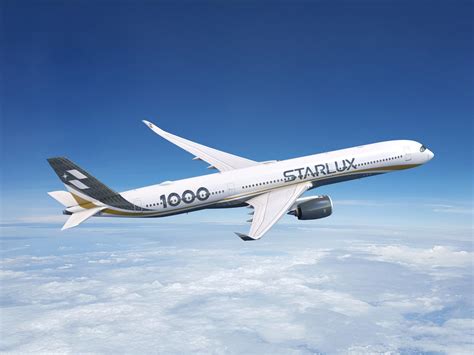
Qatar Airways is not alone in embracing the A350-1000. Airlines such as Japan Airlines, China Airlines, STARLUX, Philippine Airlines, and Ethiopian Airlines have all opted to add the type to their fleets. Each of these carriers is pursuing ambitious long-haul expansion strategies, and the A350-1000’s combination of range, fuel savings, and passenger appeal makes it a natural choice.
For example, Japan Airlines uses the A350-1000 for ultra-long-haul routes like Tokyo–New York, where fuel economy and premium cabin space are paramount. STARLUX and China Airlines are using it to connect Asia with Europe and North America, while Ethiopian Airlines leverages the aircraft’s high-altitude performance and large capacity to serve intercontinental routes from Addis Ababa.
Looking Beyond 2025: The Future of Qatar Airways’ Fleet
As global aviation continues to evolve, airlines must anticipate trends rather than react to them. Qatar Airways’ increasing investment in the A350-1000 reflects a forward-looking approach to fleet development, one that prioritizes sustainability, adaptability, and premium service delivery.
While other carriers continue to retire aging fleets and grapple with evolving environmental regulations, Qatar is already several steps ahead. Its A350-1000 fleet provides the foundation for long-term growth, both in terms of route expansion and brand reputation. With new aircraft deliveries scheduled and the potential to replace older long-haul types like the Boeing 777, the A350-1000 is set to become the backbone of Qatar Airways’ international fleet.
Why the A350-1000 Truly Fits Qatar Airways
The alignment between aircraft and airline could not be more precise. The Airbus A350-1000 mirrors Qatar Airways’ commitment to excellence—technologically advanced, environmentally responsible, and relentlessly focused on the passenger. Its performance supports the airline’s ambitious long-haul connectivity strategy, while its cabin space enhances the signature onboard product that has earned Qatar global acclaim.
Moreover, the A350-1000 delivers hard operational benefits that go beyond branding. Lower fuel burn, reduced maintenance costs, improved reliability, and hot-weather performance all translate into measurable efficiencies that boost profitability and customer satisfaction alike.
In an age where airlines must do more with less—offering premium services while controlling emissions and costs—the A350-1000 is the rare aircraft that enables all three. For Qatar Airways, it is not just the perfect aircraft today; it is the platform upon which the future of long-haul excellence is being built.
Conclusion
The Airbus A350-1000 has proven to be a transformational aircraft, and nowhere is this more evident than in the fleet of Qatar Airways. From its launch customer relationship to its expanding global footprint, the airline has harnessed every advantage the aircraft offers. As Qatar Airways continues to redefine long-haul travel, the A350-1000 stands at the center of its strategy—an elegant synthesis of engineering, economics, and experience that embodies the next chapter of premium aviation.