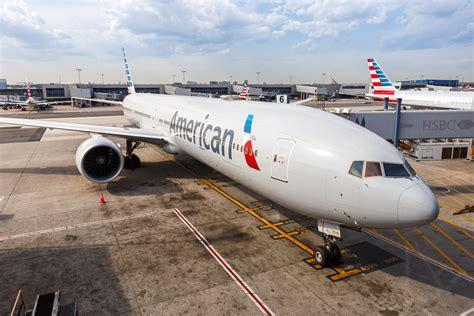
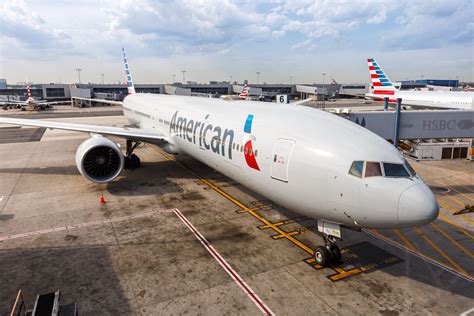
American Airlines continues to maximize the value of its Boeing 777-300ER fleet across a carefully chosen set of high-capacity, high-revenue routes. As of July 2025, these aircraft — each configured with 304 seats across four cabin classes — are strategically deployed to link key U.S. hubs with global commercial and leisure centers, particularly those demanding premium service and high cargo throughput. The airline operates 20 of these long-haul widebodies, optimized to serve a broad mix of transatlantic, transpacific, and select high-volume domestic flights.
The Backbone of American’s Long-Haul Premium Strategy
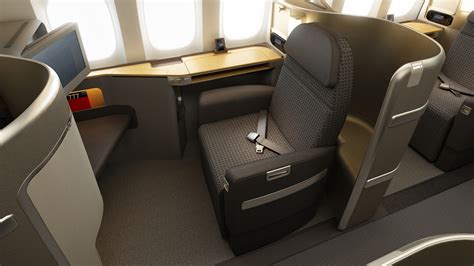
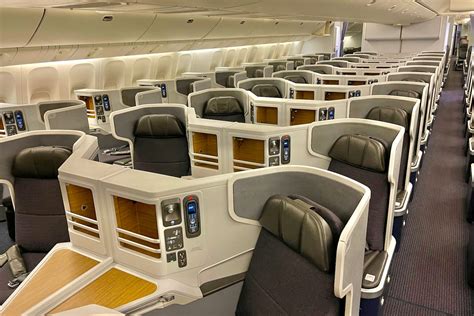
American’s 777-300ERs (designated as 77W in scheduling databases) are more than just high-capacity jets; they are revenue-generation engines. Fitted with 8 Flagship First, 52 Flagship Business, 28 Premium Economy, and 216 Main Cabin seats, these aircraft provide the most comprehensive onboard product suite in the American Airlines fleet. Their range and capacity make them particularly well-suited for routes that see significant business-class demand, strong freight movement, and steady leisure traffic.
The aircraft’s cabin layout ensures premium passengers can access lie-flat suites in both First and Business class, while also catering to Main Cabin travelers with consistent service and entertainment offerings. Importantly, the aircraft’s cargo hold contributes significantly to international revenue, especially on routes where belly cargo yield matches or exceeds passenger profitability.
Key Routes in July 2025: London, Sydney, São Paulo, and More
According to Cirium data for July 2025, American Airlines uses the 777-300ERs on a wide array of strategic long-haul routes. The centerpiece of the deployment is London Heathrow (LHR), which receives flights from five major U.S. cities. With 837 roundtrip flights across all routes in the month, the 777-300ERs contribute an enormous ASM (Available Seat Miles) output. Here are the primary destinations:
- Dallas/Fort Worth (DFW) – London Heathrow (LHR): 248 roundtrips, 358 million ASMs
- New York (JFK) – London Heathrow (LHR): 217 roundtrips, 276 million ASMs
- Miami (MIA) – London Heathrow (LHR): 186 roundtrips, 195 million ASMs
- Los Angeles (LAX) – Sydney (SYD): 155 roundtrips, 181 million ASMs
- LAX – London Heathrow (LHR): 124 roundtrips, 166 million ASMs
- Miami (MIA) – São Paulo (GRU): 93 roundtrips, 121 million ASMs
- Charlotte (CLT) – London Heathrow (LHR): 62 roundtrips, 75 million ASMs
- JFK – Madrid (MAD) and JFK – Barcelona (BCN): 62 roundtrips each
- JFK – Miami: 62 roundtrips, despite being a short-haul route
Why London Heathrow Dominates the Map
London Heathrow emerges as the most critical hub in American Airlines’ 777-300ER strategy. The transatlantic joint venture with British Airways creates seamless connections across Europe, with LHR serving as a vital node. Combined, AA’s LHR flights represent over 60% of the total monthly ASMs generated by the 777-300ER fleet.
The Dallas–Heathrow route is particularly dominant. With 248 roundtrips in one month alone, it accounts for more than 75,000 roundtrip seats. American relies on this route for business traffic, corporate contracts, and cargo uplift, with the presence of Flagship First underlining its premium credentials.
This transatlantic strategy mirrors that of legacy European carriers, where key city pairs like JFK–LHR or DFW–LHR remain not only symbolic but operationally essential.
The Curious Case of JFK–Miami: Domestic Use of a Long-Haul Giant
While the 777-300ER is designed for ultra-long-haul flying, its usage between JFK and Miami — a flight of under 1,100 miles — raises eyebrows. Yet, the logic is sound. American deploys the aircraft on this trunk route to:
- Maintain schedule reliability by using the same aircraft for onward international connections
- Offer premium cabin continuity for connecting First and Business class passengers
- Maximize aircraft utilization and operational flexibility
The JFK–Miami route’s frequency, at 62 roundtrips in July 2025, supports this unique utilization. It’s not about distance, but rather about fleet harmonization, efficiency, and premium experience delivery.
From Texas to the World: The Central Role of Dallas/Fort Worth
Dallas/Fort Worth International Airport (DFW) acts as the epicenter of American Airlines’ widebody strategy. It sees the highest concentration of 777-300ER flights, including services to London, São Paulo, and occasional repositioning trips like the one-off Barcelona–DFW segment.
DFW’s geographic and operational advantages — including runway capacity, central location, and strong connecting network — make it the ideal launch point for high-volume routes. The 777-300ER’s footprint here is designed to reinforce DFW’s role as a mega-hub, supporting both east-west and north-south intercontinental flows.
Cabin Retrofit Rumors: A 330-Seat Configuration on the Horizon?
In April 2025, reports surfaced suggesting American Airlines might shift to a new 330-seat configuration on its 777-300ERs. According to View From The Wing and One Mile At A Time, the redesigned layout would eliminate Flagship First, increase Flagship Business seats to 70, and expand Premium Economy to 44 seats. Main Cabin seat count would remain at 216.
This change aligns with global industry trends:
- Airlines are phasing out First Class in favor of high-end Business Class with suites
- Denser configurations allow for better unit revenue performance
- Smaller galleys and lavatories can free up floor space for additional seats
Should this plan proceed, American would join Qatar Airways, Emirates, and Air France, all of whom have moved towards premium-dense long-haul layouts.
How American’s 777-300ER Use Compares Internationally
When placed side-by-side with other global carriers, American Airlines presents a unique hybrid strategy. Unlike Gulf carriers, which use the 777-300ER strictly on long-haul, two- or three-class missions, American’s use on domestic routes — like JFK–MIA — stands out.
Let’s compare AA with several leading 777-300ER operators:
| Airline | Fleet Size | Typical Seat Count | Cabin Classes |
|---|---|---|---|
| American Airlines | 20 | 304 | First, Business, Premium, Economy |
| British Airways | 16 | 256 | First, Business, Premium, Economy |
| Emirates | 119 | 354 | First, Business, Economy |
| Qatar Airways | 57 | 356 | Business, Economy |
| Cathay Pacific | 35 | 294–438 | Some with First, all with Premium |
| Air France | 43 | 296–381 | Select First, all Premium Economy |
American’s configuration — with all four cabins — remains relatively rare. But should the rumored retrofit occur, it would further align the carrier with modern widebody norms, sacrificing ultra-premium First in favor of business-focused flexibility.
Strategic Network Execution, Not Just Aircraft Utilization
American’s use of its 304-seat Boeing 777-300ERs is a deliberate, data-driven strategy rooted in maximizing profitability on critical international corridors. These jets are not arbitrarily assigned. Their deployment is tightly focused on markets where high-density seating, premium cabin demand, and cargo capacity intersect with network needs.
The 77Ws act as flying hubs within the broader AA system, enabling flexible fleet deployment and premium consistency. With continued global demand for premium leisure and business travel rising, and with transatlantic joint ventures intensifying, these aircraft offer American the versatility, prestige, and profitability that few other types can match.
In an aviation world shifting toward fuel efficiency and customer segmentation, the 777-300ER remains American Airlines’ flagship workhorse — at least for now. Whether reconfigured or replaced in the coming years, its legacy will be defined by its crucial role in connecting America to the world.