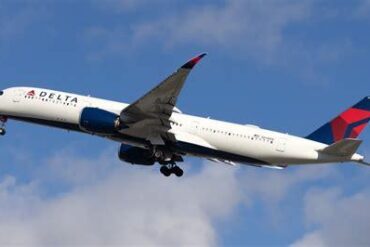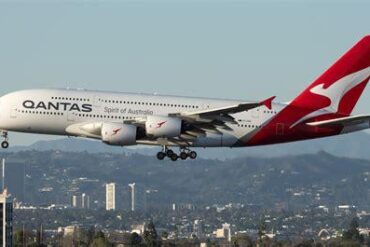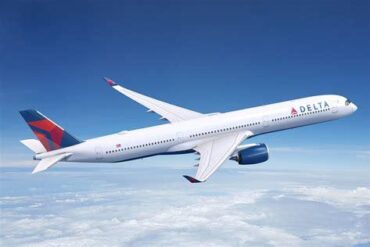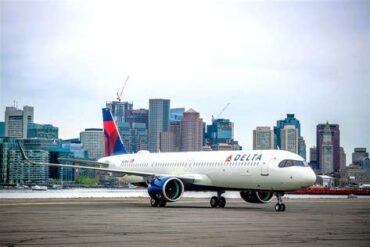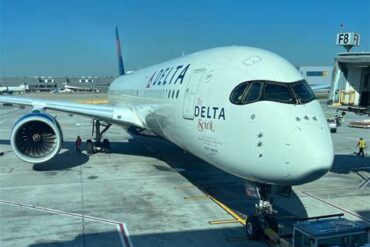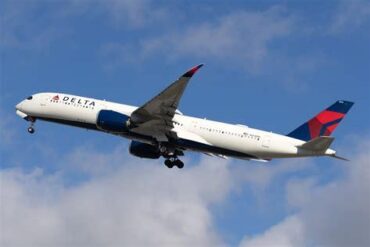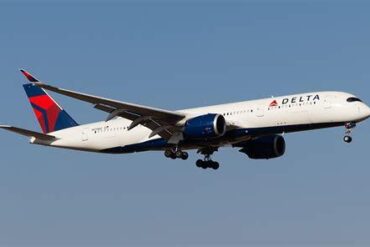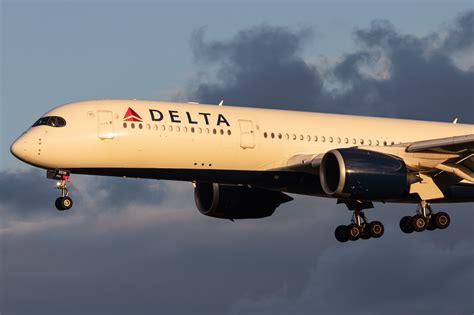
The aviation map between North America and Australia is changing again, and this time the shift is happening quietly but strategically. Delta Air Lines is steadily increasing its presence across the Pacific, particularly in Australia, where it is expanding flights between Los Angeles International Airport (LAX) and Melbourne Airport (MEL). While competition on this route already exists from major carriers like United Airlines and Qantas, Delta is bringing something unique to the market: the Airbus A350-900, making it the only airline deploying the A350 on this transpacific city pair.
This distinction may sound like a minor technical detail at first glance, but in the world of long-haul aviation it represents a significant strategic decision. Aircraft type determines everything from passenger comfort and cargo capacity to operating economics and route viability. By committing the A350-900 to Melbourne, Delta is signaling confidence in both the route and the long-term demand between the United States and Australia.
The move is part of a broader transpacific expansion strategy that aims to gradually narrow the gap between Delta and the long-established Pacific powerhouse, United Airlines.
Delta’s Growing Presence In Melbourne
Delta first launched nonstop flights between Los Angeles and Melbourne in late 2025, entering a competitive but strategically important market. Initially, the airline operated the route three times per week, carefully testing demand while managing capacity.
The results appear promising. Delta has announced a steady increase in service frequency throughout 2026:
- October 13, 2026: Service increases to four weekly flights
- October 27, 2026: Expanded to five weekly flights
- December 22, 2026: Flights rise to daily service
- After March 27: Schedule adjusts to five weekly flights, still higher than the initial launch frequency
These increases signal confidence in the route’s performance. Airlines rarely add frequencies on ultra-long-haul routes unless booking data demonstrates consistent demand.
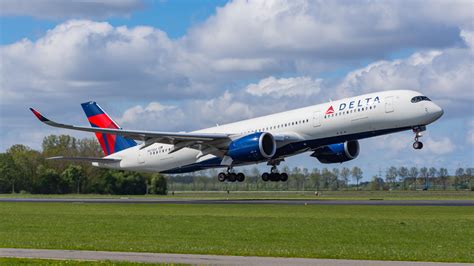
Melbourne represents Delta’s third destination in Australia, joining Sydney and Brisbane. Unlike the Brisbane route, which operates seasonally during peak travel periods, Melbourne is a year-round operation, underscoring its importance in Delta’s Oceania network.
Competition On The Los Angeles–Melbourne Route
Despite being the newest entrant, Delta faces formidable competition on this route.
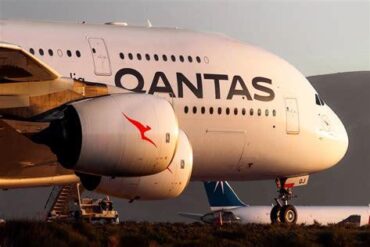
United Airlines operates flights from both Los Angeles and San Francisco to Melbourne using the Boeing 787-9 Dreamliner, while Qantas also flies the LAX–Melbourne route with its own fleet of 787-9 aircraft. These Dreamliners are well suited to long-distance operations, offering strong fuel efficiency and range.
Delta, however, has taken a different path by assigning its Airbus A350-900, a larger widebody aircraft with greater passenger and cargo capacity.
The difference is notable:
- Delta A350-900: 275 seats
- United 787-9: 257 seats
- Qantas 787-9: 236 seats
While the numerical difference may seem modest, across hundreds of flights per year it translates into thousands of additional available seats and significant extra cargo revenue potential.
Cargo is particularly important on ultra-long routes like this one. Long-haul flights often rely heavily on freight revenue, especially when connecting major economic regions such as California and southeastern Australia.
Why The Airbus A350 Matters On Ultra-Long Routes
The Airbus A350-900 is widely regarded as one of the most capable long-haul aircraft in commercial aviation. Designed with advanced aerodynamics, lightweight composite materials, and efficient engines, the aircraft is optimized for routes exceeding 12,000 kilometers.
The distance between Los Angeles and Melbourne is approximately 6,883 nautical miles (12,748 km)—a distance that pushes the limits of modern twin-engine widebody jets.
This is where the A350 provides a strategic advantage.
Compared with the Boeing 787-9 used by competitors, the A350-900 offers:
- Greater passenger capacity
- Higher cargo payload
- Longer operational range
- Wider cabin interior
The trade-off is slightly higher operating costs due to the aircraft’s larger size and weight. However, airlines can offset this by filling more seats and carrying more cargo.
In other words, the A350 allows Delta to earn more revenue per flight, even if the cost per trip is slightly higher.
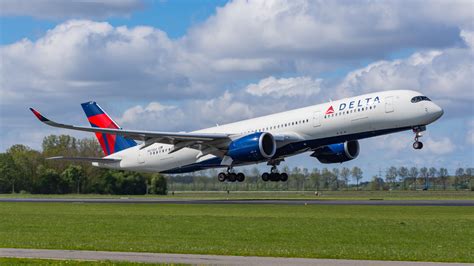
For a long-haul route where each flight spans roughly 15 hours, maximizing revenue opportunities becomes essential.
Delta’s Broader Australia Network
Melbourne is just one piece of Delta’s broader strategy across Australia. The airline has maintained a long-standing presence in Sydney, one of the busiest intercontinental routes in the world.
Currently, Delta operates 11 weekly flights between Los Angeles and Sydney, using the Airbus A350-900. The route was previously flown by the Boeing 777-200LR, one of Boeing’s longest-range aircraft.
Competition on the Sydney route is intense:
- American Airlines: Daily Boeing 777-300ER
- United Airlines: Daily Boeing 787-9
- Qantas: Airbus A380
Despite the crowded field, Sydney remains a cornerstone of transpacific travel, linking two major global tourism and business markets.
Delta also launched flights to Brisbane in 2024, marking a historic milestone. Prior to the pandemic, no US airline served Brisbane nonstop from the United States.
The launch was made possible partly through financial incentives offered by Brisbane Airport, which has aggressively pursued new international routes.
Today, Brisbane sees service from all three major US legacy carriers:
- Delta Air Lines: Los Angeles – Brisbane
- United Airlines: San Francisco – Brisbane
- American Airlines: Dallas/Fort Worth – Brisbane (seasonal)
Why Oceania Became A Strategic Target
To understand the significance of these routes, it helps to look at the broader post-pandemic aviation landscape.
After COVID-19 restrictions lifted, travel demand rebounded dramatically—but not evenly. Transatlantic routes between North America and Europe recovered faster than routes to Asia.
Europe, however, has a strong seasonal travel pattern, with the highest demand occurring during the northern hemisphere summer. When winter arrives, many European routes see reduced demand, forcing airlines to either cut flights or redeploy expensive widebody aircraft elsewhere.
This seasonal imbalance created an opportunity.
Travel demand to Australia and New Zealand peaks during the northern winter, making Oceania an ideal destination for aircraft that might otherwise sit idle.
As a result, airlines shifted capacity toward the region, dramatically increasing the number of flights.
United Airlines, in particular, expanded aggressively thanks to the strength of its San Francisco hub, launching routes to Adelaide, Brisbane, and Christchurch.
However, this surge also created challenges.
Too many seats in the market drove load factors and yields downward, forcing airlines to reconsider how much capacity the region could sustain.
Delta even reduced its Sydney route from double daily flights to 11 weekly departures during this period.
Against that backdrop, increasing flights to Melbourne suggests that demand on the route has proven resilient.
Inside Delta’s Airbus A350-900 Cabin
Delta operates two different configurations of the Airbus A350-900, but flights to Oceania use the airline’s newer “35H” subfleet.
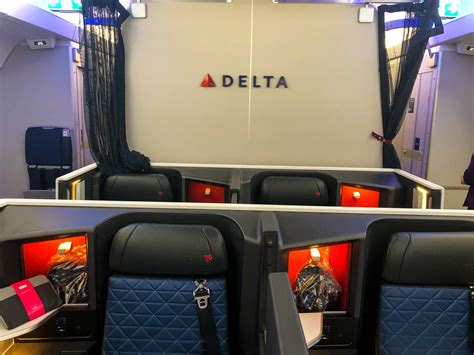
These aircraft feature a three-class cabin with 275 seats, carefully designed for long-haul comfort.
The configuration includes:
- 40 Delta One Suites
- 40 Delta Premium Select seats
- 195 Economy seats, including 36 Delta Comfort+
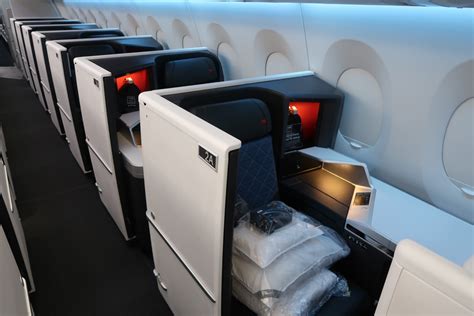
The Delta One Suite debuted in 2017 and quickly became one of the airline’s flagship premium products. Each suite offers a fully flat bed, direct aisle access, and a sliding privacy door, providing an experience closer to a private cabin than a traditional business-class seat.
The design is based on the Thompson Vantage XL platform, a staggered seating arrangement that ensures every passenger has aisle access without sacrificing space.
Premium economy passengers are accommodated in Delta Premium Select, which uses the Collins Aerospace MiQ seat. This product bridges the gap between economy and business class, offering wider seats, greater recline, and upgraded dining.
Meanwhile, the economy cabin uses Recaro CL3710 seats, a model known for its lightweight design and ergonomic support—important features on flights that can exceed 15 hours in duration.
Delta’s Expanding Transpacific Ambitions
Historically, Delta relied heavily on joint venture partnerships to provide global long-haul coverage. In Europe, for example, it works closely with Air France, KLM, and Virgin Atlantic, while LATAM serves as its partner in South America.
In Asia, Korean Air has long been Delta’s primary partner.
However, Delta’s previous partnership with Virgin Australia ended in 2022, leaving the airline without a strong local ally in the Australian domestic market. Virgin Australia instead aligned itself with United Airlines.
That shift forced Delta to rethink its strategy.
Instead of relying heavily on partner airlines, Delta has begun expanding its own long-haul operations, adding routes to cities such as Taipei, Hong Kong, Manila, and Singapore. The airline is also planning a return to India and will launch flights to Riyadh in October 2026.
To support this expansion, Delta is steadily growing its fleet of long-range aircraft.
The A350-900 is currently the airline’s longest-range jet, but Airbus A350-1000 aircraft are scheduled to begin arriving in 2027, offering even greater capacity and performance.
The Quiet Strategy Behind The A350
On paper, the Boeing 787-9 used by competitors is cheaper to operate. It burns less fuel and carries fewer passengers, reducing financial risk if demand weakens.
Delta’s A350 strategy follows a different logic.
By deploying a larger aircraft with greater cargo capability, Delta can generate more revenue on each flight when demand is strong. The aircraft’s larger cabin also allows the airline to sell more high-margin premium seats, particularly in Delta One and Premium Select.
For routes as long as Los Angeles to Melbourne, these premium seats are often the most profitable part of the airplane.
The result is a subtle but powerful competitive approach: operate a slightly larger aircraft, capture more premium passengers, and maximize cargo revenue.
As Delta continues expanding its presence across the Pacific, the Airbus A350 has become the backbone of that strategy.
And on the long stretch of sky between California and Melbourne, it remains a unique sight—the only aircraft of its type flying this particular transpacific route under a single airline’s banner.