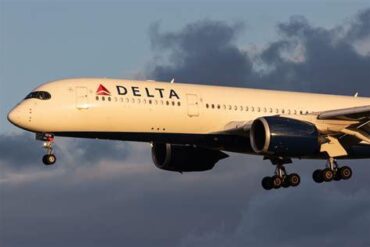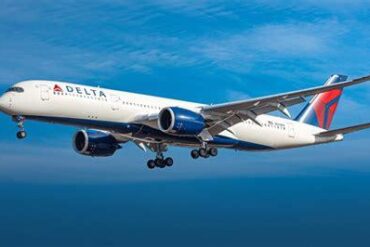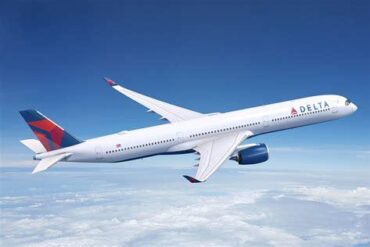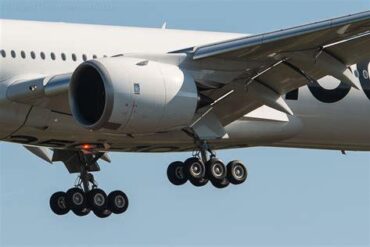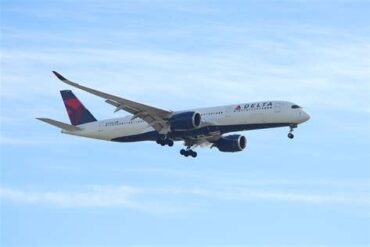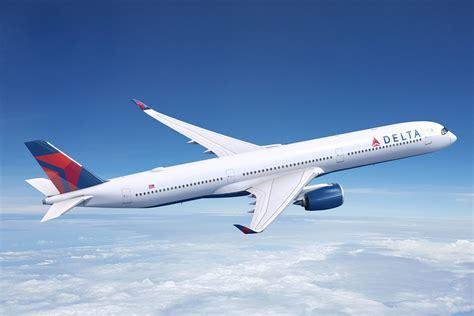
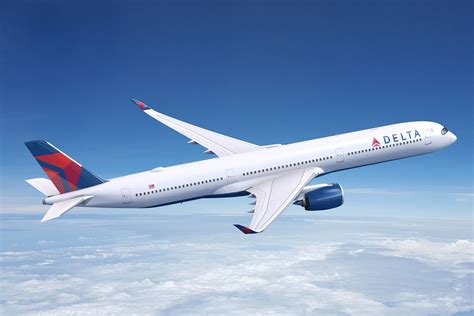
Delta Air Lines is embarking on a transformative evolution in its transpacific service strategy, announcing a full-scale deployment of its Airbus A350-900 fleet across all continental transpacific routes by March 2026. This move cements the airline’s long-haul operational future in one of the most competitive aviation corridors in the world, as it phases out the Airbus A330neo from these routes and standardizes its widebody transpacific offering with the more capable A350-900.
This strategic pivot isn’t just a technical upgrade — it’s a signal of Delta’s ambition to redefine passenger experience, boost operational efficiency, and compete aggressively in a resurgent post-pandemic transpacific travel market.
Why the Airbus A350-900 Reigns Supreme on Transpacific Routes
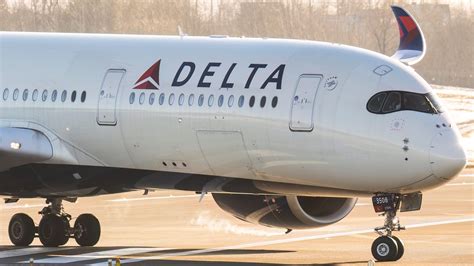
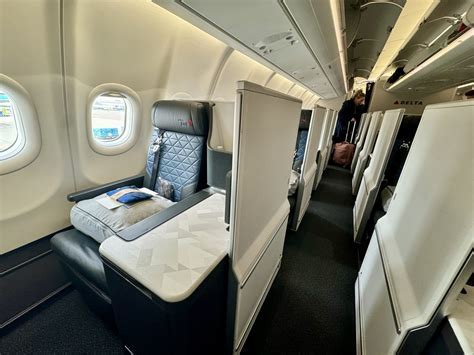
At the core of this network overhaul is the Airbus A350-900’s superior capabilities. With 306 seats arranged in a spacious three-class cabin — including 32 Delta One Suites, 48 Premium Select, and 226 Main Cabin seats — the A350 offers a more uniform and scalable passenger product across Delta’s longest routes.
Its ultra-long range, greater fuel efficiency, and improved cargo capacity over the A330neo make it an ideal match for high-demand, long-haul routes across the Pacific. The aircraft’s next-generation composite fuselage, lower cabin altitude, and quiet engines provide a more comfortable inflight experience while reducing environmental impact — critical factors in the competitive and environmentally conscious Asia-Pacific market.
Compared to the A330neo, the A350 not only offers more seats but also cuts down operational costs per seat, a crucial advantage for transpacific flights that can stretch over 12 hours. These enhancements, coupled with fleet commonality and pilot certification efficiencies, are why the A350 is now central to Delta’s long-haul strategy.
Timeline of the Transition: The Final Leg from Seattle to Shanghai
While much of Delta’s transpacific flying has already migrated to the A350, a final route remains under transition. The Seattle (SEA) to Shanghai Pudong (PVG) service, still operated by the Airbus A330-900neo, is slated to switch to the A350 on March 28, 2026. This change marks the final puzzle piece in Delta’s ambition to create a uniform A350-only transpacific network.
According to Cirium and Ishrion Aviation, Delta will gradually phase in A350s on this route beginning in March 2026, starting with three flights before transitioning fully to 30 monthly flights in April 2026. Once implemented, every single Delta flight crossing the Pacific from the continental U.S. will be operated by an A350-900.
Expansive Network: Delta’s Continental US to Asia-Pacific Destinations
Delta’s transpacific footprint extends across some of the most critical business and tourism hubs in the Asia-Pacific region. The airline currently operates 17 nonstop routes from its major hubs to cities in Japan, China, South Korea, Taiwan, Australia, and New Zealand.
Major Delta hubs involved in these transpacific routes include:
- Atlanta (ATL)
- Detroit (DTW)
- Los Angeles (LAX)
- Minneapolis-Saint Paul (MSP)
- Salt Lake City (SLC)
- Seattle (SEA)
From these cities, Delta connects to premier international destinations like Tokyo Haneda, Seoul Incheon, Shanghai Pudong, Taipei, Auckland, Melbourne, and Sydney. The routes are generally daily, with some exceptions:
- Los Angeles–Auckland: Three weekly flights
- Los Angeles–Melbourne: Three weekly flights
- Los Angeles–Shanghai: Three weekly flights (to be upgraded to daily with A350s)
Frequency and Capacity: A Route-by-Route Breakdown
The following is a detailed view of Delta’s transpacific operations, with all services poised to be served by the A350-900 fleet post-transition:
From Atlanta (ATL):
- Tokyo Haneda (HND): 7 flights/week
- Seoul Incheon (ICN): 14 flights/week
From Detroit (DTW):
- Tokyo Haneda (HND): 7 flights/week
- Seoul Incheon (ICN): 7 flights/week
- Shanghai Pudong (PVG): 7 flights/week
From Los Angeles (LAX):
- Tokyo Haneda (HND): 7 flights/week
- Auckland (AKL): 3 flights/week
- Melbourne (MEL): 3 flights/week
- Shanghai Pudong (PVG): 3 flights/week
- Sydney (SYD): 7 flights/week
From Minneapolis-Saint Paul (MSP):
- Tokyo Haneda (HND): 7 flights/week
- Seoul Incheon (ICN): 7 flights/week
From Seattle (SEA):
- Tokyo Haneda (HND): 7 flights/week
- Seoul Incheon (ICN): 7 flights/week
- Taipei Taoyuan (TPE): 7 flights/week
- Shanghai Pudong (PVG): 7 flights/week (transitioning to A350s in March 2026)
From Salt Lake City (SLC):
- Seoul Incheon (ICN): 7 flights/week
Strategic Benefits: Operational Efficiency and Brand Uniformity
Delta’s move toward a single widebody aircraft type on all transpacific routes is about more than just capacity. Standardizing on the A350 allows for significant cost optimization, pilot training simplification, and maintenance uniformity. This consistency can improve on-time performance and reduce logistical complexity in international operations.
From a branding perspective, passengers flying Delta from any point in the continental U.S. to Asia-Pacific will now enjoy a consistent product in terms of seat design, inflight entertainment, Wi-Fi connectivity, and onboard service. This reliability builds consumer trust and strengthens Delta’s premium international image.
Competitive Positioning: A Bold Statement in the Pacific Arena
By going all-in on the A350-900, Delta sends a clear message to both customers and competitors: it is fully committed to leading the U.S. legacy carriers in transpacific service quality and consistency. This is particularly vital as the Asia-Pacific market regains momentum following years of COVID-era restrictions and capacity constraints.
Other carriers — including United Airlines and American Airlines — operate a mixed fleet of Boeing 787s and 777s across the Pacific. Delta’s uniform A350 strategy sets it apart in terms of modernity and consistency, which could appeal to corporate travelers and premium leisure customers seeking reliability and comfort.
Fleet Snapshot: Delta’s Widebody Arsenal
According to ch-aviation, Delta currently operates:
- 37 Airbus A350-900 aircraft, with an average age of 5.1 years
- 33 Airbus A330-900neos, averaging 2.8 years
While the A330neo fleet will continue to serve other long-haul destinations, possibly including Europe and South America, the A350s will take over the Pacific. This strategic delineation ensures optimized usage of fleet capabilities across the globe.
Looking Ahead: A Unified, Modern Experience
The full shift to A350-900s for all Delta’s transpacific flights reflects a forward-thinking strategy grounded in fleet modernization, customer satisfaction, and operational harmony. By 2026, passengers boarding a Delta flight from the continental U.S. to any Asia-Pacific gateway can expect a uniformly excellent experience aboard one of the most advanced aircraft flying today.
With this move, Delta strengthens its role not only as a leader among U.S. international carriers but as a brand synonymous with modern luxury, consistency, and reliability in one of the world’s most vital aviation markets.