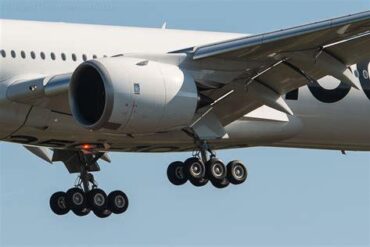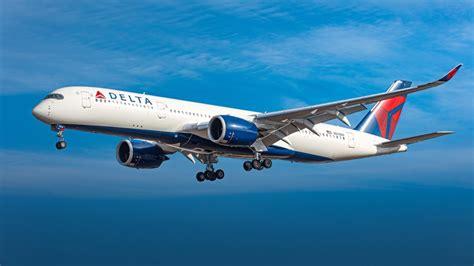
Delta Air Lines, the only North American operator of the Airbus A350, is redefining domestic widebody travel by assigning its flagship A350-900 aircraft to two strategic U.S. routes: Atlanta to Salt Lake City and Detroit to Minneapolis-St. Paul. While traditionally used for long-haul international missions, the decision to operate this aircraft type on shorter domestic sectors reflects Delta’s ongoing fleet optimization and premium service strategy.
The Airbus A350-900: A Game-Changer in Modern Aviation
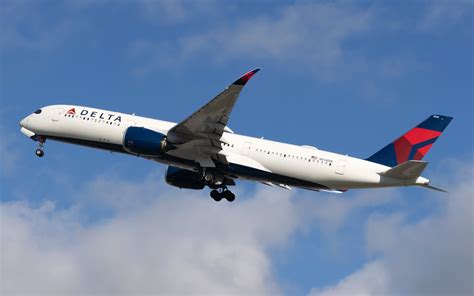
Renowned for its cutting-edge performance and passenger comfort, the Airbus A350-900 is among the most advanced widebody jets flying today. Designed for long-haul travel, it offers a maximum range of 8,500 nautical miles and cruises comfortably at Mach 0.85. Delta’s A350s, delivered both new and second-hand, are instrumental in supporting the carrier’s international expansion while playing an increasingly visible role on key domestic routes.
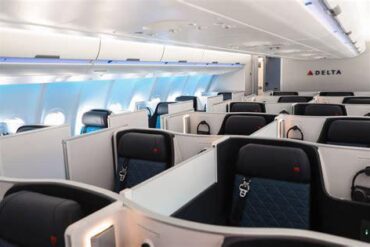
Inside, the A350 features one of the quietest twin-aisle cabins on the market, an advanced air filtration system, and lower cabin altitude — all enhancing the in-flight experience. The aircraft’s seating configurations vary depending on mission type, with domestic deployments typically using a three-class layout with 306 seats.
Detroit to Minneapolis-St. Paul: A Widebody Shortcut Between Midwestern Hubs
One of the two current domestic A350 deployments is the route between Detroit Metropolitan Wayne County Airport (DTW) and Minneapolis-Saint Paul International Airport (MSP). Spanning just 538 miles, this short hop defies the conventional use of a long-haul aircraft. However, this strategic decision is rooted in fleet repositioning and premium customer service.

Operating as DL1484 from MSP to DTW and DL1303 on the return, these flights serve not only as repositioning segments for transpacific routes — especially between Minneapolis and Seoul — but also offer passengers a high-end domestic travel experience. The scheduled flight duration hovers just under two hours, with takeoff from MSP at 7:45 PM and arrival in Detroit by 10:20 PM.
The aircraft utilized on this route comes with 306 seats across three classes:
- 32 Delta One (business class) seats
- 38 Premium Select (premium economy) seats
- 228 economy class seats, including 38 Comfort+ seats with extra legroom
Delta’s presence in Minneapolis–St. Paul is a legacy of its 2008 acquisition of Northwest Airlines, and the carrier has since solidified its position with year-round international services to cities like Amsterdam, Tokyo, Seoul, and Paris. The A350’s domestic appearance on this route provides operational flexibility while promoting consistency in product offering for connecting passengers.
Atlanta to Salt Lake City: Premium Comfort in the Heart of the West
The second route featuring the Airbus A350 is the link between Hartsfield-Jackson Atlanta International Airport (ATL) and Salt Lake City International Airport (SLC). Covering a distance of nearly 1,590 miles, this segment is more aligned with the A350’s long-haul strengths, albeit still short by intercontinental standards.

Delta operates just two A350 roundtrip flights between ATL and SLC during August, using the most premium-heavy A350 configuration in its fleet. This variant includes:
- 40 Delta One suites
- 40 Premium Select seats
- 36 Comfort+ seats
- 159 standard economy seats
With a total capacity of 275 seats, this layout prioritizes high-yield passengers. The flights offer nearly four hours of high-comfort service, departing from Atlanta at 3:55 PM and returning from Salt Lake City by 3:50 PM.
The route benefits from being monopolized by Delta, with no other carriers currently operating non-stop service between the two cities. The move also aligns with Delta’s broader network strategy, which includes launching new seasonal routes out of Salt Lake City to destinations like Fort Myers, Kailua-Kona, and Lima.
Why the A350 on Domestic Routes Makes Strategic Sense
Using the A350 on domestic routes, although unorthodox, is neither accidental nor inefficient. For Delta, these flights support operational repositioning, maintain fleet utilization during schedule lulls, and — perhaps most importantly — allow premium passengers to experience the airline’s flagship product even on short-haul journeys.
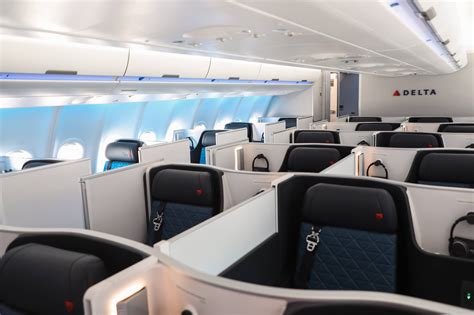
Delta has tailored its A350-900 configurations for flexibility:
| Configuration | Business Class | Premium Select | Comfort+ | Economy | Total Seats |
|---|---|---|---|---|---|
| Premium-Heavy 1 | 40 | 40 | 36 | 159 | 275 |
| Premium-Heavy 2 | 32 | 48 | 36 | 190 | 306 |
| High-Density | 30 | — | 63 | 246 | 339 |
The high-density layout, with 339 seats, suits leisure routes and price-sensitive markets, while premium-heavy layouts fit corporate-heavy hubs and international gateways. For Delta, balancing these configurations across various domestic and global routes maximizes both revenue and customer satisfaction.
Delta’s Growing A350 Fleet: A Blend of New and Second-Hand Jets
As of mid-2025, Delta operates 38 Airbus A350-900 aircraft, with an additional six on order. The current fleet includes aircraft acquired both directly from Airbus and second-hand from LATAM Airlines Brasil and Qatar Airways. These previously operated A350s have seamlessly integrated into Delta’s long-haul and now domestic strategy.
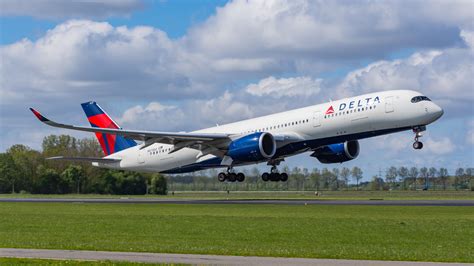
For example, aircraft such as N568DZ (delivered December 2021) and N574DZ (ex-Qatar Airways) are now routine flyers on the domestic segments discussed here. The ability to harmonize different cabin products across acquired and new aircraft has allowed Delta to expand capacity while maintaining a consistent customer experience.
Looking ahead, Delta is preparing to introduce 20 Airbus A350-1000s, with deliveries beginning in 2026. These aircraft will likely be deployed on high-demand international routes and potentially on premium transcontinental services, given their range and cabin advantages.
A North American Outlier — For Now
Delta remains the only airline in North America operating the A350, giving it a substantial competitive edge in terms of cabin comfort and fuel efficiency. United Airlines has A350s on order, but delivery has been postponed until at least 2030, while American Airlines has shifted focus to Boeing widebodies and Airbus narrowbodies like the A321XLR.
This exclusivity allows Delta to brand the A350 as a unique selling point — whether on a 13-hour flight to Tokyo or a 2-hour hop between Detroit and Minneapolis. The consistency in product, service, and reliability reinforces Delta’s reputation as a premium airline leading innovation in fleet strategy.
What Lies Ahead: More A350 Domestic Routes on the Horizon
While only two domestic A350 routes are active in August 2025, Delta is poised to expand this practice. The airline has already confirmed future A350 services between Atlanta and Los Angeles, and Detroit to LAX is also on the docket. These longer domestic routes, with high premium demand, make ideal candidates for A350 deployment.
As fleet renewals accelerate and the airline awaits deliveries of the A350-1000, Delta is well-positioned to blend international consistency with domestic flexibility. Travelers seeking a top-tier experience without crossing oceans may increasingly find themselves flying on an A350, reshaping expectations for domestic travel in the U.S.
In a competitive landscape dominated by narrowbodies and aging widebodies, Delta’s strategic deployment of the A350-900 represents not only a commitment to passenger comfort but also a forward-looking approach to modern air travel — both at home and abroad.