Delta Air Lines is accelerating its global expansion strategy with a decisive shift from seasonal experimentation to sustained, year-round transatlantic connectivity. By extending service on three high-demand long-haul routes—New York to Catania, Minneapolis to Rome, and New York to Porto—the carrier is reinforcing its position as a dominant force in premium international travel while responding to evolving passenger demand patterns that no longer fit neatly into traditional seasonal peaks.
A Strategic Shift Toward Year-Round Transatlantic Demand
Delta’s latest move reflects a broader transformation in global travel behavior. Long-haul routes that were once heavily dependent on summer tourism are now benefiting from consistent, year-round demand driven by diaspora travel, business mobility, and diversified leisure patterns. Rather than scaling back in winter, Delta is leaning into this demand with adjusted frequencies and optimized aircraft deployment.
The airline’s ability to sustain these routes through traditionally slower months signals strong forward bookings and a deeper confidence in long-term profitability. This is not merely network expansion—it is a recalibration of how transatlantic travel demand is understood and monetized.
New York to Catania: From Seasonal Success to Permanent Fixture
Delta’s non-stop service between New York JFK and Catania has quickly evolved from a niche seasonal offering into a cornerstone route. Initially launched in 2025, the flight capitalized on strong demand from the Italian-American community, particularly those with roots in Sicily. The overwhelming response has now pushed the airline to convert the route into a year-round operation.
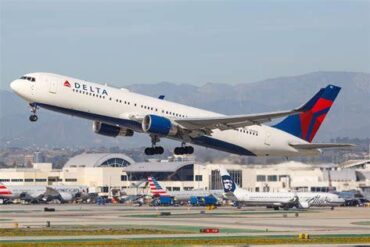
The service, operated daily using the Boeing 767-300ER, provides a direct link that previously lacked consistent connectivity from the United States. With a flight time exceeding nine hours, Delta positions the route as both a cultural bridge and a premium travel experience, offering four distinct cabin classes that cater to a wide spectrum of passengers.

This strategic permanence highlights more than just demand—it underscores Delta’s ability to identify underserved markets and rapidly scale them into reliable revenue streams. Catania, often overshadowed by larger Italian hubs, is now firmly embedded in Delta’s global network.
Minneapolis to Rome: Reconnecting the Midwest to Europe
Equally significant is the extension of Delta’s Minneapolis–Rome route, a service that had remained dormant for nearly a decade before its revival. Its return marked a renewed focus on connecting secondary U.S. hubs directly to major European capitals, bypassing the need for coastal transfers.
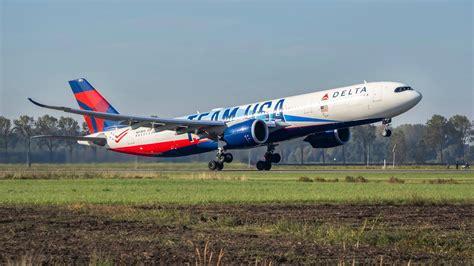
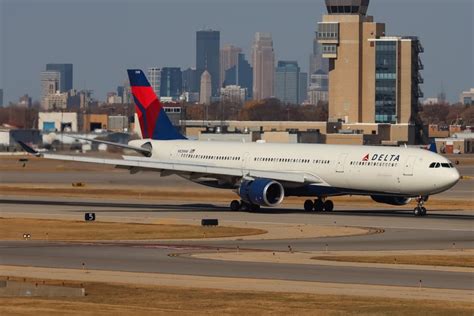
Operating with the Airbus A330 family, the route initially targeted peak travel periods. Now, with service continuing through winter—albeit at a reduced three-times-weekly frequency—Delta is demonstrating a measured but confident commitment to the market.

This route plays a critical role in strengthening Delta’s Midwest footprint. By linking Minneapolis directly to Rome, the airline enhances convenience for both business travelers and tourists while distributing international traffic more evenly across its hub network. The flexibility in aircraft deployment, shifting from the A330-900 to the A330-200, further illustrates a precise alignment between capacity and seasonal demand.
New York to Porto: Unlocking Portugal’s Rising Demand
Portugal’s growing appeal as a travel destination has not gone unnoticed, and Delta is positioning itself to capture a larger share of this momentum. The introduction and extension of the New York to Porto route provides a direct gateway to the country’s second-largest city, a market previously underserved by non-stop U.S. connections.
Operating three times weekly on the Boeing 767-300ER, the service extends into the winter season, reflecting confidence in Porto’s year-round attractiveness. The route complements existing services by other carriers while distinguishing itself through Delta’s premium product offering and network connectivity.
Porto’s rise is emblematic of a broader shift in European travel trends, where secondary cities are gaining prominence alongside traditional capitals. Delta’s early and sustained investment in this route positions it advantageously as demand continues to mature.
Network Synergy and Competitive Positioning
Beyond individual routes, the broader significance of these expansions lies in how they integrate with Delta’s existing network. Rome, already served from multiple U.S. hubs including Atlanta, Boston, and New York, benefits from increased connectivity that strengthens Delta’s competitive edge against both U.S. and European carriers.
Similarly, the addition of Porto and the solidification of Catania create a more diversified European portfolio, allowing Delta to tap into varied demand streams while reducing reliance on heavily saturated markets.
This approach reflects a deliberate balance between expansion and optimization. Instead of chasing volume alone, Delta is refining its network to maximize yield, improve aircraft utilization, and enhance customer experience across all cabin classes.
A Clear Signal of Confidence in Long-Haul Growth
Delta’s decision to extend these routes through winter—and potentially beyond—signals more than operational success. It represents a broader confidence in the resilience of international travel demand and the airline’s ability to adapt to its evolving dynamics.
By transforming seasonal routes into year-round staples, Delta is not only expanding its footprint but also reshaping expectations for transatlantic connectivity. The airline’s strategy is clear: identify demand early, invest decisively, and sustain growth with precision.
As global travel continues to normalize and diversify, Delta’s latest moves position it at the forefront of a new era in long-haul aviation—one defined not by seasonality, but by sustained, strategic expansion.