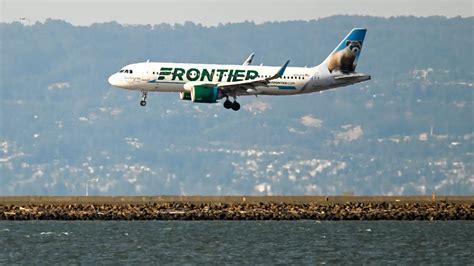
Frontier Airlines has decisively ended its longest flight, pulling the plug on the 6.5-hour service between New York John F. Kennedy International Airport (JFK) and Los Angeles International Airport (LAX). The move marks a sharp contraction of the ultra-low-cost carrier’s ambitious but short-lived expansion at one of the nation’s most competitive and expensive gateways. What began in 2024 as a bold attempt to carve out space in New York’s crowded aviation landscape has rapidly narrowed to a single remaining route: Atlanta.
JFK has long been defined by high operating costs, slot constraints, and relentless congestion. These conditions rarely align with the lean economics of an ultra-low-cost carrier built on tight margins and high aircraft utilization. Frontier’s withdrawal from multiple routes underscores the tension between cost discipline and the realities of operating at a premium airport dominated by legacy airlines.
Frontier Ends JFK–Los Angeles: A 2,151-Nautical-Mile Gamble
The now-canceled JFK–LAX route stretched 2,151 nautical miles (3,984 kilometers) each way, placing it among the most strategically significant domestic markets in the United States. Known as the country’s highest-revenue and most heavily trafficked transcontinental corridor, the route has historically been controlled by network carriers offering premium-heavy configurations and frequent departures.
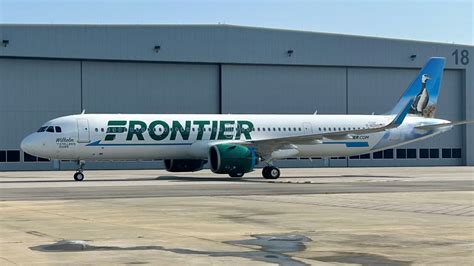
Frontier launched the service in May 2025, deploying its 240-seat Airbus A321neo on a daily schedule. The westbound leg departed JFK at 11:00 am, arriving in Los Angeles at 2:37 pm after a 6-hour, 37-minute block time. Eastbound travelers faced a less forgiving schedule, departing California at 8:37 pm and landing at JFK at 5:00 am during winter months.
Despite strong early performance, the route’s sustainability quickly came into question. Between May and November, Frontier transported 87,976 round-trip passengers, capturing approximately 5% of the nonstop market. The airline achieved an average load factor of 85.9%, with several months surpassing 90%. However, demand weakened in the fall. October saw load factors fall to 70.5%, followed by 78.4% in November. Such fluctuations raise questions about pricing pressure and yield performance in a market dominated by premium-focused competitors.
The final JFK departure operated on January 19, quietly closing a chapter that had lasted less than a year.
Las Vegas Route Also Discontinued
Frontier’s retrenchment did not stop with Los Angeles. The airline also eliminated its JFK–Las Vegas service, once slated to become its second-longest route by block time at 6 hours and 13 minutes. The 1,953-nautical-mile link had operated daily since its August 2024 inauguration.
Between launch and November 2025, Frontier carried 190,371 passengers on the route and secured roughly 12% of the nonstop market. The average load factor stood at 85.7%, indicating consistent demand. Initially scheduled to resume in mid-April, the service has now been permanently removed from future schedules.
The decision suggests broader structural challenges rather than isolated route underperformance. Even with solid seat occupancy, profitability at JFK requires more than high load factors. Airport fees, operational constraints, and competitive fare dynamics can rapidly erode margins for airlines built on cost minimization.
Frontier’s New Longest Route Shifts to Philadelphia–Los Angeles
With both transcontinental JFK routes discontinued, Frontier’s new longest flight by scheduled time becomes Philadelphia International Airport (PHL) to Los Angeles. Timed at up to 6 hours and 2 minutes, the seasonal service is set to resume on May 21 and is currently scheduled through early September, with a likely extension into October.
The route will be operated by both the Airbus A320neo and A321neo, maintaining Frontier’s high-density, fuel-efficient narrowbody strategy. Departures from Philadelphia are scheduled at 6:24 pm, arriving in Los Angeles at 9:26 pm. Eastbound flights leave at 10:21 pm and arrive the following morning at 6:44 am.
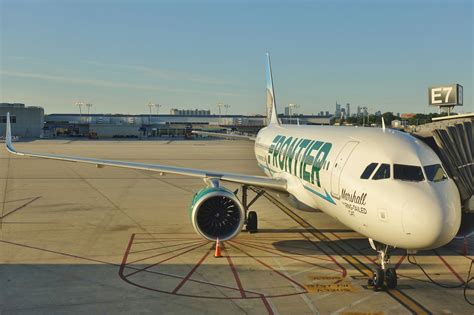
Measured by great circle distance rather than block time, Orlando to San Francisco now ranks as Frontier’s longest airport pair at 2,126 nautical miles each way. The difference is marginal—less than 2% longer than Philadelphia–Los Angeles—but it illustrates how route hierarchy can shift depending on operational metrics.
Strategic Retrenchment at JFK
Frontier’s latest schedule submission indicates that Atlanta is the only remaining JFK destination. For an airline that entered the airport less than two years ago with multiple routes, the contraction is striking. It reflects the structural mismatch between ultra-low-cost carrier economics and the realities of a slot-constrained, high-cost international gateway.
The airline’s leadership faces a complex balancing act: preserving network breadth while maintaining cost discipline in a competitive domestic market. Frontier’s withdrawal from long-haul JFK flying suggests a recalibration toward airports better aligned with its operating model.
As transcontinental markets remain fiercely contested by airlines with deeper premium demand and corporate contracts, Frontier’s strategy appears to be shifting back toward secondary airports and leisure-heavy city pairs. The end of its 6.5-hour JFK–Los Angeles service is more than a route cancellation; it is a signal of where the carrier sees sustainable opportunity in the evolving U.S. aviation landscape.