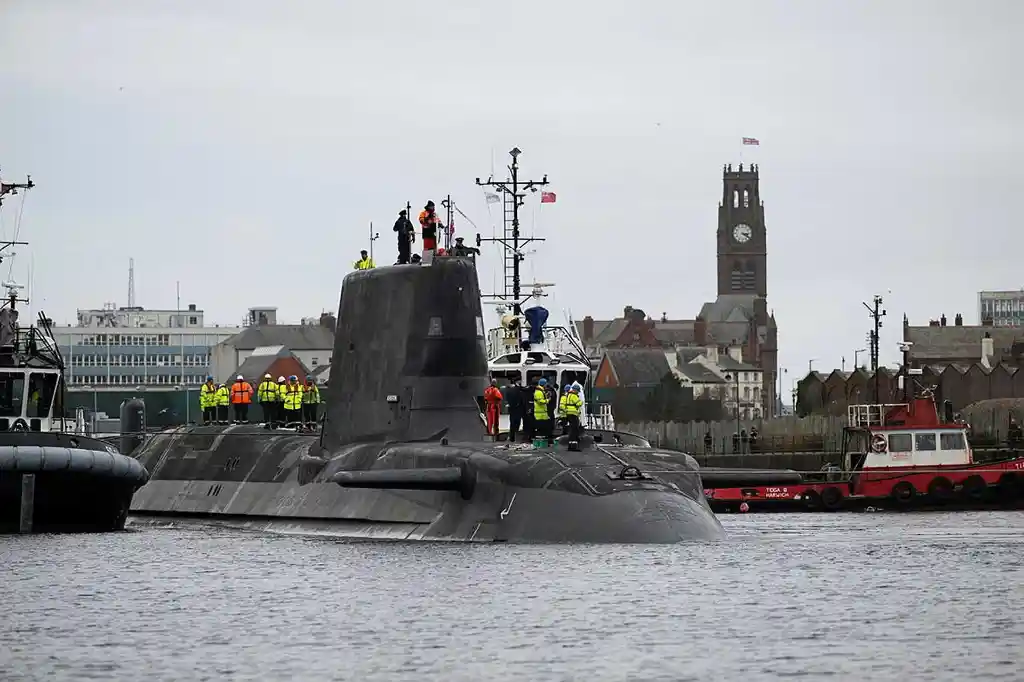
The United Kingdom has dispatched HMS Anson, one of its newest and most capable Astute-class nuclear-powered attack submarines, to Australia under the AUKUS security partnership, marking a strategically significant but operationally demanding move for the Royal Navy. The deployment sends a rare British undersea asset deep into the Indo-Pacific at a time when the UK’s submarine fleet is operating under severe availability constraints, forcing London to balance long-term alliance commitments against immediate homeland security needs.
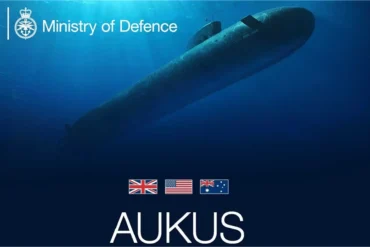
This voyage is not a routine goodwill visit. It is a deliberate, high-stakes demonstration of commitment to AUKUS, the trilateral defense framework linking the UK, Australia, and the United States, with a central focus on nuclear-powered submarine cooperation. By allocating HMS Anson to the Submarine Rotational Force–West (SRF-West) in Western Australia, the UK is reinforcing its role as a core Indo-Pacific security partner while accepting measurable risk closer to home.
The decision has attracted attention because the Royal Navy currently has only a handful of attack submarines capable of deploying at short notice. Sending one of them halfway around the world reshapes the UK’s undersea posture for months, possibly longer, and highlights the hard realities behind modern naval power: advanced platforms are only as useful as the industrial systems that keep them at sea.
HMS Anson’s Departure Signals a Strategic Commitment Beyond Europe
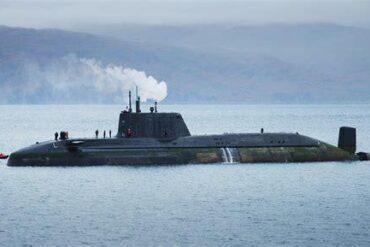
HMS Anson departed HMNB Clyde at Faslane on January 10, 2026, beginning a transit of roughly 9,500 nautical miles toward Western Australia. Her first port of call, Gibraltar, underscored the global nature of the mission and provided an early opportunity for logistics checks and crew management before the submarine entered the vast Indo-Pacific theater.
This deployment follows reporting by Navy Lookout confirming that HMS Anson’s journey is part of the UK’s planned contribution to AUKUS, rather than a last-minute political gesture. In December 2025, Defence Minister Luke Pollard described the forward deployment of an Astute-class submarine as a “core planning assumption” for the Royal Navy, arguing that it remained manageable within existing force structures.
Still, “manageable” does not mean comfortable. The timing is striking because it coincides with a period when British attack submarine availability is near historic lows, forcing allied navies to fill gaps in areas traditionally covered by UK assets.
The Astute-Class Submarine at the Center of AUKUS Operations
HMS Anson (S123) represents the cutting edge of British undersea warfare. As the fifth Astute-class submarine, she embodies decades of investment in stealth, endurance, and multi-role capability. Ordered in 2010, launched in 2021, and commissioned in 2022, Anson completed her sea trials in 2024, making her one of the newest fully operational submarines in the Royal Navy.
Powered by a Rolls-Royce PWR2 nuclear reactor, HMS Anson requires no refueling over her entire service life, giving her effectively unlimited range constrained only by crew endurance and onboard supplies. Displacing over 7,000 tonnes submerged and measuring 97 meters in length, she carries a core crew of around 98 sailors, operating in one of the most technologically complex environments in modern warfare.
Her armament defines her strategic value. Six 533 mm torpedo tubes allow the launch of Spearfish heavyweight torpedoes for anti-submarine and anti-surface warfare, alongside Tomahawk Block IV cruise missiles capable of precision land-attack missions. This combination makes HMS Anson not just a hunter-killer submarine, but a mobile strike platform with global reach.
AUKUS and the Submarine Rotational Force–West Explained
Under AUKUS, the Submarine Rotational Force–West is designed to host UK and U.S. nuclear-powered attack submarines at HMAS Stirling in Western Australia on a rotational, not permanent, basis. The framework allows Australia to gain hands-on experience with nuclear submarine operations years before its own boats enter service.
For Australian sailors, engineers, and logisticians, hosting HMS Anson provides daily exposure to reactor safety protocols, maintenance rhythms, and operational planning that cannot be replicated through classroom training. For the UK, the deployment restores a regular undersea presence in the Indo-Pacific, a region where British attack submarines have not operated continuously for decades.
This arrangement also strengthens allied deterrence in a region marked by rising naval competition, where undersea capabilities remain among the most decisive and least visible instruments of power.
The Hidden Cost: Britain’s Shrinking Pool of Available Submarines
The strategic logic of deploying HMS Anson is clear. The operational cost is equally clear. At points over the past year, assessments have suggested that only two of the Royal Navy’s ten nuclear-powered submarines could put to sea immediately, with just one Astute-class boat at higher readiness.
Several factors drive this situation. HMS Astute is awaiting dry dock access for a mid-life refit. HMS Ambush has reportedly been at very low readiness, with components removed to support other submarines. HMS Agamemnon, although commissioned in late 2025, remains months away from full operational capability.
Perhaps most telling is the case of HMS Audacious, which completed a record-breaking 363-day deployment in 2023 only to spend more than 16 months alongside afterward due to limited dockyard capacity. These examples illustrate a systemic problem: commissioning a submarine does not automatically translate into deployable power.
Long Transit Distances Change the Math of Deployment
Unlike U.S. Navy submarines, which can rotate through Western Australia on roughly six-month cycles, Royal Navy boats face a geographic disadvantage. The sheer distance from the UK to Australia means that short deployments would be inefficient, with a disproportionate amount of time spent in transit.
As a result, HMS Anson is likely to remain forward-deployed for an extended period, maximizing operational return while minimizing repeated long-distance transits. While this makes sense from an efficiency standpoint, it also means the submarine will be unavailable for European tasking for much longer than a typical regional patrol.
Gibraltar’s role as an early stop, including visible crew rotation activity, highlighted that this mission is as much about logistics and manpower management as it is about strategy.
Rising Pressure in the North Atlantic While Anson Is Abroad
The deployment comes at a moment of growing concern closer to home. Russian naval activity in the North Atlantic has increased, placing renewed emphasis on undersea surveillance and deterrence. In December 2025, the First Sea Lord warned that the long-standing allied advantage in the Atlantic was narrowing, with margins becoming “uncomfortably thin.”
Attack submarines sit at the heart of this equation. They track adversary submarines, protect carrier and amphibious groups, and provide a covert deterrent that surface ships cannot match. With frigate numbers also at low levels, the absence of even one attack submarine has an outsized impact on national flexibility.
While the U.S. Navy has partially offset this gap through increased activity, allied presence cannot fully substitute for sovereign capability when rapid, nationally directed responses are required.
Maintenance Bottlenecks Shape Strategic Choices
The Royal Navy’s submarine challenge is not rooted in design flaws or crew shortages, but in industrial capacity. Limited dry dock availability, extended refit timelines, and tightly coupled maintenance schedules mean delays cascade across the entire fleet.
In September 2025, the UK launched a 100-day accelerated maintenance initiative aimed at reducing systemic delays. While promising in intent, publicly confirmed results have yet to translate into a visible surge in deployable submarines. HMS Artful has been identified as a potential near-term addition to the operational fleet, but no confirmed return-to-sea date has been announced.
Until these bottlenecks ease, each operational submarine carries disproportionate strategic weight, turning every deployment into a trade-off rather than a routine decision.
A Calculated Risk in Service of Long-Term Influence
Sending HMS Anson to Australia is ultimately a calculated risk. It strengthens AUKUS, deepens integration with Australian and U.S. forces, and ensures the UK remains a credible Indo-Pacific actor rather than a distant observer. It also accepts near-term vulnerability in European waters, mitigated but not eliminated by allied support.
This choice reflects the reality of modern defense planning: commitments made years in advance must be honored even when circumstances tighten. AUKUS is not a symbolic agreement; it is a binding framework that demands tangible contributions.
HMS Anson’s deployment encapsulates that reality. It is a visible demonstration of British resolve, a practical investment in Australia’s future submarine force, and a reminder that naval power depends as much on maintenance docks and skilled engineers as it does on stealthy hulls and advanced reactors.
Whether this balance becomes easier will depend on how quickly other Astute-class submarines return to service. Until then, HMS Anson’s presence in Australia stands as a clear example of how limited submarine availability directly shapes national strategy, forcing difficult but deliberate choices in an increasingly contested maritime world.