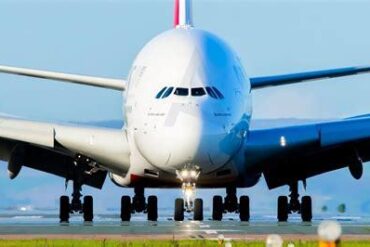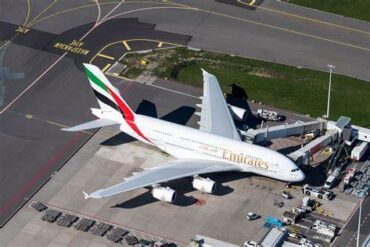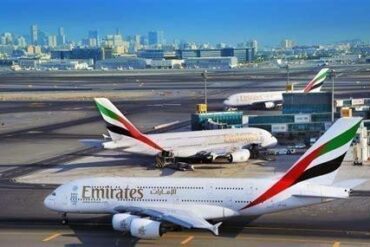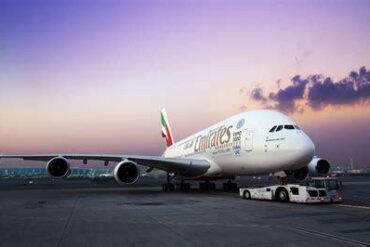
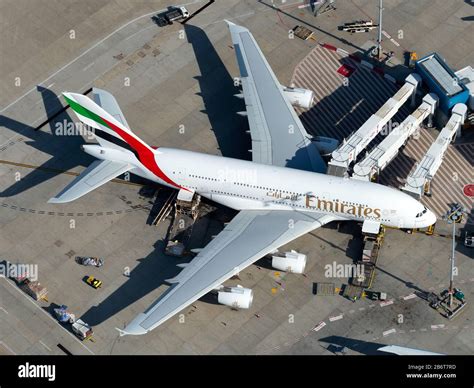
Dubai-based Emirates is set to make a bold move in European aviation by reintroducing its 615-seat Airbus A380 on the high-demand route between Dubai International Airport (DXB) and Munich Airport (MUC)—Europe’s 11th busiest airport in terms of 2024 passenger traffic. Known for operating the world’s largest A380 fleet, Emirates is intensifying its focus on volume-driven destinations, strategically deploying its high-capacity aircraft where they make the biggest operational impact.
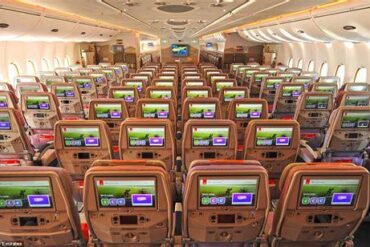
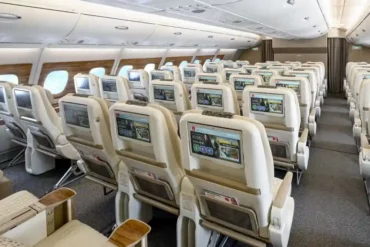
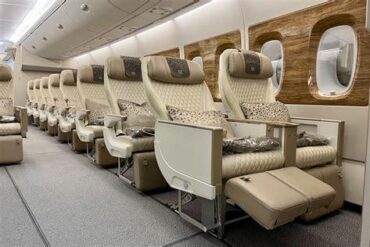
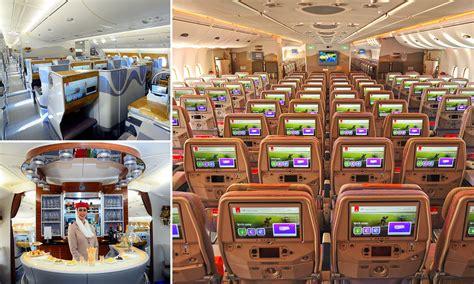
The carrier has 116 Airbus A380s, including 15 configured with 615 seats, making them the highest-capacity passenger aircraft in commercial service. These jets are outfitted in a two-class configuration, with just 58 business class seats and an extraordinary 557 seats in economy—more economy seats than the total capacity of most other wide-body aircraft.
Munich’s A380 Connection: A Strategic Expansion
Munich has long been a pivotal gateway for Emirates into Germany. The airline has served the Bavarian capital with its flagship A380s since November 2011, although the Boeing 777-300ER temporarily replaced it in late 2022. The 615-seater was initially introduced on this route in May 2024, and will now return between January 1 and March 28, 2026. Both daily flights to Munich will be operated by A380s, with one of them using the 615-seat variant.
This deployment marks Munich as the third German airport to host Emirates’ high-capacity A380s in Q1 2026, joining Düsseldorf and Frankfurt. During this window, Emirates plans to offer a staggering 197,000 seats between Dubai and Munich, propelling the German hub to the 11th position in Emirates’ European network by seat capacity.
Flight Schedules: Maximizing Connectivity and Utilization
For January 2026, the flight timings are designed to optimize both inbound tourism and outbound connectivity:
- Dubai to Munich (615-seat A380): Departs 15:50, arrives 19:30
- Munich to Dubai (615-seat A380): Departs 21:25, arrives 06:35 (+1 day)
The timing is ideal for connecting traffic through Dubai, which remains a critical component of the airline’s global strategy.
Passenger Flows and Popular Destinations
While Germany is a strong origin market for Dubai-bound leisure traffic, the bulk of Emirates’ passengers from Munich use Dubai as a transfer hub. In the 12 months ending September, around 275,000 passengers were point-to-point travelers, whereas approximately 355,000 connected onward.
The most popular onward markets for Munich-origin travelers include:
- Maldives
- India
- Australia
- Thailand
- Mauritius
- Indonesia
- Sri Lanka
- Seychelles
- China
- Vietnam
Specific leisure-focused destinations like Malé, Phuket, Bali, Bangkok, and Sydney saw the highest traffic volumes, affirming Emirates’ strength in long-haul leisure segments. In many cases, Emirates transported more Munich passengers to these locations than any other airline.
Why the 615-Seater Matters: Scale Over Yield
The 615-seat configuration is Emirates’ bet on scale, not premium revenue. Designed for high-density routes with heavy leisure demand and lower yields, the aircraft sacrifices premium offerings to maximize seat volume. This layout allows Emirates to lower unit costs and offer competitive fares while maintaining profitability, provided load factors remain high.
The economics of such a deployment are demanding—it’s not enough to merely fill seats; the aircraft must consistently achieve near-full capacity to justify its use. That’s why routes like Munich, with solid inbound tourism and robust transfer volumes, make strategic sense.
Emirates’ Q1 2026 615-Seat A380 Network
Between January and March 2026, Emirates will operate its 615-seaters on routes to 14 airports. These include:
- Daily services to Copenhagen, Prague, Düsseldorf, and now Munich
- Weekly or single-use deployments to cities like Rome Fiumicino (only on January 3)
This network reflects a calibrated approach to capacity planning, concentrating the massive aircraft on lower-premium, high-volume destinations that can absorb the seating influx without sacrificing network yield integrity.
Conclusion: A New Era of High-Density Luxury Travel in Europe
Emirates’ decision to fly its 615-seat Airbus A380 to Munich represents more than a capacity boost—it’s a reaffirmation of the airline’s confidence in Europe’s travel rebound, particularly in the leisure and VFR (visiting friends and relatives) markets. As Europe’s 11th busiest airport, Munich stands to gain substantially from increased connectivity and passenger flows, especially to long-haul leisure markets.
The move also underscores Emirates’ distinctive strategy: leveraging ultra-large aircraft not just for glamour, but as precision tools in a network optimized for scale, efficiency, and global reach.