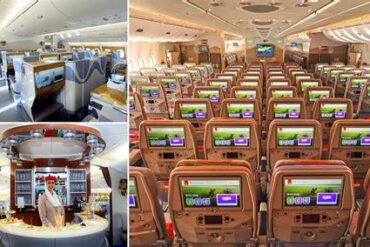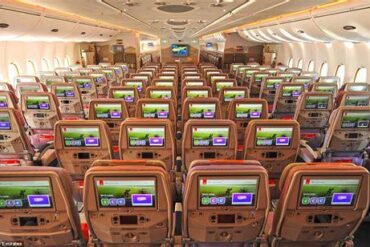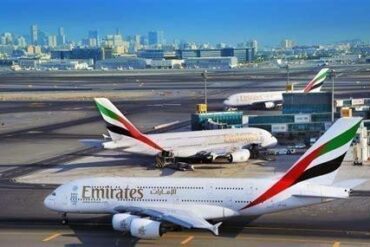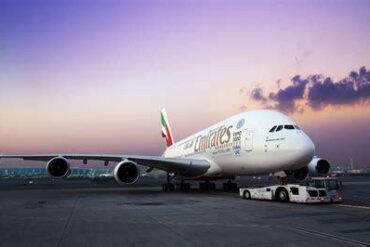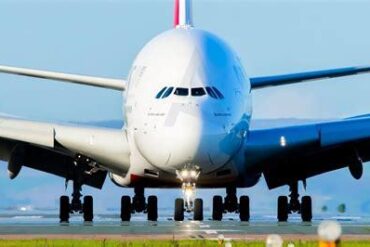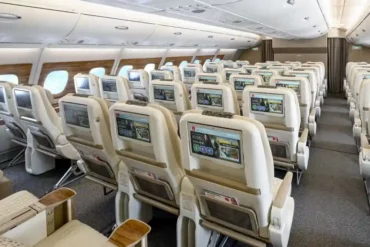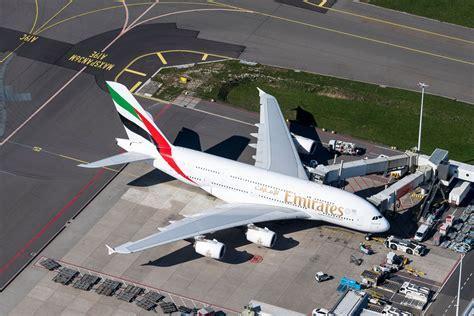
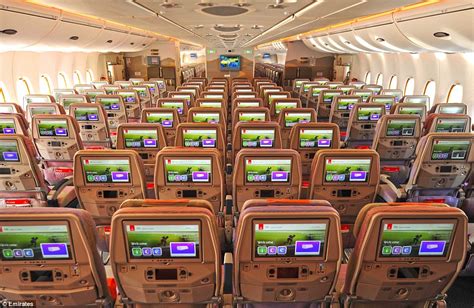
The twilight of a remarkable aviation chapter is unfolding as Emirates prepares to phase out its extraordinary 615-seat Airbus A380 configuration, a layout that has long stood as the world’s highest-capacity operational passenger aircraft. Built for scale rather than exclusivity, this dense configuration reflects a very specific strategy—one designed to move vast numbers of travelers across key global corridors where demand surges and premium yields soften.
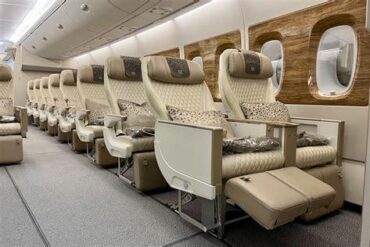
Unlike Emirates’ more balanced A380 layouts, this variant leans heavily into economy-class dominance, making it a workhorse for leisure-heavy, high-volume routes. Yet even for an airline synonymous with grandeur, the numbers tell a clear story: efficiency, flexibility, and evolving passenger expectations are reshaping the fleet. The result is a transition toward a new 569-seat three-class configuration, one that trades raw capacity for a more refined cabin mix, including the increasingly in-demand premium economy cabin.
Why the 615-Seat A380 Is Being Phased Out
The decision to retire this ultra-dense configuration is not sentimental—it is strategic. Aviation economics have shifted. Airlines today are optimizing for yield per seat rather than sheer seat count, and that means balancing premium cabins with economy.
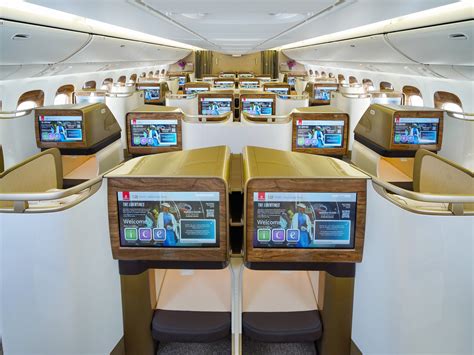
The incoming 569-seat layout introduces a more commercially versatile product. It maintains Emirates’ strong business class presence while adding premium economy, a segment that has proven to be a powerful revenue generator. This inevitably comes at the expense of hundreds of economy seats, signaling a clear pivot away from volume-first operations.
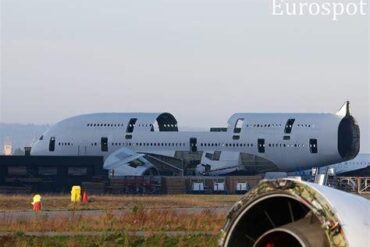
At the same time, several aircraft are being temporarily withdrawn for retrofitting, accelerating the decline of the 615-seat fleet. With just 15 aircraft ever configured this way, their disappearance marks a rare moment in aviation where capacity records quietly fade into history.
The Final 12 Routes: Where the 615-Seat Giant Still Flies
Between May and December 2026, Emirates will deploy the 615-seat A380 on a carefully selected network of routes spanning Asia, Europe, Africa, and the Middle East. These destinations share a common trait: consistent, high passenger volumes with strong leisure demand.
Across Asia and the broader region, the aircraft will serve:
- Bali (daily)
- Bangkok (twice daily)
- Kuala Lumpur (limited service until May)
- Taipei (limited service until June)
- Mauritius (daily)
- Jeddah (from late October)
In Europe, the superjumbo continues to dominate key secondary and leisure-heavy gateways:
- Birmingham (daily)
- Copenhagen (transitioning mid-year)
- Düsseldorf (daily)
- London Gatwick (seasonal variations)
- Manchester (variable frequency)
- Prague (until late May)
These routes are not random—they are finely tuned to match the aircraft’s strengths. Think holiday traffic, visiting friends and relatives (VFR) demand, and large group travel, all of which benefit from maximum seat availability.
A Sharp Decline in Operations Signals the End
Even before the final withdrawal, the numbers show a steep contraction. Emirates plans 2,179 departures using the 615-seat A380 from Dubai through the end of 2026—a figure representing a one-third reduction year-over-year.
Curiously, while this configuration is fading, other A380 variants are expanding, with 10% more flights compared to the previous year. This contrast highlights a crucial point: the A380 itself is not disappearing from Emirates’ strategy—only this extreme-density version is.
External factors have also played a role. Regional instability, including disruptions linked to the Iran conflict, combined with aircraft downtime for retrofitting, has accelerated the shift.
Routes That Lost the 615-Seat A380
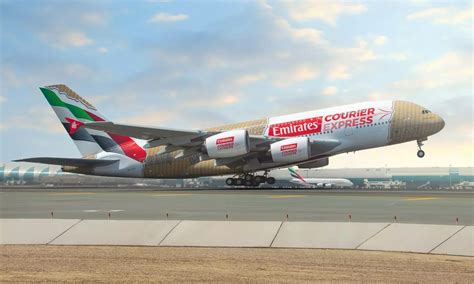
The evolving network becomes even clearer when compared to 2025. Last year, the aircraft appeared on a completely different set of routes—many of which will not see it again.
Notable destinations that previously hosted the 615-seat A380 include:
- Amsterdam
- Barcelona
- Frankfurt
- Rome Fiumicino
- Vienna
- Singapore
- Istanbul
- Cairo
- Amman
Most of these routes continue to receive A380 service, but in less dense configurations, aligning better with premium demand. Two exceptions stand out: Bahrain and Madinah.
Bahrain, in particular, showcased the aircraft’s flexibility. The A380 operated on this ultra-short route primarily during the Formula 1 Grand Prix, turning a routine regional hop into a high-capacity spectacle. Meanwhile, Madinah briefly became the shortest A380 route in Emirates’ network, driven by surging pilgrimage demand during Umrah travel periods.
These deployments underline a key truth: the 615-seat A380 was not just about scale—it was about precision deployment in moments of extraordinary demand.
Copenhagen: A Case Study in Rapid Strategy Shifts
Few routes illustrate Emirates’ evolving approach better than Copenhagen. Initially, the plan was straightforward: retire the A380 from the route by mid-2026 and replace it with two daily flights using smaller aircraft—a Boeing 777-300ER and the newer Airbus A350-900.
This shift would have increased frequency while modestly boosting total seat capacity by 17%, a classic example of trading size for flexibility.
But plans changed—quickly.
Instead of removing the A380, Emirates opted to retain it on the route, transitioning from the 615-seat version to the new 569-seat configuration starting July 1. By October, Copenhagen will see a hybrid model: one A380 flight and one A350 flight daily, both offering premium economy.
The result? A significant jump to 1,734 daily seats, roughly 20% higher than originally planned. It’s a vivid demonstration of how dynamic airline network planning has become, especially in an era where demand patterns can shift almost overnight.
The Legacy of the 615-Seat Superjumbo
The 615-seat Airbus A380 represents a bold experiment in aviation—one that pushed the boundaries of passenger density, operational efficiency, and route optimization. It thrived in a niche where scale mattered more than luxury, quietly enabling Emirates to dominate markets that demanded sheer capacity.
Its retirement does not signal failure. Quite the opposite—it reflects an industry that has matured beyond one-size-fits-all solutions. Airlines today are building fleets that are more adaptable, more segmented, and more aligned with passenger expectations.
As these final flights operate through 2026, the aircraft’s legacy is already secured. It proved that even in an era obsessed with premium travel, there remains immense value in moving people at scale—efficiently, reliably, and strategically.
And as the last of these high-density giants take to the skies, they leave behind a simple but powerful reminder: in aviation, even the biggest icons eventually make way for smarter evolution.