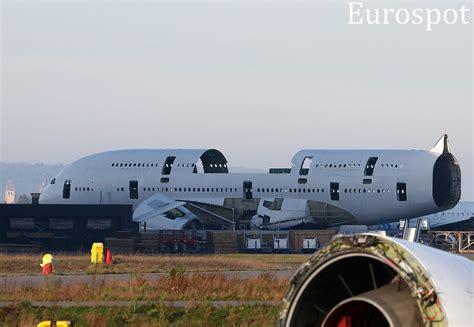
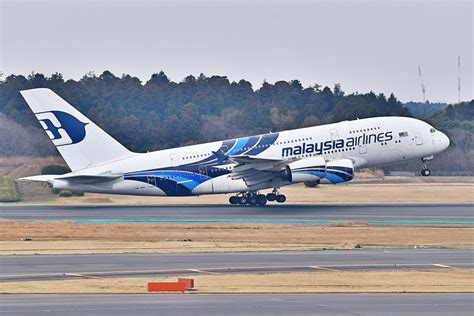
The once-proud flagships of Malaysia Airlines’ long-haul fleet, the Airbus A380s, are meeting a final, quiet end at a storage facility in France. These double-decker giants, once symbols of luxury and ambition, are now being taken apart piece by piece, their parts destined for airlines still clinging to the superjumbo’s rare utility. The latest development in this ongoing dismantlement saga involves a former Malaysia Airlines A380, now under the stewardship of U.S.-based Setna iO, and scheduled for scrapping at Tarbes–Lourdes–Pyrénées Airport (LDE).
Once the pride of Southeast Asian aviation, Malaysia Airlines’ A380s have been grounded since the airline’s strategic overhaul began in earnest. All six of the carrier’s A380s were officially retired and are now owned by Airbus Financial Services, each one stored at the same quiet French facility. The aircraft acquired by Setna iO on June 4, 2025, retains three of its four Rolls-Royce Trent 900 engines, a detail that highlights the key value now found in these aging airframes: not in their flight capabilities, but in their spare parts.
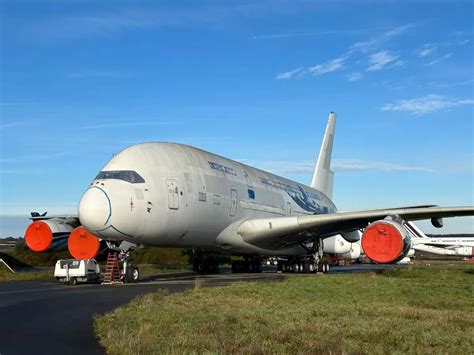
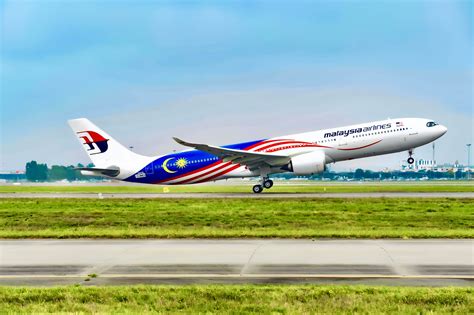
The aircraft’s disassembly is being overseen by TARMAC Aerosave, a European leader in sustainable aircraft storage, dismantling, and recycling. Their facility at LDE has become a veritable graveyard for aging wide-body jets, especially as the A380 program fades into twilight. The magnitude of this shift becomes even clearer when placed in the context of Malaysia Airlines’ broader restructuring. In a move signaling a pivot toward fuel efficiency and operational flexibility, Malaysia Aviation Group (MAG) traded in its A380s in exchange for 20 Airbus A330-900 aircraft, ten sourced directly from Airbus and another ten through Avolon, an Irish leasing firm.
Since late 2024, the transition has accelerated. As of April 17, 2025, the airline had already received three A330-900s, reflecting a deliberate step toward fleet modernization. The shift is not merely technical; it represents an airline redefining its identity, moving away from high-capacity, low-yield aircraft like the A380 and toward mid-size long-haul jets optimized for today’s aviation realities.
A Wider Trend: The A380’s Global Wind-Down
The decision to dismantle the A380 is no longer controversial—it’s industry standard. The aircraft, a marvel of 21st-century engineering, never truly aligned with evolving airline economics. While Setna iO continues its mission to support active A380 operators through component recycling, it’s not alone. On April 8, 2025, VAS Aero Services, based in Boca Raton, Florida, was officially appointed by Airbus to manage the dismantling and parts resale of three more A380s.
These included two aircraft from Lufthansa’s fleet: MSN 61 (D-AIME) and MSN 66 (D-AIMF), both stored at Teruel Airport (TEV) in Spain. The third, MSN 84, is another ex-Malaysia Airlines aircraft, stored at Tarbes–Lourdes since its relocation from Kuala Lumpur International Airport (KUL) in late 2022. Each scrapping operation represents a shift in global fleet dynamics, where once-revered flagships become parts inventories, feeding the needs of still-operating aircraft.
As of May 2025, 29 A380s have already been dismantled, including Lufthansa’s MSN 48 (D-AIMD) and MSN 73 (D-AIMJ). This represents nearly 10% of the total global fleet, a pace expected to accelerate as more aircraft reach the end of their serviceable life.
A Tale of Two Realities: Scrapping vs. Survival
Despite its growing graveyard count, the A380 is not dead. Far from it. The aircraft continues to fly across continents, retained by airlines for whom the A380 remains indispensable. Lufthansa, for example, has brought eight A380s back into active duty. The motivation? Persistent delivery delays of new long-haul aircraft, particularly the Boeing 777-9, now pushed back to 2026 or later.
In its 2024 Annual Report, Lufthansa emphasized that the A380’s return was not about nostalgia, but necessity. Long-haul demand has rebounded post-pandemic, and with capacity shortfalls plaguing the industry, the A380’s vast seating and cargo space still serve a purpose.
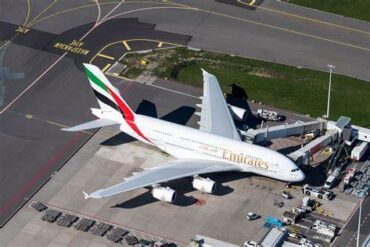
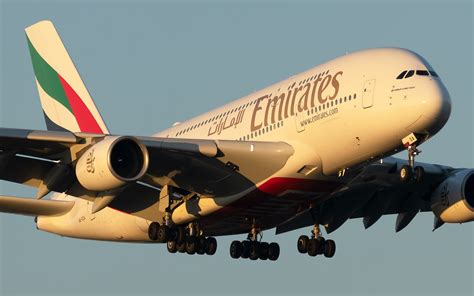
Industry insiders confirm the component market for the A380 is booming. According to Tommy Hughes, CEO of VAS Aero Services, the demand for second-hand A380 parts is sharply rising, largely driven by the roughly 175 active A380s still flying worldwide. These include aircraft operated by:
- Emirates (EK)
- Singapore Airlines (SQ)
- Qantas (QF)
- Qatar Airways (QR)
- British Airways (BA)
- Korean Air (KE)
- All Nippon Airways (NH)
- Etihad Airways (EY)
Ch-aviation data confirms that 182 A380s remain either operational or undergoing maintenance. Many of these operators are preparing for the long haul by investing in spare parts, recognizing the limited future supply as more units are scrapped.
The Economic Gravity of Retirement
The A380’s descent into retirement is not purely technical—it’s fundamentally economic. Its four-engine configuration, high operating costs, and airport compatibility challenges have made it increasingly obsolete in a twin-engine world. Airlines chasing yield over volume are choosing the A350, 787, and A330neo families. These aircraft offer similar range and better economics, especially in fluctuating demand environments.
Yet the A380 remains mechanically modern, and therein lies its post-retirement value. Components like landing gear, avionics, hydraulic systems, and especially Rolls-Royce Trent 900 engines are still in demand. For companies like Setna iO, the scrapping process is more than recycling—it’s an act of strategic resource redistribution.
By salvaging key components, they ensure that A380s still in service are supported for years to come. It’s a circular model of aviation economics, where one aircraft’s end supports another’s survival. This is especially relevant as major carriers stretch their fleets amid new aircraft delivery delays and supply chain constraints.
Malaysia Airlines: Closing the Chapter
For Malaysia Airlines, the A380 story is one of ambition, pride, and eventual recalibration. Initially introduced to compete on dense long-haul routes—particularly to London and Sydney—the aircraft failed to deliver the expected returns. High operational costs, combined with route restructures and market volatility, made it untenable.
The airline’s final commercial A380 flight occurred during the pandemic, after which all six units were grounded. Despite early efforts to repurpose them for pilgrimage flights or lease them out, no viable solution emerged. The eventual exchange deal with Airbus for A330-900s marked a clean exit.
Now, with disassembly underway in France, the airline is decisively shifting toward sustainability, fleet flexibility, and profitability. The A380, though once a beacon of modernization, now symbolizes a chapter closed—gracefully, but firmly.
Conclusion: A Dignified Farewell
The scrapping of ex-Malaysia Airlines Airbus A380s at Tarbes–Lourdes–Pyrénées Airport marks not just the end of individual airframes, but the evolution of modern aviation philosophy. The superjumbo, once hailed as the future of air travel, is being retired in favor of efficiency and modular flexibility. Yet, in its disassembly, a kind of legacy remains alive—through parts, through data, and through the continued operation of sister aircraft across global skies.
It’s not an abrupt end, but a gradual fade—one where innovation is repurposed, and greatness finds a quieter, enduring form.