The Tiger MkIII Mid-Life Upgrade (MLU) program by Airbus Helicopters has reached a pivotal engineering milestone, marking its transition from planning and design into hands-on integration. With the activation of the “Helicopter 0” ground test bed, Airbus has officially launched the full-system integration phase, a critical step in France and Spain’s decision to modernize their legacy attack helicopter fleets rather than replace them outright.
Strategic Leap: From Blueprint to Integration
The announcement, made on 22 December 2025, underscores a decisive pivot in the Tiger MkIII program’s trajectory. Rather than investing in costly replacements, France and Spain have opted for a connectivity-driven upgrade, designed to extend operational relevance into the coming decades. This signals a strategic embrace of evolving warfare needs: precision targeting, battlefield networking, and manned-unmanned teaming (MUM-T).
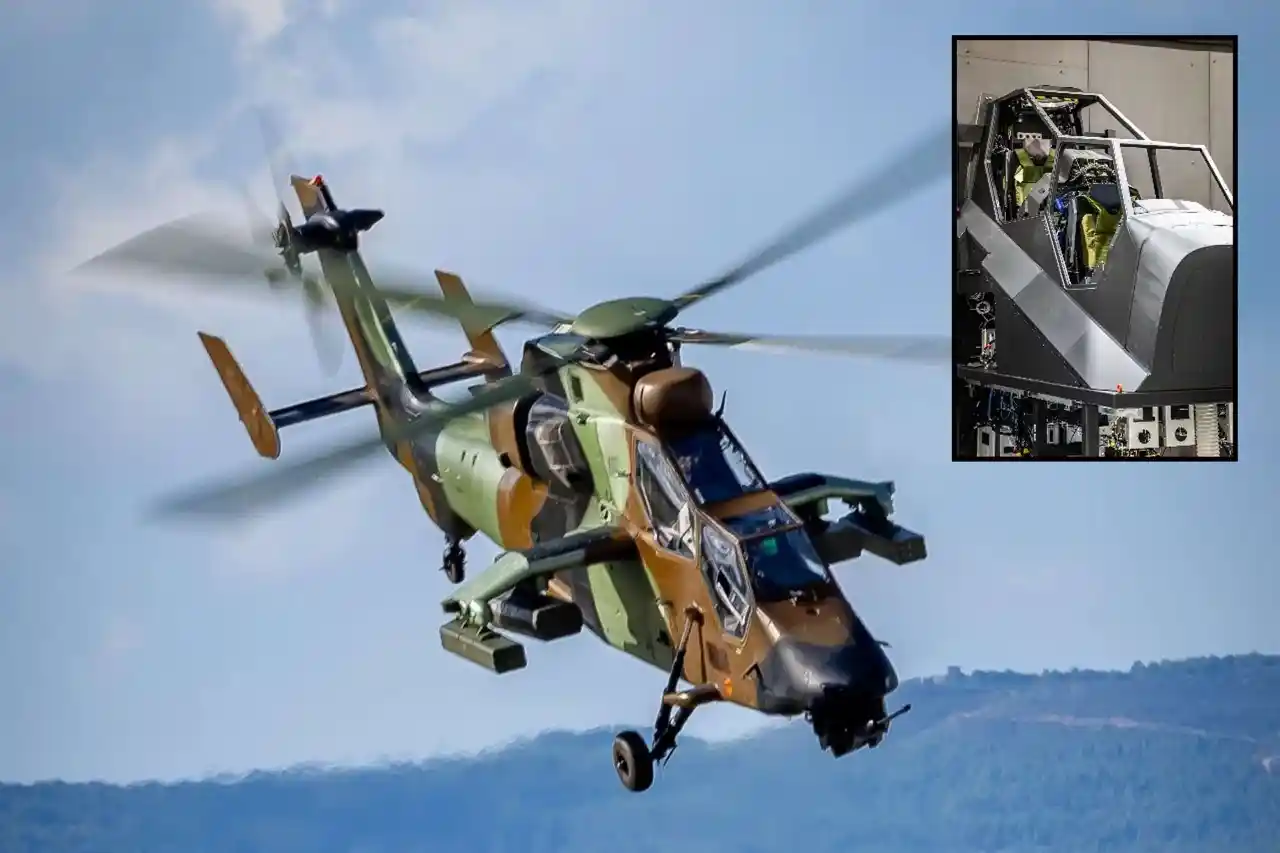
“Helicopter 0” isn’t just a mock-up. It is a high-fidelity, full-scale, non-flying ground platform that mirrors the Tiger’s cockpit and internal systems, minus its propulsion mechanism. The rig serves as a core enabler for risk-managed innovation, allowing developers to test mission systems, new avionics, advanced communications, and weapon integrations under real-world conditions without ever leaving the ground.
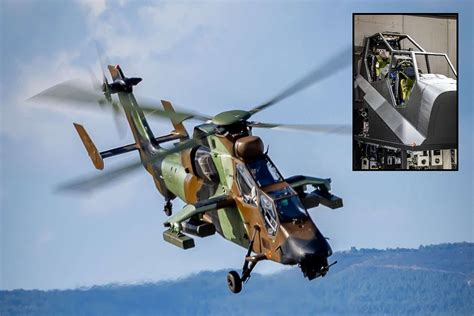
This engineering sandbox facilitates early identification of integration bottlenecks, refinement of software and user interfaces, and validation of connectivity protocols before live flights. This systematic progression is expected to reduce development risk, accelerate certification, and streamline the eventual transition to live prototypes.
Core Upgrades: Building the Digital Backbone
At the heart of the MLU is a re-imagined digital ecosystem. Airbus is not simply swapping outdated parts but rebuilding the Tiger’s nervous system—its mission architecture, sensor suite, and connectivity interfaces. Key highlights include:
- Next-generation avionics for increased computational capacity
- Overhauled mission systems enabling real-time targeting, faster data fusion, and intuitive interfaces
- Modernized sensor arrays that improve reconnaissance and situational awareness
- Revamped communications, including a dedicated data link for integration with unmanned aerial systems (UAS)
The integration of drone-compatible data links is particularly critical. In future operational theaters, collaborative combat between crewed helicopters and autonomous drones will be foundational. Surveillance drones may scout ahead, laser-designate targets, or jam enemy defenses, allowing the Tiger MkIII to engage from a safer distance.
Flight-Test Readiness: The Prototype Trio
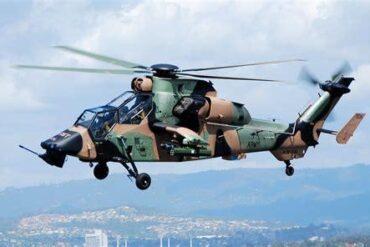
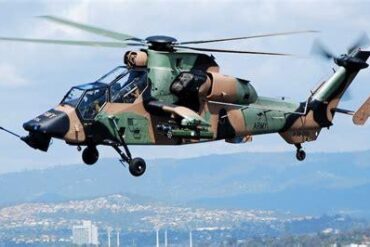
Airbus has already consolidated its prototype assets. All three Tiger helicopters designated for flight testing are now housed at Marignane, France:
- A recently arrived French Army Tiger
- A Spanish Army Tiger, delivered earlier in 2024
- A second French Army Tiger, also received in 2024
These aircraft will act as the proving ground for the validated ground rig systems. This dual-track testing—ground and air—ensures that software, systems, and cockpit interactions transition smoothly from simulation to reality. Flight testing is scheduled to begin in 2026, with insights from the Helicopter 0 rig already being fed into the retrofit timeline.
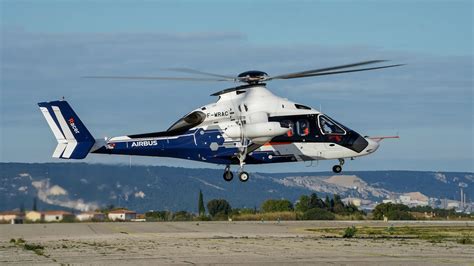
This structured approach is engineered to minimize surprises during test flights, reduce last-minute rework, and compress development timelines while safeguarding performance targets.
Operational Impact: From Firepower to Interoperability
The tactical potency of the Tiger MkIII won’t rest on just one upgraded module. Its real strength lies in how its systems coalesce into a cohesive digital strike platform capable of thriving in high-threat environments.
The MLU will:
- Reduce pilot workload via optimized human-machine interfaces
- Shorten the sensor-to-shooter loop, ensuring faster engagements
- Enable seamless target sharing between air and ground forces
- Enhance survivability through data-driven decision support systems
By aligning with NATO’s evolving concept of networked warfare, the upgraded Tiger MkIII will become a node in a broader information-sharing ecosystem. This ensures its relevance in future scenarios involving joint air-ground operations, swarming drone assets, and AI-assisted threat analysis.
Dual-Hub Production: Albacete and Marignane Unite
Airbus is not only modernizing technology—it is restructuring its industrial footprint. A new final assembly line is being established in Albacete, Spain, complementing the existing retrofit operations at Marignane in France.

The dual-site strategy isn’t just a logistical choice. It reflects a commitment to:
- Shared sovereign capability across partner nations
- Balanced industrial participation between Spain and France
- Sustainment infrastructure embedded within both countries
The two facilities will handle the serial retrofit of 60 Tiger helicopters, with France receiving 42 units and Spain 18 units. By distributing production responsibilities, the program ensures long-term support scalability, job retention, and a robust European industrial base dedicated to military rotorcraft excellence.
From Lessons to Longevity: A 20-Year Operational Lens
The rationale behind the Tiger MkIII upgrade is rooted in hard-earned battlefield experience. With two decades of operational service—including deployments in Afghanistan, Mali, and the Sahel—France and Spain have accumulated vast insights into helicopter warfare.
Recurring themes from this legacy include:
- System obsolescence, particularly in software and mission electronics
- Interoperability challenges across NATO and EU partners
- Spare parts logistics, impacting mission availability rates
Instead of reinventing the wheel with a next-generation airframe, Airbus is strategically investing in modernizing the most rapidly aging subsystems. The result is a platform that is both familiar to crews and dramatically more capable in tomorrow’s battlespace.
Future-Ready: Paving the Way for Air-Land Integration
As 2026 flight testing draws closer, the Tiger MkIII will increasingly be positioned as an integral part of Europe’s network-centric land warfare doctrine. It is being sculpted not merely as a gunship but as a command-aware platform, able to share ISR (intelligence, surveillance, reconnaissance) data, coordinate fire missions, and act as a sensor relay.
The integration of UAS datalinks, modern sensor fusion, and reconfigurable cockpits means that future Tigers can:
- Support autonomous teaming with loyal wingman drones
- Relay target coordinates to artillery and ground-based missile systems
- Perform non-kinetic missions, such as electronic warfare or jamming
These capabilities allow battlefield commanders to leverage the Tiger MkIII as a high-speed, high-survivability node in their wider operational architecture.
Conclusion: A Decisive Phase with Strategic Implications
Airbus’ activation of Helicopter 0, the consolidation of flight prototypes at Marignane, and the establishment of a final assembly line in Albacete are not isolated achievements. They signal a program entering its most critical engineering phase, where success will be defined by the seamless interplay between ground validation, flight testing, and serial production.
If the program adheres to its timelines, France and Spain will, by the latter half of the decade, field one of the most digitally advanced legacy attack helicopters in Europe. The Tiger MkIII will not just be a weapons platform—it will be a digital enabler, bridging the gap between traditional rotorcraft missions and the demands of 21st-century multi-domain warfare.